GENIAC Journal: Hands-On Analogue Computer Kit (1950s)
◆ Revised
Introduction
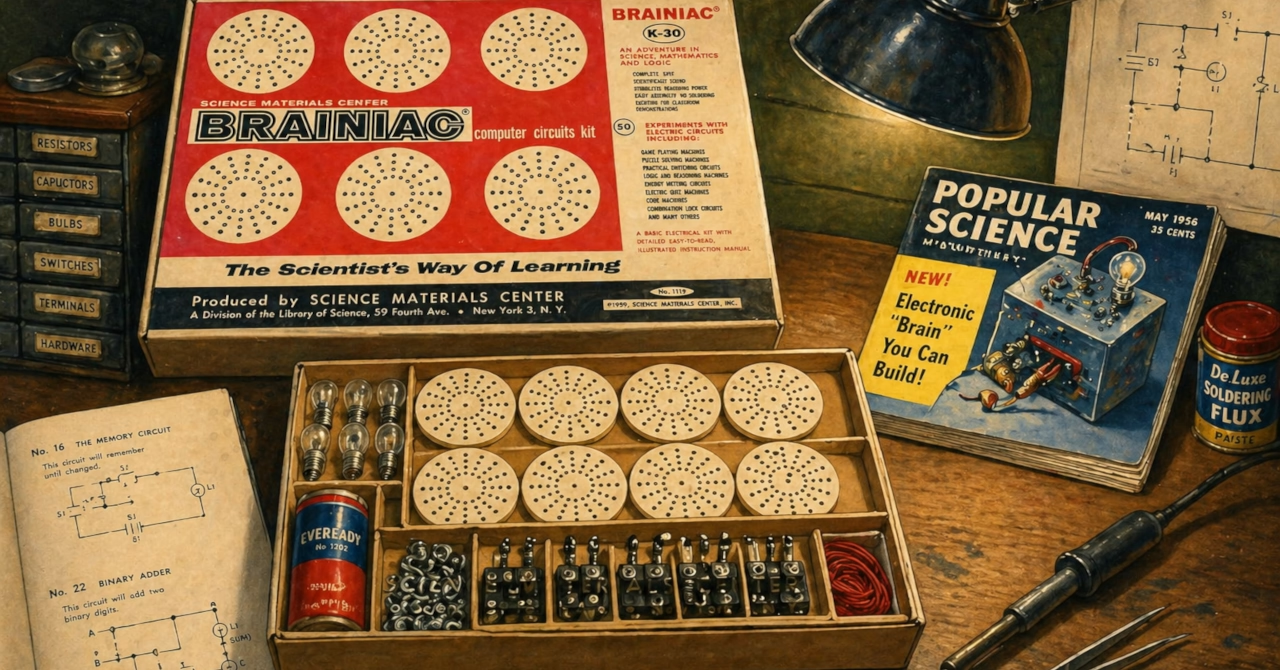
Emerging from the 1950s “electric brain” era, the GENIAC, short for Genius Almost-Automatic Computer, was a low-cost, hands-on analogue computing kit designed to make logic visible through switches, wires, and light bulbs. Marketed in slightly different forms, including the well-known BRAINIAC kit, it invited users to build small machines that could calculate and reason by following electrical circuits rather than stored programs. This journal treats GENIAC not as a curiosity, but as a working system for understanding how simple components can be arranged to model decisions, relationships, and thought itself.
How to Read This Journal
The GENIAC journal is organised as a structured exploration of a single system. Core articles establish how the kit operates as an analogue computing model. Exploratory pieces extend these ideas into broader questions of logic, design, reasoning, education, and technical culture. The advertisement archive presents original material, showing how these concepts were communicated to a general audience. Readers may begin with the core article and follow outward, or move directly into the archive to see how computing was made visible and accessible in its original context.
Core Articles
The core articles establish GENIAC as a hands-on analogue computing system, built from switches, circuits, and simple electrical components. Rather than presenting computing as abstraction, these pieces examine how logic, reasoning, and calculation emerge from physical arrangements.
-
I Remember a Kit Computer from the 1950s. What Was It?
Helps readers identify the GENIAC Electric Brain Construction Kit by reconstructing its distinctive physical appearance, educational purpose, and cultural role. -
What Is the GENIAC Analogue Computer?
Introduces the GENIAC kit as a visible machine for logic, showing how switches, bulbs, and circuits made machine reasoning understandable. -
GENIAC Analog Computer Kit
An overview of the GENIAC system, examining how a low-cost educational kit used switches and circuits to model logic, reasoning, and early computational thinking. -
How Does the GENIAC “Electronic Brain” Actually Work?
Explains how GENIAC turned questions into electrical pathways, why its claims were exaggerated but useful, and how its visible logic still teaches early computing. -
Was the GENIAC a Real Computer or Just a Toy?
Examines the uneasy boundary between educational toy and genuine computing machine, showing why GENIAC’s limitations are part of its historical value. -
Why Was the GENIAC Computer Created in the 1950s?
Places GENIAC within the electric brain era, showing why visible machine reasoning mattered when computers were powerful symbols but inaccessible objects. -
How GENIAC Sparked the Electric Brain Revolution
Explores how 1950s “electric brain” ideas were translated into hands-on circuits, positioning GENIAC as a practical response to early machine reasoning and the rise of information processing.
Begin with the core articles to understand what GENIAC was, how it worked, and why its strange combination of logic, theatre, education, and circuitry still matters.
Explorations
The exploration articles extend the GENIAC journal beyond individual pieces into system-level understanding. These works examine how the kit functions as a progression of ideas, tracing how simple circuits develop into machines that calculate, compare, translate, and reason. They also explore the wider cultural and intellectual world that surrounded early machine reasoning, including logic systems, symbolic thinking, hobbyist culture, and the public language of “electric brains”.
-
What Could You Build with the GENIAC Computer?
Surveys the practical range of GENIAC projects, from alarms and lighting circuits to arithmetic machines, code systems, games, and visible logic. -
GENIAC Project List: Building Thinking Machines and Circuits
A guided reading of the GENIAC manual’s project list, showing how its circuits progress from simple switching to arithmetic, reasoning, coding, and game-playing machines. -
GENIAC Kit Parts List and Modern Rebuild Guide
An examination of the GENIAC kit components, showing how simple parts form a complete system for building logic machines and how they can be recreated for modern experimentation. -
5 Interesting Facts about the GENIAC Computer
Presents five revealing facts about GENIAC, from exposed electrical logic and binary arithmetic to its role in selling ordinary people access to computing culture. -
4 Things That Made the GENIAC Ahead of Its Time
Shows how GENIAC anticipated modern computing culture through hands-on learning, visible logic, modular design, and binary thinking. -
6 Surprising Uses of the GENIAC Computer Kit
Looks at six advanced uses of the kit, including burglar alarms, logic puzzles, game-playing machines, binary arithmetic, and secret code systems. -
5 Design Features of the GENIAC Explained
Examines the design features that made GENIAC more than a novelty kit, from rotary switches and lamps to modular circuits and visible reasoning. -
4 Reasons Why the GENIAC Still Matters Today
Explains why GENIAC remains relevant in an age of opaque software, sealed devices, and increasingly invisible machine reasoning. -
Why Did We Stop Teaching People How Machines Think?
Contrasts GENIAC’s culture of visible systems and hands-on reasoning with modern interfaces that often hide how computation works. -
4 Things GENIAC Got Wrong About Computers
Looks at the assumptions GENIAC preserved about computing’s future, including physical rewiring, machine reasoning, memory, and invisible software. -
The Death of the Intelligent Hobbyist
Uses GENIAC to examine the decline of a technical culture that expected ordinary people to open machines, study systems, and learn through friction. -
Why Early Computers Were Built Around Logic
Explores how mid-century computing culture treated logic as the foundation of machine reasoning, linking GENIAC circuits to the broader rise of formal computational thinking. -
Machine Reasoning and the Age of Syllogisms
Examines the historical language of syllogisms and machine reasoning, showing how GENIAC reflected a period when logical structure became central to computing and artificial intelligence.
Advertisement Archive
This archive gathers original GENIAC and BRAINIAC advertisements as primary material. Each piece captures how the kit was presented to the public, from educational promise to visual explanation. Read together, these advertisements reveal how computing was translated into accessible language, positioning switches, circuits, and logic as something that could be built, understood, and experienced directly.
-
What Is GENIAC?
Defines the kit for a general audience, framing it as a machine for reasoning and calculation. -
How GENIAC Was Marketed to Learners
Uses a 1956 Galaxy advertisement to examine how GENIAC framed thinking, speed, and learning as a direct challenge to the reader. -
The GENIAC Approach: Learning with Analogue Circuits
Examines how GENIAC advertisements framed learning through switches, wires, and visible circuit behaviour.
About the Author
Attention Signal
Disclosure
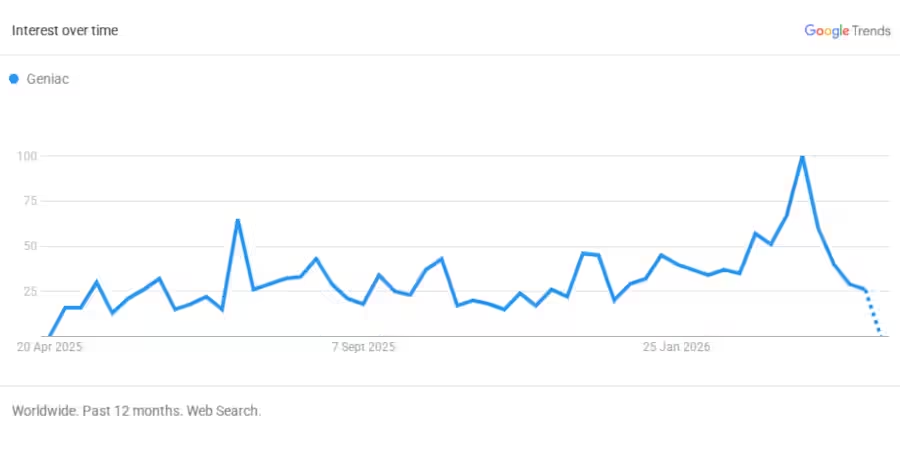
This page presents a curated exploration of the GENIAC analogue computer kit and its associated materials. Content reflects the author’s interpretation of historical sources, including instructional manuals, advertisements, and related artefacts. The GENIAC system is discussed as an educational and conceptual model for understanding logic, circuits, and early computing ideas, rather than as a complete or authoritative account of computing history. References to “thinking machines” and reasoning systems follow the language and framing of the original material and are included for historical context. The Attention Signal section draws on publicly available trend data to illustrate patterns of interest and does not represent comprehensive or definitive measures of relevance. Readers seeking formal technical, historical, or academic treatment of computing should consult primary literature, scholarly sources, and specialist texts.