The original home of the Miscellaneum

Philreichert.org is part archive, part workshop and part ongoing conversation. Vintage computers, hi-fi, magazines, software and overlooked artefacts become starting points for exploring ideas that still matter. Follow one object far enough and it may lead to music, design, publishing, preservation, or somewhere entirely unexpected.

What's Happening This Month

The Miscellaneum 006 – Vintage Hi-Fi Special

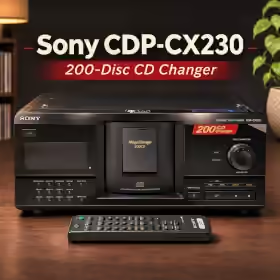
Step inside the world of Sony's remarkable 200-disc MegaStorage CD changer as AudioPhil shares his experience of why this 1990s marvel still deserves a place in a serious Hi-Fi system. Ask yourself this question, where did all the Commodore VIC-20s go? I consider who owns a type-in program published in a vintage computer magazine forty years later? What happens when a pocket-sized modern computer starts listening to old machinery? Explore how the M5Stack Cardputer can augment vintage electronics by observing, recording and interpreting how classic equipment behaves. Could yesterday's electronic instruments have a second life? Discover how AI and modern hardware could make old synthesizers programmable again. Discover how sound chips turned 8-bit machines into instruments, as ingenious programmers and composers transformed scarce voices, tiny memories and unforgiving timing into remarkably expressive computer music.

Hifi & Audio

SONY CDP CX230 200 CD Changer

SONY CX230
200x CD Player

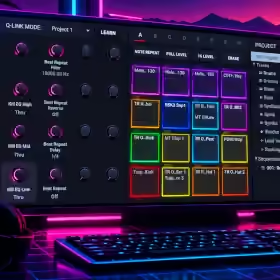
MPC software on a widescreen monitor in a neon synthwave studio

I Can Run Akai
MPC 3 on Linux

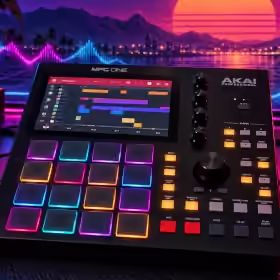
MPC One with sixteen illuminated drum pads in a neon synthwave studio

Open MPC
Community Plugins

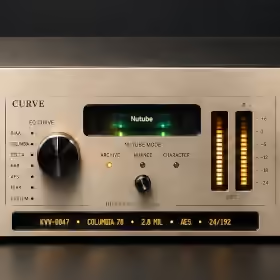
Reichertek Nu:Archive conceptual rack-mounted phono preamplifier and high-resolution archival recorder

Reichertek Nu:Archive
Ultimate Phono Recorder

Computing

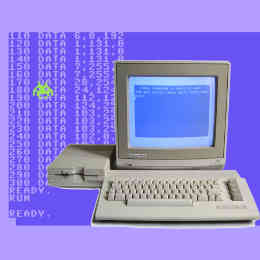
Commodore 64 computer, disk drive and floppy disks against a neon synthwave sunset

Commodore 64
Archive Search

Commodore VIC-20 home computer with original power supply and vintage computing accessories

Where Did All the VIC-20s Go
After Commodore Moved On?

Commodore 64 MIDI workstation with Passport interface, Casio CZ-101 synthesizer and CRT sequencer display

Commodore 64 as a
MIDI Music Workstation

Cyberpunk Commodore 64 workstation with joystick and CRT displays overlooking a neon futuristic city

Commodore 64 Quarterly
September 2026

Retrogaming

Crystian and the Lost Caves for the Commodore 64

Crystian and
the Lost Caves

Jaleco Big Run for the Commodore Amiga retail box

Jaleco Big Run
Commodore Amiga

KDE's Hidden Playground: Five Great Games

KDE's Playground
Five Great Games

Epic: The Old Space Game You Might Half Remember

Epic: The 1992
Space Game Memory

/r/ Random

English courtroom with bewigged lawyers arguing beneath a colossal Dyson Sphere surrounding a blazing star

Can You Legally Build
a Dyson Sphere?

Vintage computer magazine type-in program and 8-bit computer game

Who Owns a Type-In
Program 40 Years Later?

M5Stack Cardputer monitoring and augmenting vintage electronic equipment

Augment Vintage Electronics
with a Cardputer

Independent publisher at a desk as glowing digital connections flow through a traditional study, symbolising publishing for people and AI

Beyond SEO:
Publishing for AI

Newsletters

The Miscellaneum 001

The Miscellaneum
Edition 006

Cyberpunk Commodore 64 workstation with joystick and CRT displays overlooking a neon futuristic city

Commodore 64 Quarterly
September 2026

M5Stack Cardputer Newsletter - June 2026 Edition

M5Stack Cardputer
Newsletter June 2026

Independent Digital Publishing Newsletter 02

Digital Publishing
Newsletter (May 2026)

Research Collections

Research Collections bring together related articles, newsletters, journey maps and historical material into curated knowledge collections. Explore connected topics across computing, audio and digital culture, and discover how individual articles combine to build a richer understanding of each subject.

Commodore MAX: The Japanese Proto-Commodore 64

Commodore MAX
Japanese Proto-C64

Commodore C64 Scratch Pad

Commodore C64
Journal

Commodore C64 Journal Authority

Commodore C64
Journal

Commodore Amiga Multimedia Computer

Commodore Amiga
Journal


Featured Journey Map

This featured reading path highlights one curated sequence from the site. Journey maps connect related articles into structured thematic exploration, helping readers move progressively through a topic rather than encountering articles in isolation. Readers looking for additional guided reading paths can browse the complete collection at: Journey Maps Index.

Journey Map - GENIAC Analogue Computer Kit

This article sits within the GENIAC Analogue Computer Kit topic cluster. The sequence below moves from discovery and explanation through historical advertising culture and into broader reflections on computing, learning and the changing relationship between humans and machines.

Reading context: This journey combines historical reconstruction, vintage advertising, analogue computing concepts and reflective essays about digital culture. Most readers will move through the sequence gradually rather than in a single sitting. The complete journey takes approximately 45–90 minutes.

  1. Foundations and Discovery
  2. Remember a Kit Computer from the 1950s?
  3. What Is the GENIAC Computer?
  4. Why Was the GENIAC Computer Created?
  5. Advertising, Imagination and Electric Brains
  6. How the GENIAC Computer Was Marketed to Learners
  7. The GENIAC “Electronic Brain” Explained
  8. Was GENIAC a Computer or a Toy?
  9. Reflections on Computing Culture
  10. Why GENIAC Still Matters
  11. Why Did We Stop Teaching This?
  12. The Decline of Hobbyist Computing Culture

Site RSS Feeds

Subscribe to these RSS feeds to follow new issues and guided reading journeys from philreichert.org.


At the Editor's Desk

One of the pleasures of maintaining the Miscellaneum is discovering connections between articles written years apart. Lately, I've been revisiting our collection of articles on computer music, MIDI, vintage synthesizers and the remarkable machines that made electronic music accessible to ordinary enthusiasts.

Eight existing articles have emerged as the foundation for a possible exploration of The Programmable Musical Instrument. From the sound chips of early home computers to the preservation of vintage synthesizers through emulation, there's a fascinating story waiting to be told. I'm still exploring how these pieces might fit together. There are plenty of other curiosities competing for attention, so we'll see where the research leads.

Development Pipeline — November/December 2026

Here's what's currently on my editorial workbench. Some projects will move quickly, others may take a detour, and a few might never make it into publication. The pipeline is a working plan, not a publishing commitment. Readers are welcome to follow along as ideas develop, priorities change and completed work finds its way into the Miscellaneum.
  1. Review and update pages to improve metadata compliance [Complete]
  2. Discovery and ideation [Complete]
  3. Added Recent Commodore 64 Additions to the Internet Archive [Complete]
  4. Add featured gallery image to homepage [Planned]
  5. Refresh How Sound Chips Turned 8-Bit Machines into Instruments [WIP]
  6. Refresh SID vs MIDI: Two Ways Computers Make Music [Planned]
  7. Refresh MIDI Basics – A Retro Tech Deep Dive [Planned]
  8. Refresh Atari ST Music Software – Sequencers, Patch Editors, Interfaces [Planned]
  9. Refresh Can the Commodore 64 Be the MIDI Hub of a Music Workstation? [Planned]
  10. Refresh Old Synthesizers are Become Programmable Again [Planned]
  11. Refresh MAME Is Preserving Vintage Synthesizers and Samplers [Planned]
  12. Refresh Yamaha QY10 Music Sequencer – Handheld Music MIDI Workstation [Planned]
  13. Develop Making Music With a Commodore 64 Without Overbuying Gear [CG35-101] [Planned]
  14. Develop Could a Commodore 64 Be a Music Workstation in 1986? [CG35-027] [Planned]
  15. Develop How Much of the 1980s Synth Sound Was Computer-Assisted? [CG35-002] [Planned]
  16. Develop What to Check in Vintage C64 MIDI Interfaces Before You Buy [CG35-104] [Planned]
  17. Develop Old Computer Magazines Worth Collecting, for the Right Reasons [CG35-108] [Planned]
  18. Develop When Did MIDI Help the Computer Become a Real Music Studio? [CG35-001] [Planned]
  19. Develop Early Sequencers Worked Like Programs, Not Pianos [CG35-032] [Planned]
  20. Develop Commodore VIC-20 Colour Codes Aren't a Cheat Sheet [CG34-998] [Planned]
  21. Develop new thematic journey map [Planned]
  22. Develop new Independent Digital Publishing Newsletter edition [Planned]
  23. Develop new M5 Stack Cardputer Newsletter edition [Planned]
  24. Publish next The Miscellaneum edition [Planned]

Count, Down, Compute!