6 Surprising Uses of the GENIAC Computer Kit

Introduction
Most people assume the GENIAC was a toy.
That is understandable. The kit arrived in the 1950s packed with wires, switches, flashlight bulbs, cardboard panels, and optimistic “electric brain” marketing. It looked more like a rainy weekend hobby project than a serious machine.
But that assumption misses what made GENIAC genuinely interesting.
The kit was quietly teaching ordinary people how machine logic works.
Not through abstract mathematics. Not through engineering textbooks. Through physical systems you could wire together yourself at the kitchen table.
That is why the GENIAC still feels strangely modern today. Beneath the retro styling sits a surprisingly ambitious idea: reasoning itself can be built from switches, conditions, and structured choices.
The real surprise is not that GENIAC existed. The surprise is what it expected users to build with it.
1. It Could Simulate Home Security Systems
One of the most practical GENIAC projects was a burglar alarm circuit. Doors and windows acted as inputs. A locked condition armed the system. If a protected entry point opened, a warning light activated.
That may sound simple now, but the underlying logic is still familiar. Modern alarm systems operate on the same basic principle: detect a condition, change state, trigger a response.
The GENIAC manual repeatedly blurred the line between toy and engineering demonstration. Projects like these taught readers that automation was really a chain of logical conditions rather than magic.
The GENIAC Project List: Building Thinking Machines and Circuits makes this progression especially clear. Users moved from simple switching systems into arithmetic, coding, game logic, and machine reasoning.
2. It Could Model Spacecraft Safety Logic
GENIAC also leaned heavily into 1950s space-age imagination. One project simulated a spaceship airlock system complete with pressure conditions, safety checks, and warning indicators.
The hardware itself was primitive by modern standards. The machine relied on manually operated rotary switching rather than automatic electronic processing.
But the educational leap was real.
The user learned that a machine could evaluate several conditions before allowing an action to occur. If pressure was unsafe, the “door” remained logically locked.
GENIAC turned science fiction ideas into something people could physically build and test.
3. It Could Solve Logic Puzzles
The kit also handled classic reasoning puzzles including the fox, hen, and corn problem. Instead of solving the puzzle mentally, the user wired a machine that determined whether the situation was safe or dangerous.
This is one of the most revealing GENIAC projects because it shows how mid-century computing culture increasingly viewed intelligence as structure.
If logical relationships could be mapped into circuits, then machines could appear to “think”.
That idea sits directly behind later discussions of artificial intelligence and symbolic reasoning. The article Machine Reasoning and the Age of Syllogisms explores this shift in much greater depth.
4. It Could Perform Arithmetic Visibly
GENIAC included adding machines, subtracting machines, multiplying machines, dividing machines, and binary translators.
Modern readers may shrug at this because smartphones perform calculations invisibly every second. GENIAC did something different.
It made calculation visible.
Switch positions became inputs. Circuit paths became decisions. Light bulbs became answers.
The user could literally trace the logic path through the machine. That transparency gave the kit much of its educational power.
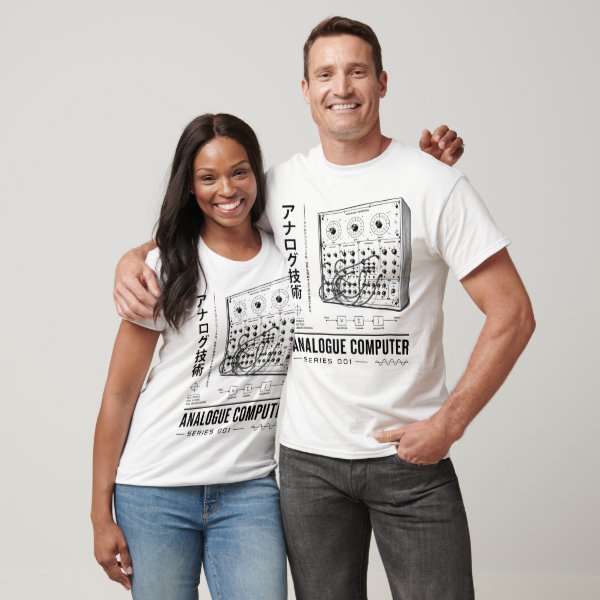
It also explains why analogue computing aesthetics still resonate today, including pieces like the Analogue Computer T-Shirt: Series 001 Design. These systems expose their reasoning process instead of hiding it behind sealed screens and processors.
5. It Could Play Strategy Games
Some of the most ambitious GENIAC projects were the game-playing machines. The manual included circuits for Nim and tit-tat-toe.
Again, the hardware was simple. The conceptual leap was not.
The machine could respond to a player’s move according to predefined logical rules. That is an early form of algorithmic behaviour.
The article Why Early Computers Were Built Around Logic helps explain why this mattered historically. Early computing culture was obsessed not just with calculation, but with formal reasoning systems.
GENIAC distilled those ideas into something ordinary people could experiment with directly.
6. It Could Encode Secret Messages
The coding and decoding projects may have been the most entertaining circuits in the entire manual.
Users could build Caesar-style cipher systems that transformed ordinary text into secret messages using switch arrangements and letter substitutions.
The project felt playful, but it quietly introduced readers to genuine computational concepts: symbolic transformation, mapping systems, and structured translation rules.
The article How GENIAC Sparked the Electric Brain Revolution captures this tension well. The marketing language surrounding “electric brains” was often exaggerated, but underneath the hype sat a serious attempt to familiarise the public with machine reasoning.
More Than a Toy
The GENIAC was not a true electronic brain. Its marketing regularly overstated what the machine could actually do.
But dismissing it as merely a toy misses the larger point.
GENIAC helped ordinary people understand that logic could be mechanised, that reasoning could be structured, and that machines could follow rules in surprisingly human-looking ways.
For a box of switches, bulbs, and cardboard panels, that is a surprisingly large legacy.
For a broader introduction to the system itself, What Is GENIAC? remains the best starting point before exploring the deeper project manuals and circuit designs.
Featured Product
Analogue Computer Series 001 T-Shirt
The phrase “reason in syllogisms” belonged to a time when computing was visible, tactile, and mechanical. The Analogue Systems 01 retrocomputing themed t-shirt celebrates that era of electric brains, logic circuits, switches, and learning machines, when reasoning could be traced through wires and confirmed by the glow of a lamp.
Disclosure: this is a commercial product link to an external Zazzle store associated with philreichert.org. Purchases are handled by Zazzle.
Writer's Notes
What stayed with me while working on this article was how casually the GENIAC manual moved between household wiring, space-age fantasy, logic puzzles, and machine reasoning as though these were all part of the same conversation. There is something slightly disorienting about seeing a cardboard hobby kit used to explain burglar alarms, game strategy, symbolic logic, and cryptography in one sitting. Modern computing culture often hides its internal processes behind polished interfaces, but GENIAC exposed the machinery completely. You could follow the reasoning path with your eyes. That physical transparency gives these old systems an honesty I find deeply appealing. The article works best when it lets that tension remain visible: toy on the surface, computational worldview underneath.
Glossary
- Electric Brain
- A mid-century phrase for a machine that appeared to calculate, decide, or reason. In this article, it captures the GENIAC’s marketing promise and its awkward charm: a simple kit trying to make machine thinking feel visible and exciting.
- Machine Logic
- The use of structured rules so a machine responds predictably to inputs. The article uses it to explain how GENIAC turned switches and circuits into small demonstrations of decision-making.
- Conditional Logic
- Logic based on “if this, then that” relationships. In the GENIAC projects, a door opening, a pressure condition, or a switch setting could trigger a light, making abstract reasoning feel physical.
- Binary Translator
- A circuit that converts numbers between ordinary decimal notation and binary notation using only two states. In the article, it shows how GENIAC made the hidden language of computers readable through bulbs and switches.
- Symbolic Transformation
- The process of changing one symbol into another according to a rule. GENIAC’s secret code projects used this idea when letters were substituted through wiring, turning playful ciphers into a lesson in computation.
- Algorithmic Behaviour
- Behaviour that follows a fixed set of steps or rules. The article applies this to GENIAC’s game-playing circuits, where the machine did not understand the game but could still respond according to a designed strategy.
Frequently asked questions
Was the GENIAC computer kit really a toy?
The GENIAC was sold as an educational hobby kit, but it was more than a simple toy. It used switches, wires, bulbs, and circuits to demonstrate logic, arithmetic, coding, game strategy, and machine reasoning in a hands-on way.
What could the GENIAC computer kit actually do?
The GENIAC could be wired into many small logic machines, including burglar alarms, spaceship airlock models, arithmetic machines, logic puzzle solvers, game-playing circuits, and secret code systems.
Why were GENIAC’s uses surprising?
GENIAC’s uses were surprising because a simple 1950s kit of switches, bulbs, wires, and cardboard panels could model ideas that now seem central to computing, including conditional logic, symbolic transformation, binary arithmetic, and algorithmic behaviour.
Why does the GENIAC kit still matter today?
The GENIAC still matters because it made machine logic visible and physical. It showed ordinary users that reasoning could be structured, wired, tested, and understood long before personal computers became common.
Related articles…


Source Note
This article draws on GENIAC manual and advertising material from the 1950s, especially the way those sources described reasoning, circuits, switches, and “electric brain” learning. The aim is interpretive rather than academic: to explain how mid-century learners were invited to understand machine logic through visible parts and practical experiments.
Disclosure
This page presents a curated exploration of the GENIAC analogue computer kit and its associated materials. Content reflects the author’s interpretation of historical sources, including instructional manuals, advertisements, and related artefacts. The GENIAC system is discussed as an educational and conceptual model for understanding logic, circuits, and early computing ideas, rather than as a complete or authoritative account of computing history. References to “thinking machines” and reasoning systems follow the language and framing of the original material and are included for historical context. Readers seeking formal technical, historical, or academic treatment of computing should consult primary literature, scholarly sources, and specialist texts.