How the GENIAC Analogue Computer Kit Was Marketed to Learners
◆ Revised
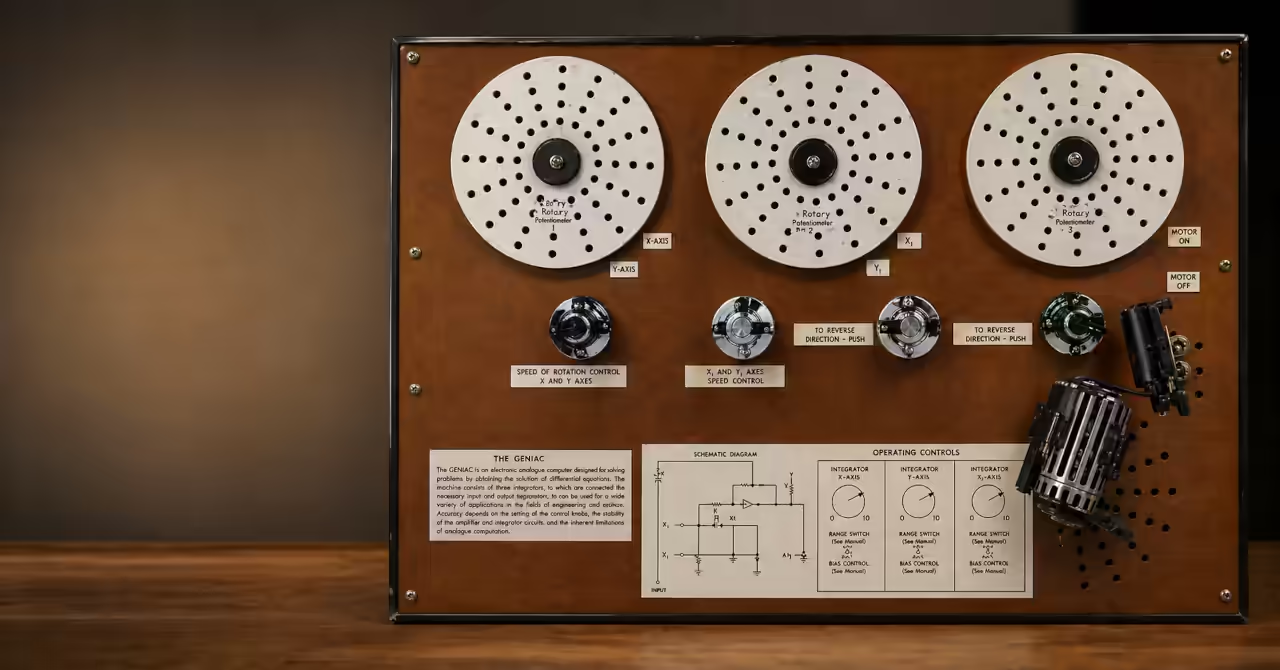
A Challenge Framed as a Question
The advertisement does not begin with a specification. It begins with a provocation. Can you think faster than this machine? That question places the reader in direct competition with the device, not as an engineer, but as a mind.
In the context of a 1956 science magazine, this is not casual marketing. It reflects a moment when the idea of machines performing reasoning tasks was still novel, even unsettling. The GENIAC is not presented as a calculator. It is framed as an electric brain, a term that deliberately blurs the boundary between mechanism and thought.
The advertisement reinforces this directly in its wording. Phrases such as “solve problems faster than you can express them” and “electric brain” are not technical descriptions. They are rhetorical devices designed to elevate a simple circuit kit into something that appears to compete with human reasoning.
This language does two things at once. It simplifies the machine into an accessible object, and it expands its perceived capability. The result is a learning tool that feels powerful before it is even assembled.
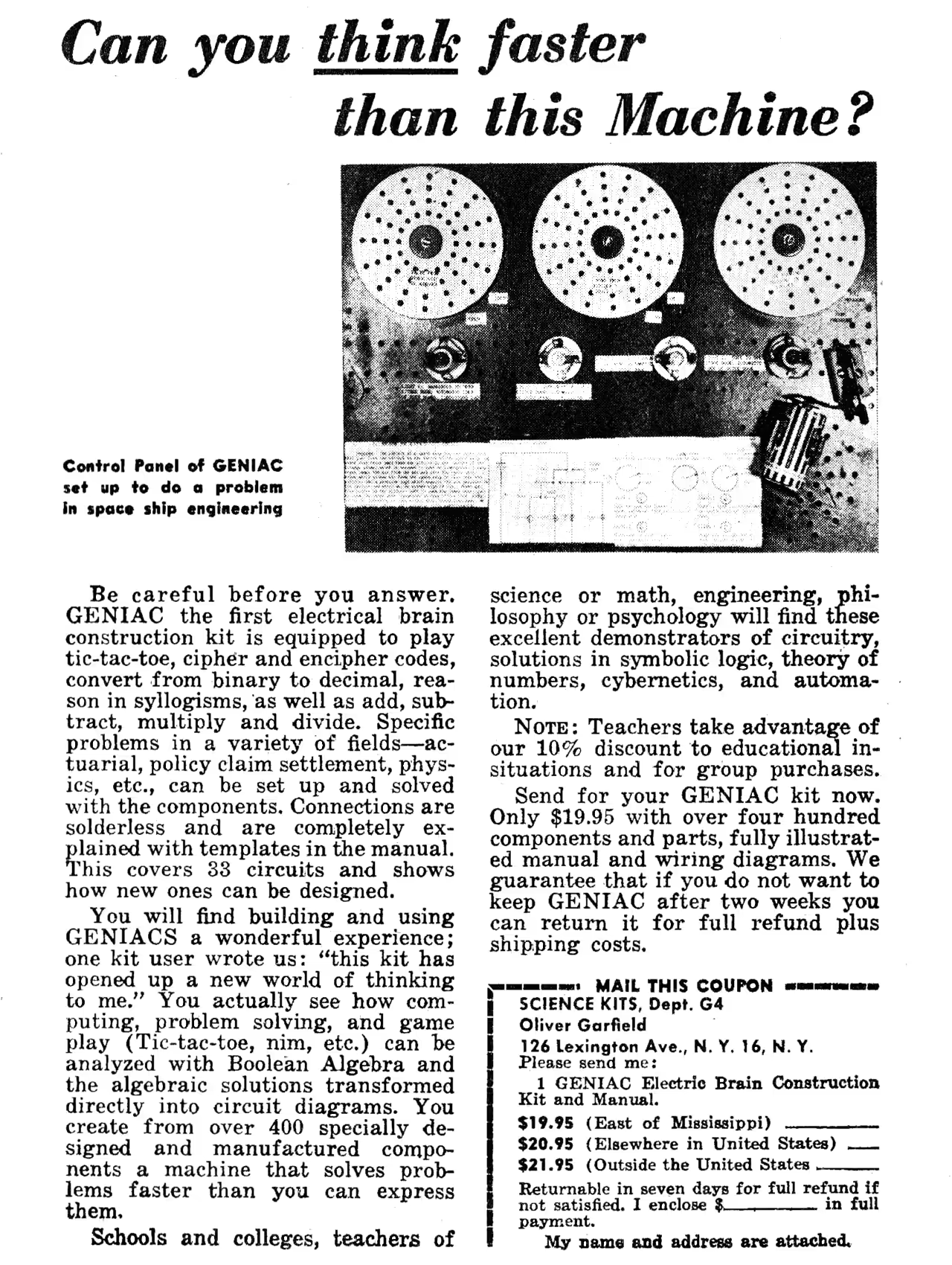
This advertisement appeared in Galaxy Magazine[1], a publication known for speculative science and forward-looking engineering ideas, where concepts like automation and thinking machines were actively explored in both fiction and technical discussion.
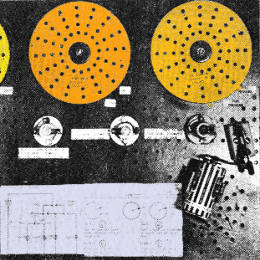
The advertisement itself reinforces this framing through its layout. The circular control discs, labelled axes, and visible outputs are presented not as decoration, but as proof that reasoning can be arranged, tested, and observed directly.
The Machine as a Learning Surface
The panel shown in the advertisement is deceptively simple.
- circular switch discs
- labelled positions
- visible wiring logic
- lights and outputs
There is no hidden computation. The reasoning is externalised. This is the key idea:
The GENIAC does not conceal thinking. It displays it as structure.
Each rotation of a disc alters a condition. Each connection represents a rule. When an output activates, it is not a result produced invisibly inside the machine, but a conclusion physically realised.
Faster Than a Human?
The claim that the machine can “solve problems faster than you can express them” is not about raw speed in the modern sense. It is about decision latency.
A human must:
- interpret the problem
- hold intermediate states
- apply rules step by step
The GENIAC, once wired, does not reason sequentially. It evaluates conditions through the structure of its circuit. This makes the machine feel faster not because it moves quickly, but because it does not need to think in steps. Its answer is already latent in the wiring.
Space Travel and the Problem of Timing
This advertisement was found in a Galaxy Magazine[1] that is read by people interested in speculative science. The caption situates the panel within space ship engineering. That is not incidental. By the late 1950s, astronautics introduced problems that strained human intuition:
- timing airlock sequences
- managing pressure and safety interlocks
- coordinating multiple dependent conditions
- preventing catastrophic combinations of states
These are not merely problems of arithmetic. They are problems of logic under constraint.
The space engineering reference in the advertisement should be read in this context. Appearing in Galaxy Magazine, a publication steeped in speculative science, the advert borrows the language of rockets and control systems to frame its relevance. This is less a literal claim and more a positioning strategy.
By aligning a learning kit with imagined future systems, the advertisement gives simple circuit logic a sense of consequence. The learner is not just building a device. They are participating in the kind of reasoning associated with advanced engineering, even if only in miniature form.
A system like GENIAC could model rules such as:
- if pressure is low and the outer door is closed → allow the inner door
- if fuel is low or temperature is high → shut the system down
Such conditions must be resolved instantly and reliably. In science-fictional spaceflight, the romance is the rocket. The engineering is the interlock. A delay or error is not academic; it is structural failure.
The Early Language of Cybernetics
During this period, figures such as Norbert Wiener had already formalised the idea that control and communication could be expressed through systems of feedback, influencing both engineering and public imagination.
The advertisement’s text references:
- symbolic logic
- theory of numbers
- cybernetics
- automation
This places GENIAC within a broader intellectual movement. During this period, thinkers were exploring whether systems could regulate themselves through feedback and logic.
Systems could regulate themselves through feedback and logic.
In that framing, GENIAC becomes more than a kit. It becomes a demonstrator of control systems: a way to see how decisions can be encoded into circuits.
From Hand-Set Logic to Running Systems
What makes the panel compelling is that it sits at a threshold:
- The user sets the variables manually
- The machine resolves the outcome automatically.
It is not autonomous, but it is no longer passive. This creates a transitional form of computation: human-defined, machine-executed logic.
From there, the next imaginative step is obvious. Automate the inputs. Drive the discs with gears, cams, or motors. Let the machine scan a range of conditions and reveal where the answer changes. At that point, the headline shifts from challenge to prediction.
The Advertisement as Artefact
Seen today, the advertisement captures a precise moment:
- before software abstraction
- before digital dominance
- when computation could still be handled, turned, and observed
The GENIAC does not hide its reasoning. It invites inspection. It assumes the user will not only operate the machine, but understand it. That assumption may be its most striking feature.
What Kind of Thinking Is Being Compared?
The question remains effective because it is still open. Not simply whether a machine can think faster, but what kind of thinking is being compared. The GENIAC does not replace human thought. It transforms one category of thought, structured rule-based reasoning, into something immediate and physical. Once that transformation occurs, speed is no longer the defining advantage. Clarity is.
That same visual language of circuits and control has carried forward into modern interpretations, including design and media inspired by analogue systems.
Within the GENIAC series, this advertisement marks the entry point. It presents the question. The surrounding articles show how that question becomes method, system, and design. Together, they form a complete model of how early computing was introduced to the public.
Featured Product
Analogue Computer Series 001 T-Shirt
Inspired by early analogue computing kits and circuit logic, this design translates the GENIAC concept into a wearable form. Part of the Analogue Computer Series
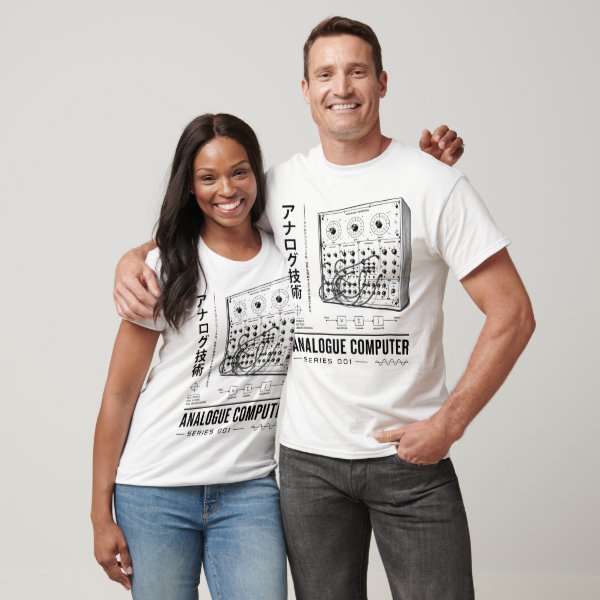
Exhibit Notes
This advertisement works because it does not merely sell a kit. It invites the reader into a contest with a machine. The question is theatrical, but the mechanism behind it is practical: switches, circuits, and visible outcomes arranged so that reasoning can be handled.
What interests me most is the shift from mystery to method. GENIAC uses the language of the “electric brain”, but then opens the box and shows how the effect is made. The learner is not asked to believe in machine intelligence. They are asked to build a small working version of it.
The space engineering reference is interpreted here through the context of Galaxy Magazine, where speculative science and future technologies formed the backdrop for many articles and advertisements. While the advert itself gestures toward space applications, the stronger reading is that it borrows the language of that environment to make logical systems feel immediate and consequential.
That framing matters. It shows how early computing ideas were not introduced as abstract theory, but as something connected to real and imagined systems. GENIAC sits in that space between explanation and possibility, where learning becomes a form of participation in a future that is still being defined.
Reader Guide
The following material expands on the terminology, historical context, technical concepts, and related reading connected to this article.
Journey Map - GENIAC Analogue Computer Kit
This article sits within the GENIAC Analogue Computer Kit topic cluster. The sequence below moves from discovery and explanation through historical advertising culture and into broader reflections on computing, learning and the changing relationship between humans and machines.
Reading context: This journey combines historical reconstruction, vintage advertising, analogue computing concepts and reflective essays about digital culture. Most readers will move through the sequence gradually rather than in a single sitting. The complete journey takes approximately 45–90 minutes.
- Foundations and Discovery
- Remember a Kit Computer from the 1950s?
- What Is the GENIAC Computer?
- Why Was the GENIAC Computer Created?
- Advertising, Imagination and Electric Brains
- How the GENIAC Computer Was Marketed to Learners
- The GENIAC “Electronic Brain” Explained
- Was GENIAC a Computer or a Toy?
- Reflections on Computing Culture
- Why GENIAC Still Matters
- Why Did We Stop Teaching This?
- The Decline of Hobbyist Computing Culture
Glossary
- Cybernetics
- A mid-20th-century field concerned with control, communication, and feedback in machines and living systems, often used to describe how devices could regulate behaviour through logical circuits.
- Speculative Science
- A style of scientific thinking common in 1950s magazines that explored future technologies, such as space travel and thinking machines, blending real engineering ideas with imaginative possibilities.
- Electric Brain
- A popular term used in advertising to describe machines like GENIAC that could appear to reason or make decisions through electrical circuits.
- Analogue Logic
- A form of reasoning implemented through physical electrical connections, where outcomes are determined by circuit structure rather than stored instructions or digital code.
- Decision Latency
- The time it takes to reach a conclusion, used in the article to contrast step-by-step human reasoning with the immediate resolution of conditions in a wired circuit.
Frequently asked questions
Why did the GENIAC advertisement ask whether a machine could think faster than a person?
The question turned the advertisement into a challenge. It suggested that a wired circuit could resolve logical conditions immediately, rather than requiring a person to work through each step in sequence.
Was GENIAC really an analogue computer?
GENIAC was a hands on electric brain kit that used switches, wires, and lamps to model reasoning and calculation. It was not a stored program computer, but it demonstrated how logic could be physically arranged and observed.
Why does the article connect GENIAC with space travel?
The advertisement appeared in a science fiction magazine where readers were already thinking about rockets and automation. Space travel provides a clear example of logic under constraint, such as airlocks, pressure checks, and safety interlocks that must work reliably.
How was GENIAC marketed to learners?
GENIAC was presented as a kit that allowed learners to build and observe reasoning machines directly. The advertisement framed learning as active participation, inviting the reader to wire circuits, set conditions, and see outcomes appear physically.
Connected Threads
- GENIAC Kit Parts List and Modern Rebuild Guide – Used to explain why the parts were deliberately simple, affordable, and accessible.
- Why Early Computers Reasoned in Syllogisms - Before AI became conversational, machines were presented as systems that could reason through visible logic. This article traces the phrase “reason in syllogisms” back to GENIAC, electric brain culture, and the moment when thought seemed to glow through a lamp.
Related articles…
References
- Galaxy Magazine, March 1956, page 5 (retrieved 2026-04-27)
Disclosure
This page presents a curated exploration of the GENIAC analogue computer kit and its associated materials. Content reflects the author’s interpretation of historical sources, including instructional manuals, advertisements, and related artefacts. The GENIAC system is discussed as an educational and conceptual model for understanding logic, circuits, and early computing ideas, rather than as a complete or authoritative account of computing history. References to “thinking machines” and reasoning systems follow the language and framing of the original material and are included for historical context. Readers seeking formal technical, historical, or academic treatment of computing should consult primary literature, scholarly sources, and specialist texts.