Can a Machine Really Reason in Syllogisms?

The Strange Promise Behind “Thinking Machines”
“Reason in syllogisms” is not a phrase most people expect to find in a vintage advertisement. Yet there it was in the 1950s, printed beside glowing lamps, rotary switches, and homemade “electric brain” kits.
To a modern reader, the claim feels almost impossible. How could a small educational machine made from cardboard panels, wires, and batteries possibly reason?
The answer is stranger, and more interesting, than it first appears.
The people behind these machines were not claiming that a kit like GENIAC possessed human thought. They were exploring something narrower and, in some ways, more astonishing. They were asking whether parts of reasoning itself could be turned into physical systems.
A syllogism is a structured form of logic. If all A are B, and all B are C, then all A are C. The machine does not need to understand dogs, pilots, or philosophy. It only needs to preserve the relationship correctly.
That idea changed the tone of early computing culture. Logic stopped being something trapped in books and classrooms. Suddenly it could glow through a lamp.
That is the moment the GENIAC still captures so well. It takes an invisible mental process and places it on a workbench where anybody can touch it.
When Reasoning Became Something Physical
The GENIAC reasoning machine worked because logical relationships were built directly into electrical pathways. A switch represented a statement. A wire represented a permitted connection. A lamp represented a conclusion.
It sounds simple now, but the effect must have felt extraordinary at the time.
A user could select two logical premises using rotary switches. If the selected relationship produced a valid conclusion, the circuit completed and the lamp illuminated. If the logic did not hold, the pathway remained broken.
That meant reasoning became observable.
Not metaphorically. Literally.
You could watch logic succeed or fail in real time.
One switch position might represent “all fighter pilots are bomber pilots.” Another could represent “all bomber pilots are jet pilots.” If those premises formed a valid chain, the corresponding conclusion lamp would glow.
The machine was not thinking about aircraft. It was preserving structure.
That distinction matters because it explains both the power and the limitation of the GENIAC. The reasoning did not emerge spontaneously. It existed in the arrangement itself. The logic had already been embedded into the system before the user touched the controls.
Even so, there is something deeply compelling about seeing abstract reasoning reduced to switches and contacts. “A thought became a circuit” is not a bad summary of the entire electric brain era.
The more you sit with that idea, the more modern it begins to feel.
The Quiet Genius of the GENIAC Kit
The GENIAC was not important because it pretended to be alive. It was important because it exposed the structure underneath logical behaviour.
Modern computers usually hide their processes behind screens and software layers. The GENIAC did the opposite. It placed the mechanism directly in front of the user. You could trace the wires. You could inspect the pathways. If the answer appeared, you could physically follow why.
That transparency gave the kit unusual educational power.
A syllogism on paper can feel dry. A syllogism that lights a bulb feels different. It becomes an event. The user chooses premises, turns switches, and waits for the machine to reveal whether the relationship holds.
For many people, that would have been the first time logic felt tangible.
This is why the GENIAC Project List: Building Thinking Machines and Circuits remains such an effective companion resource. The projects gradually move readers from simple electrical behaviour into systems that calculate, compare, encode information, and reason formally.
The progression matters because the GENIAC was designed less as a toy and more as a ladder into computational thinking.
And once you recognise that, another question naturally appears.
What the Machine Could Never Understand
The advertisements often leaned heavily on phrases like “electric brain.” That language carried excitement, theatre, and a touch of science fiction. It encouraged readers to imagine that intelligence itself might soon become mechanical.
But the machine’s real achievement was narrower than human thought.
A GENIAC could follow formal logic without understanding meaning. It did not know what a pilot was. It did not know whether a statement was wise, ethical, or true in the real world. It simply preserved relationships inside a controlled structure.
That limitation is not disappointing. It is clarifying.
It reminds us that reasoning and understanding are not automatically the same thing.
That distinction feels remarkably current now. Modern AI systems can produce fluent answers and convincing explanations, yet people still ask a familiar question: is the system genuinely reasoning, or is it producing patterns that resemble reasoning?
The GENIAC offers a surprisingly useful lens here because its boundaries are visible. Nothing is hidden behind abstraction. You can see where the logic begins and where it ends.
“The machine could follow a rule without knowing a thing.” That single observation links the electric brain era to many present-day conversations about AI.
The historical language behind this shift is explored more deeply in Why Early Computers Reasoned in Syllogisms, which traces how visible logic became part of early computing culture and public imagination.
Why the Old Machine Still Feels Alive
The GENIAC does not feel modern because it predicted smartphones or conversational AI. It feels modern because it exposed a question that still has no simple answer.
What exactly does it mean for a machine to reason?
The little kit approached that question in the clearest way possible. It reduced reasoning to relationships, pathways, and outcomes. It invited ordinary people to experiment with formal logic using their own hands.
That invitation still has power.
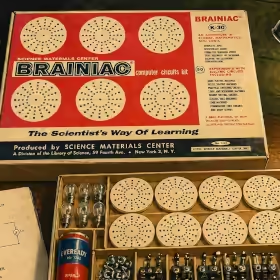
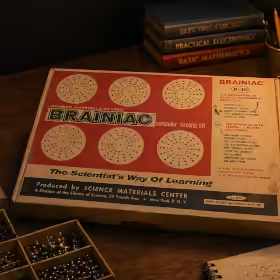
There is also something emotionally striking about the aesthetics of the machine itself. Rotary selectors. Labelled bulbs. Masonite panels. Wires crossing like railway lines. The GENIAC belonged to a moment when the future looked physical.
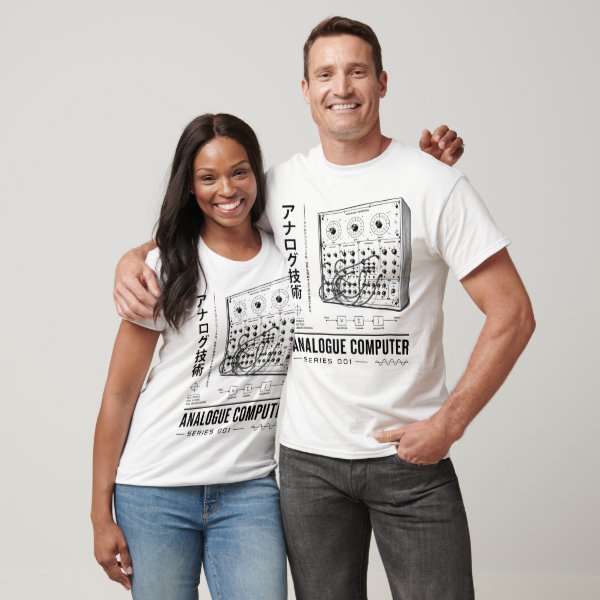
Even now, the visual language of retro computing continues to resonate. The Analogue Systems 01 retro computing themed t-shirt quietly draws from that same world of visible circuitry and electric brain culture. It works best not as merchandise first, but as a continuation of the atmosphere surrounding these machines.
Because in the end, the fascination is not only technical. It is cultural. The GENIAC represents a period when people believed reasoning itself might soon become something you could build at home.
The Lamp, the Logic, and the Lasting Question
So, can a machine really reason in syllogisms?
In the formal sense, yes. A machine can preserve logical relationships and produce valid conclusions from prepared premises. The GENIAC demonstrated that clearly, visibly, and elegantly.
But the larger question never disappeared.
What separates logic from understanding? What separates structure from meaning? What separates a convincing answer from genuine comprehension?
The GENIAC does not fully answer those questions. That is part of why it remains so compelling.
Instead, it places the problem directly in front of the reader. A battery. A switch. A glowing bulb. And somewhere inside that simple arrangement sits the beginning of a conversation that still surrounds modern AI.
Continue with Why Early Computers Reasoned in Syllogisms to follow the historical language of machine reasoning, then explore the GENIAC project list to see how these ideas became working circuits. For the broader connected journey, the GENIAC Journal gathers the wider story of how logic once glowed through a lamp.
Featured Product
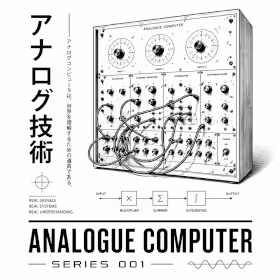
Analogue Computer Series 001 T-Shirt
The phrase “reason in syllogisms” belonged to a time when computing was visible, tactile, and mechanical. The Analogue Systems 01 retrocomputing themed t-shirt celebrates that era of electric brains, logic circuits, switches, and learning machines, when reasoning could be traced through wires and confirmed by the glow of a lamp.
Disclosure: this is a commercial product link to an external Zazzle store associated with philreichert.org. Purchases are handled by Zazzle.
Writer's Notes
What intrigued me most about this article was the way the logic of logic itself seemed to take hold of 1950s and 1960s thinking. It was not just that machines were becoming faster or more useful. It was that people were beginning to see reasoning as something that could be structured, modelled, tested, and eventually built into systems.
That was a genuine breakthrough in thought. Once logic could be treated as a system, it began guiding more than computers. It shaped engineering, management, decision-making, automation, software, and eventually the way we now talk about artificial intelligence. Much of modern life still carries that assumption: if a process can be defined clearly enough, perhaps it can be represented, improved, or automated.
The GENIAC analogue computer kit is fascinating because it brings that huge intellectual shift back down to the workbench. You do not need a data centre or a modern AI model to experience the idea. With switches, wires, and lamps, GENIAC can still give a solid learning experience in logic today. That is its quiet magic. It shows that a breakthrough does not always need to be hidden inside advanced technology. Sometimes it can glow through a small bulb.
Glossary
- Syllogism
- A formal pattern of logical reasoning where two statements lead to a conclusion. In this article, syllogisms are the core idea behind how GENIAC simulated reasoning. What feels surprising is that a process once taught in philosophy classrooms could be demonstrated with switches and light bulbs.
- Electric Brain
- A popular mid-century term for machines that appeared to think or reason. The article uses it to describe the cultural excitement surrounding early computing kits like GENIAC. The phrase carried a sense of wonder at a time when electricity itself still felt futuristic to many households.
- Formal Logic
- A system of reasoning based on defined rules and structures rather than emotion or intuition. In the article, GENIAC uses formal logic to produce valid conclusions from selected premises. The fascination comes from seeing abstract reasoning reduced to physical pathways you can trace by hand.
- Premise
- A starting statement used in an argument or logical process. The GENIAC machine allowed users to choose premises using switches, which then determined whether a conclusion lamp would light. A premise is like the first rail laid down before the rest of the logical track can be followed.
- Circuit
- A complete electrical pathway through which current flows. In this article, circuits are not only electrical systems but representations of logical relationships. The remarkable part is that a glowing lamp could stand in for a successful chain of reasoning.
- Analogue Computing
- A style of computing that represents relationships physically or electrically rather than through digital code alone. The GENIAC belongs to this broader tradition. It reminds readers that early computing was often tactile, visual, and mechanical rather than hidden behind screens.
- Logic Pathway
- A structured route through which a logical relationship is preserved or tested. In the article, wires and switch positions create these pathways inside the GENIAC. The idea feels almost poetic because thought itself appears to travel like electricity through a machine.
- Artificial Intelligence
- Computer systems designed to perform tasks associated with human reasoning, language, or decision making. The article compares modern AI questions with the much simpler logical behaviour of the GENIAC. The connection is not that the old kit was intelligent, but that it made people ask what machine reasoning really means.
Frequently asked questions
Can a machine really reason in syllogisms?
Yes, in a formal and limited sense. A machine like the GENIAC could be wired so that selected premises led to valid logical conclusions, shown by a glowing lamp. It did not understand meaning like a person, but it could preserve and demonstrate logical structure.
What does “reason in syllogisms” mean?
To reason in syllogisms means to use a structured form of logic where two statements lead to a conclusion. For example, if all A are B, and all B are C, then all A are C. The article explains how this kind of reasoning could be represented physically with switches, wires, and lamps.
Was the GENIAC a real thinking machine?
The GENIAC was not a thinking machine in the human sense. It did not understand, judge, or interpret the world. Its value was that it made formal logic visible, letting users build circuits that behaved according to prepared reasoning rules.
Why is the GENIAC still relevant to modern AI discussions?
The GENIAC is relevant because it helps separate reasoning, structure, and understanding. Modern AI can produce fluent language, but people still ask whether it is genuinely reasoning. GENIAC provides a clear historical example of machine reasoning that was formal, visible, and inspectable.
Related articles…
Source Note
This article draws on GENIAC manual and advertising material from the 1950s, especially the way those sources described reasoning, circuits, switches, and “electric brain” learning. The aim is interpretive rather than academic: to explain how mid-century learners were invited to understand machine logic through visible parts and practical experiments.
Disclosure
This page presents a curated exploration of the GENIAC analogue computer kit and its associated materials. Content reflects the author’s interpretation of historical sources, including instructional manuals, advertisements, and related artefacts. The GENIAC system is discussed as an educational and conceptual model for understanding logic, circuits, and early computing ideas, rather than as a complete or authoritative account of computing history. References to “thinking machines” and reasoning systems follow the language and framing of the original material and are included for historical context. Readers seeking formal technical, historical, or academic treatment of computing should consult primary literature, scholarly sources, and specialist texts.