880 Gamer Issue 8: Amiga Games, Demos and Cover Disk (2015)
◆ Revised
Introduction
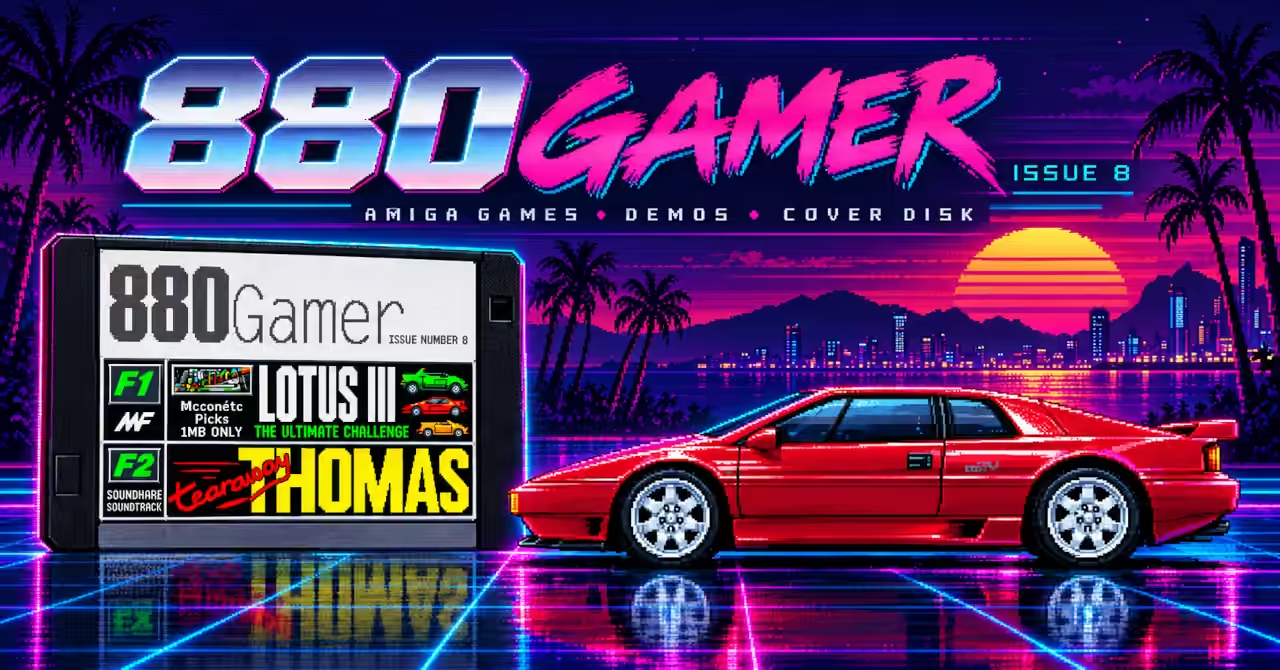
A magazine and a floppy disk make a wonderfully familiar pairing for an Amiga enthusiast. 880 Gamer carries that tradition into a later generation of independent publishing, bringing together game reviews, demoscene discoveries and a companion cover disk. Issue 8, dated December 2015, offers plenty to explore, from the Cartoon Classics Amiga 500+ package to Lotus racing, Star Wars and the stranger corners of the Amiga games library.
I first published this page in August 2016. More than a decade later, the original download location has disappeared, but an archived copy gives us another opportunity to revisit the magazine. It also makes this issue a small example of why keeping track of independent Amiga publications matters: the enthusiasm can outlast the website that originally housed it.
Download 880 Gamer Issue 8
The original issue was distributed as a ZIP archive containing the magazine and its companion cover-disk material. The link below points to a copy preserved by the Internet Archive’s Wayback Machine.
Download 880 Gamer Issue 8 and its companion cover disk — archived ZIP
The magazine is a PDF for reading on a modern computer, while the companion disk uses the Amiga Disk File (ADF) format. Reading the magazine and running the disk are separate activities; the disk material needs a suitable Amiga setup or compatible emulator.
A Magazine with a Floppy-Disk Spirit
Part of the pleasure of an Amiga magazine was having something to try after reading it. The cover disk turned a review or announcement into an invitation: load the software, experiment and form your own opinion. Issue 8 continues that relationship between the printed page and the computer, pairing its magazine with cover-disk material featuring Lotus III and Tearaway Thomas.
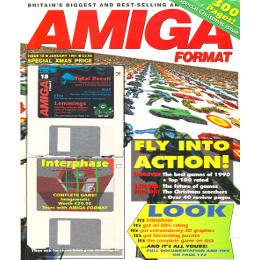
There is a useful distinction here: the magazine reviews Lotus Esprit Turbo Challenge, while the cover disk features Lotus III. The issue offers both a retrospective reading experience and a reason to return to the machine. For an earlier example of that magazine-and-disk partnership, take a look at Amiga Format issue 18, from January 1991.
Inside Issue 8
The contents range across games, creative software and demos. The Cartoon Classics package brings Lemmings, The Simpsons, Captain Planet and Deluxe Paint III into the same discussion: a reminder that an Amiga could be a games machine and a creative workstation on the same desk.
Features and Software
- Cover disk: Lotus III and Tearaway Thomas
- Pause screen: Shadow of the Beast
- Amiga 500+ Cartoon Classics package
- Deluxe Paint III
Game Coverage
- Lemmings
- The Simpsons
- Captain Planet
- Tearaway Thomas
- Belial
- Fears
- Lotus Esprit Turbo Challenge
- Star Wars
Demoscene Coverage
- Impassioned
- Iraq-Demo
- Vertigo
From Lotus Racing to Electronic Music
Editor Mark Stanner’s reflections on cars and electronic music give the issue a personal thread. Games and demos become starting points for interests that continue beyond the screen. That is an appealing quality in an enthusiast magazine: the selection tells us something about the person doing the selecting.
The Lotus coverage is also a good excuse to revisit the Amiga’s racing library. If it leaves you wanting another drive, Jaleco Big Run on the Amiga offers a different racing excursion. Its 1989 arcade counterpart provides another perspective on the journey from arcade cabinet to home computer.
Pictures Worth Pausing For
The Shadow of the Beast pause-screen feature invites a quieter kind of appreciation. Screenshots let us stop and examine the visual world of a game, with time to notice its colours, shapes and atmosphere. For a listening companion, my Shadow of the Beast soundtrack article explores the musical side of that world.
The demoscene reviews offer another route into the Amiga’s audiovisual character. A demo can be enjoyed as a short production in its own right, bringing code, graphics and music together. Readers interested in the wider relationship between the machine and its creative community can continue through my Commodore Amiga notebook on its history, software and culture.
Star Wars on the Amiga
The issue’s Star Wars coverage provides a connection to the arcade game and its distinctive combination of vector imagery, speech and music. Bringing a familiar cinema world into a playable cockpit was a considerable part of its appeal, and a home-computer conversion invites us to consider which parts of that experience survive the move.
I explore the arcade sound in more detail in The Audio of Star Wars: Digitized Speech and Stereo. For another branch of the story, Atari’s Empire Strikes Back conversion kit looks at how an existing arcade cabinet could be given a further life.
Keeping the Magazine Within Reach
Returning to this page after ten years brings the download link itself into the story. A small publication can remain interesting long after its original hosting arrangement has ended. An archived copy helps preserve the opportunity to read it, while a checked contents list and a little context help the next reader decide where to begin.
Similar discoveries and disappearing websites run through Lost Amiga Projects Worth Revisiting. There is still pleasure in following these trails, particularly when they lead to something we can read, hear or run again.
Continue Reading
For another selection from the same editor, visit 880 Gamer issue 7. To step further back into Amiga publishing, Australian Amiga Review from September 1995 offers a different moment in the machine’s history. You can find more publications in my selection of microcomputer magazines.
Writer's Notes
I first published this article in August 2016. There is considerable satisfaction in keeping it available more than a decade later: a recommendation made then can still help someone discover the magazine today. Maintaining the page means repairing links, checking details and preserving enough context for a new reader to understand what caught my attention. As original download sites disappear, that small act of continuity becomes increasingly useful.
The article has also gained new connections as this website has grown. What began as a single magazine recommendation now sits alongside explorations of Amiga history, racing games, arcade sound and digital preservation. Those later articles give this older page greater depth, while it records an earlier point in the same continuing curiosity. A decade of independent publishing builds a body of work that readers can enter from many directions and return to as their own interests develop.
Reader Guide
The following material expands on the terminology, historical context, technical concepts, and related reading connected to this article.
Glossary
Some of the terms used in this article have specialised, historical or technical meanings. This glossary provides additional context for selected terms and ideas.
- Cover disk
- A disk supplied with a computer magazine, typically containing game demos, utilities, creative software or other material discussed in its pages. Downloadable publications can continue this tradition by distributing a disk image alongside the magazine.
- Amiga Disk File (ADF)
- A disk-image format commonly used to store the contents of an Amiga floppy disk as a single file. Compatible emulators can mount an ADF as a virtual floppy disk; suitable tools can also write supported images back to physical disks. The format does not reproduce every form of original disk protection.
- Demoscene
- A computer-art community whose participants create real-time audiovisual productions called demos. These combine programming, graphics and music, often exploring the capabilities and limitations of particular computers. Unlike a game demo, a demoscene production is usually a self-contained creative work rather than a playable preview.
- Vector graphics
- Graphics described using lines, curves and coordinates rather than solely as a grid of coloured pixels. Atari’s Star Wars arcade game uses a vector display to draw its distinctive outlines directly. A home-computer conversion can reproduce a similar wireframe appearance on a conventional raster display.
- Emulator
- Software or hardware that reproduces the behaviour of another computer system so its programs can run. An Amiga emulator provides a virtual Amiga environment on a modern machine, allowing compatible games, demos and applications to operate with the appropriate system configuration and files.
Related articles…



Disclosure
This independently written article discusses 880 Gamer Issue 8 and its companion Amiga cover disk, drawing on the magazine, published sources and archival material. Digital research and writing tools, including large language model tools, assisted with the editorial update, and the hero image was remastered using generative AI. Phil Reichert reviews and edits the article. The magazine, game titles and original artwork remain the property of their respective rights holders. The download link points to an external archived copy; availability and completeness may vary. Any relevant commercial relationships or affiliate links are disclosed separately.