Empire Strikes Back: Atari’s Star Wars Conversion Kit (1984)
Introduction
In the arcade business of the early 1980s, success was not just about designing a good game. It was also about how long that game could keep earning. Atari’s original Star Wars arcade machine from 1983 had already established itself as one of the most memorable cabinets of its era, combining vector graphics, a flight yoke controller, digitised speech, and stereo sound into an experience that felt unusually cinematic for the time. When The Empire Strikes Back arrived as a follow-up, Atari did not simply ask operators to buy an entirely new machine. Instead, it promoted a conversion kit that allowed an existing Star Wars cabinet to be upgraded into the newer game.
That decision says a great deal about the economics of the arcade industry. Cabinet space was limited, budgets were tight, and operators constantly weighed earning power against purchase cost. A conversion kit offered a practical middle path. Rather than removing a proven machine and replacing it with a new one, an operator could refresh the experience, market a sequel, and keep the same hardware working on the floor. In that sense, Atari was not only selling a game. It was selling a business strategy.
The Original Atari Star Wars Machine
Released in 1983, Atari’s Star Wars arcade game quickly became one of the standout coin-operated machines of its period. It used colour vector graphics instead of the raster graphics that dominated many other cabinets of the era. This gave the game its crisp wireframe look, perfectly suited to spacecraft, laser fire, and the abstract geometry of the Death Star trench. The game was visually distinctive, but its appeal went beyond graphics alone.
The cabinet also delivered strong sensory impact through its sound and controls. Players gripped a yoke that reinforced the illusion of piloting an X-wing or snowspeeder, while digitised voice samples and stereo effects pushed the cabinet beyond the ordinary beeps and explosions still common in many arcades. The result was a machine that felt expensive, modern, and theatrical. It was exactly the sort of cabinet an operator wanted in a prominent position, because it attracted attention even before a coin was inserted.
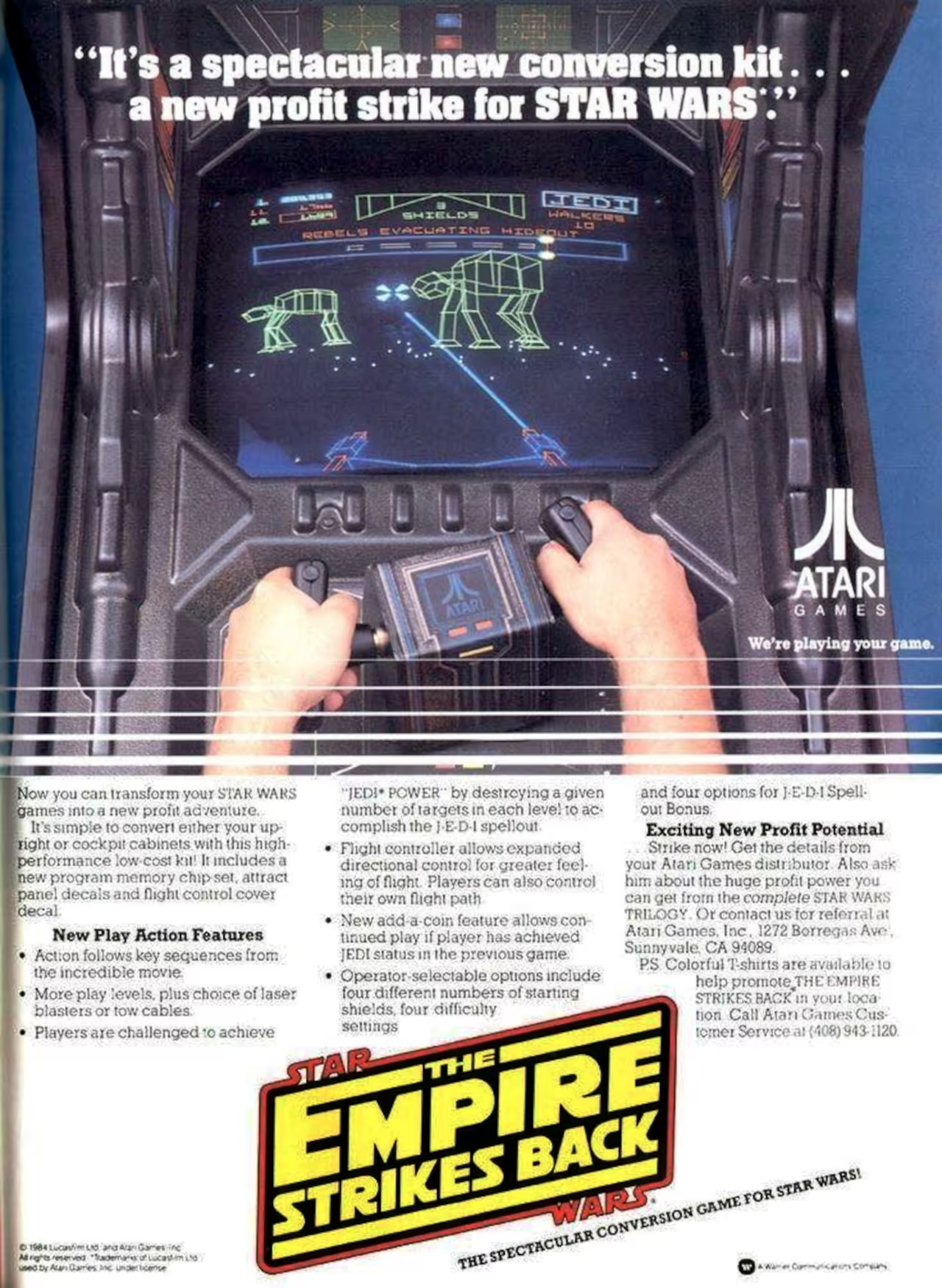
From the advertisement itself, we can clearly see Atari marketing a conversion kit to existing Star Wars cabinet owners using operator focused language about profit, upgrades, and continued earning power.
Enter The Empire Strikes Back
By the mid-1980s, the arcade industry had become intensely competitive. Operators wanted fresh attractions, but they also had to be selective. Floor space was finite, players were fickle, and a full new cabinet represented a serious investment. Atari’s answer was to build on the popularity of its existing Star Wars platform with The Empire Strikes Back, a sequel that reused the same broad technological foundation while delivering new scenes and stronger ties to the film series.
The shift in theme was significant. The original game focused heavily on the Death Star assault and X-wing combat, while The Empire Strikes Back broadened the action into the Hoth campaign and other recognisable moments associated with the second film. In practical terms, this meant Atari could offer something new without abandoning the strong identity of the first machine. For players, it was a sequel. For operators, it was a chance to extract more value from an existing asset.
What a Conversion Kit Meant
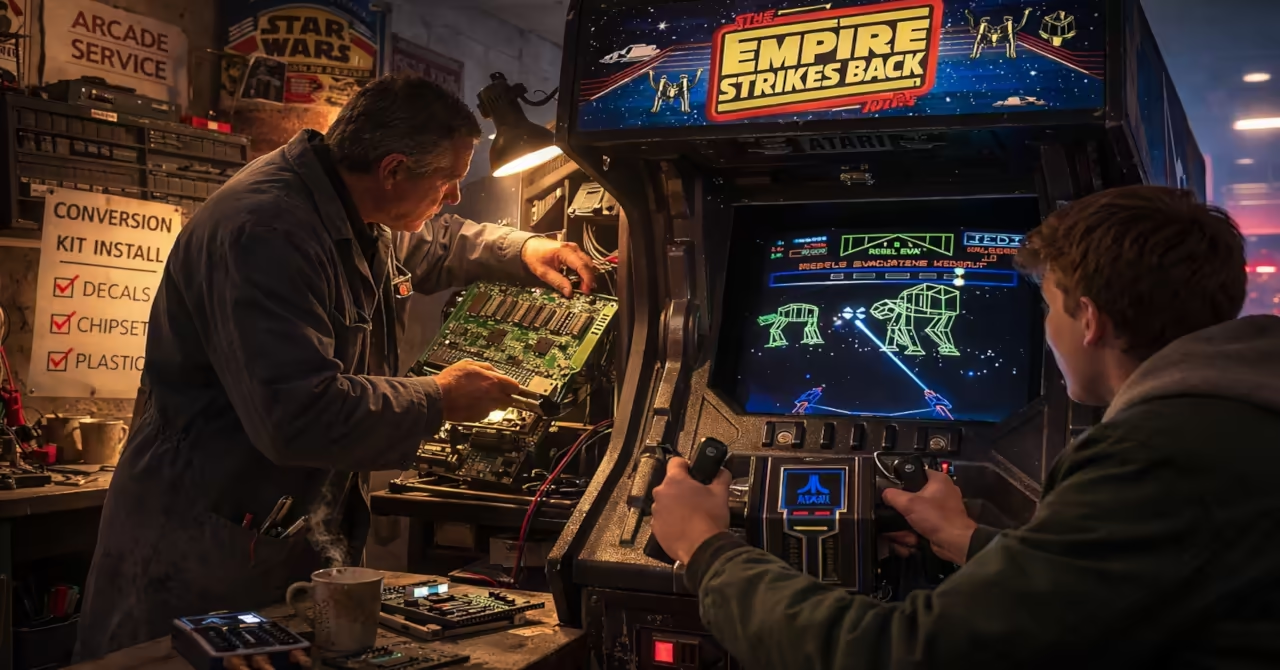
A conversion kit was one of the arcade industry’s most sensible inventions. Instead of purchasing a completely new cabinet with a new monitor, controls, wiring, and artwork, an operator could install a package of replacement parts designed to transform one game into another. In the case of Atari’s Empire Strikes Back conversion, the advertisement makes clear that the target was the existing Star Wars machine. This was not a vague universal upgrade. It was a direct continuation of a successful platform.
Such kits typically included replacement ROM chips containing the new game code, fresh control panel graphics or overlays, instruction cards, decals, and other artwork needed to present the cabinet as a new product on the arcade floor. The structure, monitor, and major hardware remained in place. This approach reduced cost, shortened installation time, and made it easier for an operator to keep pace with a market that rewarded novelty but punished waste.
Why Arcade Operators Liked Conversions
An arcade owner did not look at a machine in the same way a player did. A player saw spectacle, challenge, and the appeal of a familiar licence. An operator saw floor space, maintenance risk, and the number of coins that might reasonably be expected each week. A popular machine that was beginning to lose momentum posed a familiar problem. It might still function perfectly well, yet no longer command the same attention it once did. A conversion kit gave that machine a second life.
The advantages were straightforward. It was cheaper than buying a full new cabinet. It allowed the operator to market a fresh title tied to an already successful machine. It reduced freight and installation burdens. It also made practical use of cabinets that already occupied valuable floor positions. Most importantly, it gave owners the chance to respond quickly to trends. If a sequel or related title could be installed with less disruption, the risk of the upgrade was much easier to justify.
The Concerns Facing Operators
The advertisement’s language is revealing because it speaks directly to operator anxieties. Arcade owners worried about return on investment, how long a machine would remain profitable, whether a sequel would draw repeat play, and whether new expenditure would generate enough revenue to be worthwhile. A cabinet that looked impressive but failed to earn was an expensive ornament. On the other hand, a machine built around a known licence with proven hardware and a modest upgrade cost was far easier to trust.
Reliability was another important concern. Operators preferred hardware that their technicians already understood. A conversion based on an existing machine reduced uncertainty because much of the cabinet’s behaviour, maintenance pattern, and control layout was already familiar. There was comfort in not having to introduce an entirely new platform. In a business where downtime meant lost income, familiarity had real monetary value.
Trade Magazine Advertising and the Arcade Business Press
This advertisement also belongs to a wider world of industry publishing that is easy to forget now. Arcade operators did not rely on modern social media, video previews, or influencer coverage. They read trade magazines. Publications such as Replay, Play Meter, and similar American industry titles served as information channels for the coin-operated business. Manufacturers advertised directly to the people who ordered, installed, and maintained machines, not to the teenagers who lined up to play them.
That is why the wording of these advertisements often feels different from consumer marketing. They emphasise earnings, operator opportunity, proven licences, and profit potential. The aim was not simply to excite; it was to reassure. A game maker had to convince a buyer that the cabinet would justify its place on the floor. In that sense, these trade advertisements are valuable historical documents. They reveal how the business side of arcade culture understood itself.
The Language of Profit
The phrasing in Atari’s advertisement is unmistakably commercial. It promotes a “conversion kit” and presents the sequel as a “new profit strike” for Star Wars. That wording captures the real audience perfectly. This was not copy written to deepen lore or celebrate game design in abstract terms. It was aimed at decision-makers with budgets and invoices. Atari was effectively saying: you already own a successful platform, here is a practical way to make it earn again.
Even the slogan and layout work in service of that message. The cabinet is shown as a dramatic cockpit experience, but the text below quickly moves into selling points. New play features, selectable options, continued play, and the attraction of a new title all become part of the operator’s calculation. The ad understands that spectacle matters, but it frames spectacle as revenue. That balance between excitement and pragmatism is typical of arcade trade advertising at its best.
Extending the Life of a Hit
Seen from a modern perspective, the conversion kit represents a practical form of hardware reuse. Atari had already invested in the design of a memorable cabinet and a technically strong platform. Rather than abandoning that investment after a single title, it used a sequel to extend the commercial life of the machine. This was efficient, but it was also clever brand management. Players encountered something recognisable yet refreshed, while operators enjoyed the benefits of a sequel without carrying the full cost of a clean-sheet purchase.
This strategy also helps explain why certain arcade platforms lingered in public memory. A cabinet that could evolve had a better chance of remaining visible. Conversion kits could not solve every problem, and not every upgraded game succeeded, but the concept made sense in a market defined by turnover and trend cycles. In the case of Atari’s Star Wars line, it allowed the company to preserve the appeal of a technically impressive machine while keeping its place in the arcade conversation for longer.
Conclusion
Atari’s Empire Strikes Back conversion kit is a reminder that arcade history was shaped as much by business realities as by graphics, sound, and licensing. The original Star Wars machine had already proven that a cabinet could feel cinematic and technologically advanced. The sequel conversion showed how manufacturers and operators tried to turn that success into a longer commercial lifespan. Rather than replacing a strong machine outright, Atari offered a way to update it, refresh interest, and keep the hardware earning.
That makes the advertisement more than a period curiosity. It is a small window into the commercial logic of the arcade era: trade magazines speaking to operators, profit language wrapped around spectacle, and a sequel sold not just as entertainment but as an upgrade path. For players, The Empire Strikes Back was another trip into the Star Wars universe. For arcade owners, it was a calculated attempt to keep a proven machine alive in a fast-moving market.

Editorial
The first thing that caught my eye in this advertisement was the title itself. It was promoting The Empire Strikes Back arcade machine. That immediately resonated with me because I have already written a deep dive into the original Star Wars arcade system. That earlier article explored the hardware and especially the audio design of the 1983 machine. Seeing the sequel appear in a period advertisement made me curious about how Atari positioned the next chapter of the game.
The moment that really made the advertisement interesting was when I realised it was not aimed at players at all. This was clearly written for arcade operators in a trade journal. The language is commercial. The message is practical. Atari was speaking directly to the people who owned the machines and counted the coins at the end of the night. That perspective changes the way you read the page. It is not about cinematic excitement alone. It is about keeping a profitable cabinet earning money on the floor. I’m especially interested in how arcade systems were marketed, maintained, and sonically presented at cabinet level.
What surprised me most was the emphasis on the conversion kit. I have always known that conversion kits existed. My assumption was that they were used to revive older machines that had already reached the end of their popularity. This advertisement shows something quite different. Atari was offering operators a way to upgrade what was effectively last season's hit. The Star Wars machine was still impressive hardware. Instead of replacing it they were offering a kit that refreshed the experience.
The components shown in the advertisement also tell an interesting story. There are decals. There appears to be a motherboard chipset or ROM upgrade. There are plastic facade elements that change the presentation of the cabinet. All of that suggests the underlying machine remained the same. The hardware platform was strong enough to carry the sequel. The new content was largely a software update combined with visual rebranding. In modern terms it almost feels like an expansion pack delivered in physical form.
The final line in the advertisement sparked a bit of imagination as well. It mentions the possibility of having all three Star Wars films represented in arcade format. That idea immediately made me picture three cabinets standing side by side in an arcade. You could step up to the first machine and begin the journey. Then move across to the next cabinet and continue the story. It would be a trilogy experience played entirely in arcades.
Of course the fantasy ends with a practical thought. Each attempt would cost another coin. A full run through three machines might quickly empty a pocket full of change. That small moment of imagination captures something about the arcade era itself. These machines were exciting. They were theatrical. They invited you into the world of the films. And they also reminded you that every few minutes the machine expected another coin.
Glossary
- Arcade Cabinet
- A dedicated coin operated gaming machine housed in a large wooden or metal enclosure. Cabinets contain the monitor, controls, electronics, and artwork that present the arcade game to players.
- Cockpit Cabinet
- A seated arcade cabinet designed to immerse the player in the game. Atari’s Star Wars machine used a cockpit design with a flight yoke to simulate piloting a spacecraft.
- Conversion Kit
- A package of hardware and artwork used to transform an existing arcade cabinet into a different game. Kits often included ROM chips, decals, instruction cards, and control panel overlays.
- ROM Chip
- Read Only Memory chips that stored the game program. Installing new ROM chips allowed arcade operators to upgrade or convert a machine to run a different game without replacing the entire cabinet.
- PCB (Printed Circuit Board)
- The main electronic board that runs the arcade game. It contains the processor, memory, sound circuitry, and other components required for the machine to operate.
- Vector Graphics
- A graphics method that draws images using lines instead of pixels. Atari’s Star Wars arcade game used vector graphics to produce sharp wireframe spacecraft and laser effects.
- Yoke Controller
- A control device shaped like an aircraft control column. The Star Wars arcade machine used a yoke so players could steer their ship in a way that resembled real flight controls.
- Arcade Operator
- The business owner or company responsible for purchasing, installing, and maintaining arcade machines. Operators earned revenue from coins inserted by players.
- Trade Magazine
- An industry publication aimed at arcade owners and distributors rather than players. Manufacturers advertised new machines, conversion kits, and revenue opportunities in these magazines.
- Coin Op
- Short for coin operated. The term refers to machines that require coins or tokens to play, including arcade games, pinball machines, and other amusement devices.
Frequently asked questions
What is an arcade conversion kit and why were they used?
An arcade conversion kit was a package of hardware and artwork designed to transform an existing arcade cabinet into a different game. Operators used conversion kits because they were much cheaper than buying a new machine and allowed a successful cabinet to continue earning revenue with updated gameplay.
Did the Empire Strikes Back arcade game use the same hardware as Star Wars?
Yes. The Empire Strikes Back arcade conversion used the same Atari Star Wars vector graphics hardware. The upgrade mainly involved installing new ROM chips and replacing cabinet artwork while the monitor, controls, and core electronics remained the same.
Why did arcade operators prefer conversion kits instead of new machines?
Conversion kits reduced cost, installation time, and risk. Arcade operators could refresh a popular cabinet with a new title while keeping the same physical machine on the floor. This allowed them to extend the earning life of the cabinet without the expense of purchasing a completely new game.
What parts were included in a typical arcade conversion kit?
A typical arcade conversion kit included replacement ROM chips containing the game program, updated cabinet artwork or decals, a new control panel overlay, instruction cards, and sometimes additional circuit boards or wiring modifications needed to support the new game.