Jaleco Big Run rally game for the Commodore Amiga (1991)

Introduction
Jaleco's Big Run is best remembered as an arcade rally game inspired by the punishing Paris–Dakar competition. The Big Run arcade version placed the player behind the wheel of a powerful off-road racing car and sent them across deserts, rough tracks and improvised roads. Less commonly remembered is that Big Run was also converted for the Commodore Amiga, bringing a version of the arcade experience into the home.
This article takes a light look at the Amiga release through an original boxed copy of the game. It forms part of my wider Retrogaming Journal. Rather than attempting a detailed review of the software, the focus is on the physical package: its dramatic artwork, promotional language, instruction booklet, registration card and single floppy disk.
The original coin-operated game is discussed separately in Big Run: The Supreme 4WD Challenge arcade game.
The Arcade Rally Comes Home
Converting an arcade racing game to the Commodore Amiga was never a simple task. Dedicated arcade hardware could produce fast-moving roads, large vehicles and an impressive sensation of speed, while the Amiga version had to recreate that experience within the capabilities of a general-purpose home computer. Even so, the Amiga became home to many memorable arcade conversions, with Big Run joining a long list of coin-operated classics adapted for Commodore's 16-bit platform.
The retail package nevertheless presents the conversion with complete confidence. The box identifies the game as a Jaleco arcade hit and sells the Amiga release as a demanding rally challenge rather than a reduced imitation. Its description promises six stages based on the Paris-to-Dakar rally, with the player required to qualify for each stage through driving skill and determination.
The packaging dates from the early 1990s and carries the branding of Storm and The Sales Curve. The disk itself credits The Sales Curve and Jaleco, connecting the home-computer release directly to its arcade origins.
Front Cover Artwork
The front cover is dominated by movement and danger. A blue rally car appears to be plunging towards a rocky ravine while a red sports car powers across the desert above it. Dust, gravel and reflected light fill the composition, creating the impression that every competitor is only moments away from losing control.
The vertical Big Run title gives the box a distinctive identity, while the Storm and Jaleco logos frame it as both a home-computer release and an arcade conversion. A small Amiga label in the corner identifies the platform without disturbing the artwork.
It is an effective example of retail-box design from the period. The illustration does not attempt to show the game literally. Instead, it sells the idea of speed, danger and cross-country adventure before the buyer has seen the software running.
Back-of-the-Box Marketing
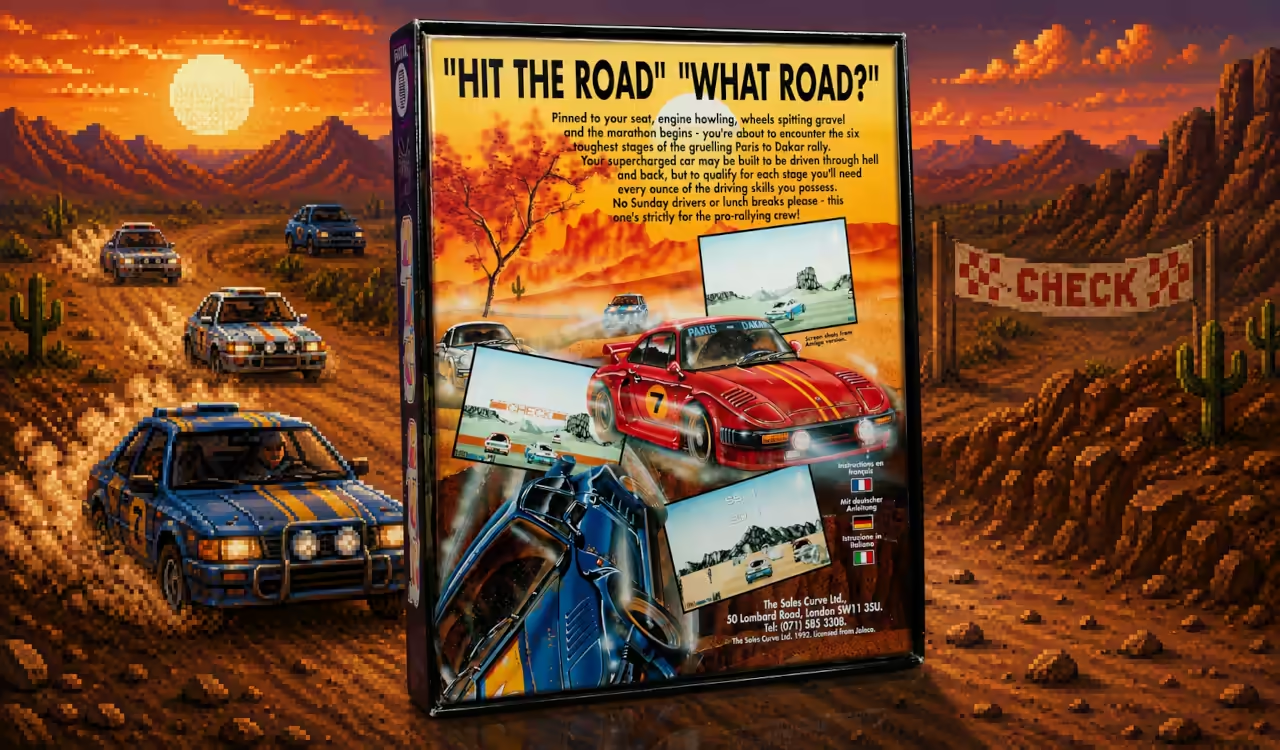
The back cover begins with the memorable line, “Hit the road” — “What road?” It immediately establishes the tone of the game: this is not intended to be an orderly circuit race.
The accompanying text describes howling engines, flying gravel and six difficult rally stages. It also warns that there will be no easy breaks for casual drivers. The wording is exaggerated in the best tradition of early-1990s game advertising, but it communicates the central appeal clearly.
Three small Amiga screenshots provide a glimpse of the actual conversion. These show desert scenery, competing vehicles and checkpoint-style racing. They are modest compared with the painted artwork, but they give the prospective buyer some evidence of what the home version looks like.
Inside the Box
The surviving package contains a blue 3.5-inch floppy disk, a multilingual instruction booklet and a warranty-registration card. The booklet provides instructions in English, French, German and Italian, reflecting the broad European market for Amiga software.
The registration card also offers a free Amiga demonstration disk containing playable previews of forthcoming Storm games. Its questions about favourite magazines, games and future computer purchases provide an interesting glimpse into how software publishers gathered market information before online accounts and automatic product registration.
Many surviving Amiga games are now encountered as loose disks or downloaded disk images. A boxed copy such as this preserves more of the original experience. The artwork, documentation and promotional material help explain how the game was presented to buyers when it was new.
Original Retail Packaging



Conclusion
Although best known for its arcade origins, Big Run also found a place in the Commodore Amiga software library through this attractive home conversion. Today, the retail box, artwork, instruction booklet and original floppy disk offer a fascinating snapshot of how publishers presented arcade experiences to home computer enthusiasts during the early 1990s. Preserving these artefacts helps tell the broader story of an era when the excitement of the arcade was carefully repackaged for the living room.
If you enjoy looking back at unusual or ambitious game releases, you may also enjoy my review of the Dragon's Lair DVD game review, another memorable attempt to bring a unique gaming experience into the home using very different technology.

Curator's Notes
One of the pleasures of collecting original software is discovering that the packaging often tells as much of the story as the program itself. I bought this copy because I enjoyed the arcade original and was curious to see how it was presented to Amiga owners. Although this article only scratches the surface of the home conversion, preserving photographs of the original box, manual and disk ensures that another small piece of computing history remains available for future enthusiasts. Sometimes the cardboard surrounding a game can be just as nostalgic as the game itself.
Reader Guide
The following material expands on the terminology, historical context, technical concepts, and related reading connected to this article.
Related articles…


Disclosure
This article is provided for historical, educational, and entertainment purposes. Product names, trademarks, and copyrighted material are acknowledged as the property of their respective owners. Opinions expressed are those of the author based on personal experience and research, and no affiliation with or endorsement by the original creators or rights holders is implied.