The Miscellaneum 006 – Vintage Hi-Fi Special

Editorial
Vintage hi-fi reminds me that listening was never just background entertainment. It was a physical experience built on industrial engineering, imagination, and a touch of mystique.
Welcome to The Miscellaneum 006, our Vintage Hi-Fi Special. This edition brings together several articles that have been quietly accumulating across the site: reel-to-reel recorders, substantial Japanese amplifiers, cassette decks, advertising ephemera and even a modern loudspeaker concept inspired by the optimism of an earlier audio age.
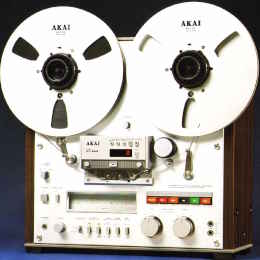
Vintage hi-fi remains fascinating because the equipment was rarely designed to disappear. The knobs were meant to be turned, the meters were meant to move and the machinery was expected to announce its presence in the room. An AKAI reel-to-reel recorder does not merely reproduce music. It rotates, illuminates, clicks and clunks its way through the performance. Likewise, the great AIWA components of the late 1970s were not anonymous black boxes. They were pieces of domestic technology intended to be examined as much as heard.
This issue begins with the AKAI 1710W, a valve-era reel-to-reel machine that offers a reminder of just how physical recorded music once was. From there, we explore AIWA’s wonderfully confident “Meant for Each Other” advertising campaign, followed by closer looks at the AX-7500 amplifier and AD-6500 cassette deck. The AKAI GX-625 article has also received an update, adding another machine to our growing collection of heavyweight tape equipment.
These articles are not intended to argue that everything old was better. Vintage equipment could be inconvenient, temperamental and astonishingly heavy. Much of it also arrived before remote controls, automatic calibration and the expectation that every device should contain a computer. Yet its limitations often made its purpose clearer. A recorder recorded. An amplifier amplified. The controls on the front generally revealed what the machine was doing.
We finish with the ReicherTek Solaris, a speculative loudspeaker design that asks what might happen if some of that physical confidence were carried into a modern system. It is less an exercise in nostalgia than a reminder that audio equipment can still be enjoyable as an object, an instrument and a piece of engineering.
So clear a little space on the furniture, warm up the amplifier and enjoy this month’s excursion into the machinery of listening.

New Pages
New Exhibits to the Collection


Site Updates


In The Margins
A small linguistic aside. One word that evokes the subtle textures of sound, whether in nature or in vintage audio.
Susurration
- Meaning
- A whispering, rustling, or murmuring sound; often used to describe the soft noise of leaves, wind, or any gentle ambient soundscape. It carries a sense of soothing subtlety, where sound is felt as much as heard.
- Pronunciation (Australian English)
- /ˌsʊsəˈreɪʃən/ “soo-suh-RAY-shun”
- In a sentence
- As the tape player wound down, the faint susurration of tape hiss became part of the music’s nostalgic charm.
- Why use it (rather than “whisper”, “murmur”, or “rustle”)
-
- Susurration evokes a continuous, ambient texture, rather than a discrete sound.
- Whisper suggests a human element or intent, while susurration feels more natural and atmospheric.
- Murmur is often associated with voices, whereas susurration can describe any subtle soundscape.
- Rustle is specific to leaves or paper, while susurration applies to any soft, continuous ambiance.
- Miscellaneum note
- Vintage audio, especially tape, lives in a world of susurration. Before digital silence, there was always a faint murmur of the medium itself. That gentle tape hiss or the hum of a transformer is not a flaw. It's a reminder that every moment of playback is a physical event. In the margins of every recording is a susurration—the soft breath of the machine that brought the music to life.
Web Finds
Many of this month's Web Finds come from the early years of the internet, when enthusiasts documented their discoveries in painstaking detail. Some of these pages haven't changed in over a decade—not because they've been abandoned, but because they were written well enough to stand the test of time.
- Sony TPS-L2 – The Walkman Archive – A meticulously researched history of the world's first Walkman, documenting its design, development, accessories and cultural impact with photographs and contemporary detail rarely found elsewhere. While researching this issue, I found myself recalling my father's original Walkman and discovering just how much history surrounds what many remember as simply a portable cassette player. An excellent example of specialist preservation that rewards readers with both nostalgia and genuine historical insight.
- Arm Resonances and Turntable Acoustic Feedback – A clear technical examination of tonearm resonance, cartridge compliance, structural vibration and acoustic feedback in vinyl playback. The subject closely reflects my own experience: feedback that may have been a minor concern in modest stereos of the past can become a very practical problem in modern living-room systems, where larger loudspeakers, powerful amplifiers and subwoofers generate far greater acoustic energy. An excellent example of older enthusiast engineering that remains directly relevant to contemporary listening rooms.
- Marantz 2130 AM/FM Stereophonic Tuner Restoration – A richly illustrated restoration of Marantz’s top-tier 2130 tuner, complete with its wonderfully hypnotic cathode-ray-tube oscilloscope display. Japanese audio equipment fitted with onboard scopes has become especially captivating vintage gear, not least because it presents so beautifully in photographs and video. This article goes well beyond the glowing display, documenting the regulated power supply, scope circuitry, tuner stages and component replacement work through an excellent selection of detailed internal images.
- Reel-to-Reel Tape Is Making a Comeback – A lively overview of the renewed interest in reel-to-reel playback, presenting open-reel tape as both a premium listening format and one of hi-fi’s most visually impressive surviving technologies. My own site features several reel-to-reel machines, including my AKAI 1710, so this article provides a useful contemporary counterpoint: less a technical reference than an enthusiastic puff piece that helps put some heat back into the reel-to-reel revival.
Featured Product
Analogue Computer Series 001 T-Shirt
The Analogue Computer Series 001 T-shirt celebrates an overlooked chapter of computing history. Inspired by the ingenious GENIAC computer, it is a quiet nod to makers, engineers, and curious minds. Like the gentle susurration of analogue circuits, it reminds us that the best ideas never truly fall silent.
Disclosure: this is a commercial product link to an external Zazzle store associated with philreichert.org. Purchases are handled by Zazzle.

Computational Curiosities
26 ◆ 43 ◆ 28 ◆ 93 ◆ 50
Generated using the site’s digital-hybrid numerical engine.
Creator's Log
A few notes from the workshop: what's been fixed, improved, or learned on the road to keeping this site fast, useful, and brimming with curiosities.
- Editorial refreshes or publishing volume
- One of the clearest lessons this development cycle was that thoughtful editorial refreshes often deliver greater long-term value than publishing new articles. Updating existing pages with stronger writing, authentic imagery, improved metadata, and better internal links not only enhances the reader's experience but also signals that the site is actively maintained. A well-crafted article is not finished when it is published; it becomes an asset that can be refined and strengthened over time, allowing quality to compound rather than simply increasing the number of pages.
- Managing a Growing Archive
- As the site has grown, one of the greatest challenges has been managing the catalogue itself. Every new article increases the value of the archive, but it also raises the importance of helping readers discover what already exists. This development cycle reinforced that a website is more than a collection of pages. It is a curated library where navigation, topic collections, newsletters, related articles, and destination pages are just as important as publishing new content. A well-organised catalogue ensures that every article continues to work long after the day it is published.