ReicherTek Solaris: Desktop Entertainment Hi-Fi That Never Was
◆ Revised

Now! In the space of an ordinary desktop clock...
The ReicherTek™ Solaris Executive Entertainment Center
7" TFT LCD • FM/AM Stereo • Atomic Clock • MiniDisc • USB Music Playback • Desktop Audio System
Designed for the Executive Office, Home Study, Workshop or Studio.
Finally... desktop technology worthy of your workspace.
The Solaris Executive Entertainment Center combines premium audio, desktop entertainment and executive convenience into a single precision-built system occupying little more desk space than a conventional clock radio. Inspired by classic executive electronics and reimagined for the digital age, Solaris places everything you need within arm's reach.
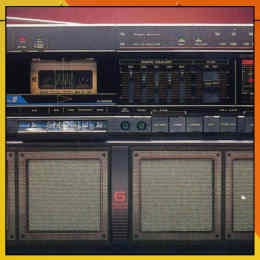
A bright atomic digital clock keeps perfect time while a crisp 7-inch TFT display provides music information, desktop video, security camera viewing, or television (optional DVB receiver). Integrated stereo loudspeakers deliver surprisingly rich sound for near-field listening while preserving valuable desk space.
Executive Features
- Large Atomic Digital Clock with automatic daylight saving adjustment.
- 7-inch colour TFT LCD monitor.
- MiniDisc player and recorder with MDLP support.
- USB Flash Drive music playback (MP3/WMA).
- FM/AM Digital Tuner with station memory.
- Auxiliary input for your computer or portable music player.
- Headphone output for private listening.
- Integrated stereo amplifier and full-range loudspeaker system.
- Bass, Treble and Balance controls.
- Sleep timer, dual alarms and programmable wake-up music.
Designed for Productivity
Whether preparing reports, monitoring email, designing presentations or simply enjoying your favourite music while you work, Solaris transforms your desk into a refined multimedia environment.
Monitor your MiniDisc recordings, keep an eye on office security cameras, watch the morning news during breakfast, or enjoy background music from your USB music library—all without sacrificing valuable desk space.
Built for the Digital Executive
Precision-machined aluminium front panels, oversized control knobs and high-quality electronic components reflect the engineering philosophy of classic executive equipment while embracing the emerging digital workplace. The result is a desktop companion equally at home beside a Dell Precision workstation, IBM ThinkPad docking station or Macintosh G4.
Specifications
- 2 × 25 W RMS Class-D Stereo Amplifier
- 7" 800 × 480 TFT LCD Display
- MiniDisc Recorder (MDLP Compatible)
- USB 2.0 Music Playback
- FM/AM Digital Tuner
- Atomic Radio-Controlled Clock
- Headphone Output
- Stereo Auxiliary Input
- Remote Control Included
ReicherTek Solaris
Executive Desktop Entertainment Center
Because your desk deserves better than plastic computer speakers.
ReicherTek
Engineering Tomorrow's Classics™
Featured Product
Analogue Computer Series 001 T-Shirt
If the ReicherTek Solaris reminds you of a time when technology was proudly visible, the Analogue Computer Series 001 t-shirt celebrates the engineering philosophy that made it possible. Inspired by mid-century analogue computing panels, signal paths and visible logic, it is designed for enthusiasts who appreciate the beauty of machines you can understand, not just use.
Disclosure: this is a commercial product link to an external Zazzle store associated with philreichert.org. Purchases are handled by Zazzle.

Author's Notes
There are products that changed the world, and there are products that should have existed.
This month's curiosity falls firmly into the second category.
While browsing a 1970s electronics magazine, I came across an advertisement for an "Executive Entertainment Center" – a gloriously optimistic desktop appliance combining a television, AM/FM radio and digital clock into a single unit intended for the office executive. It was exactly the sort of thing that could only have come from an era when adding more electronics to a desk was considered the very definition of progress.
It immediately made me wonder what might have happened had the idea survived another quarter of a century.
The result is the ReicherTek Solaris Executive Entertainment Center, an entirely fictional product imagined as though it had been released around 2003. Picture the desktop of a technology enthusiast at the dawn of the millennium. Windows XP is running on the workstation beside you. USB flash drives are replacing floppy disks. MiniDisc has matured into a remarkably capable recording format. Flat-panel LCD displays have become affordable, but still feel wonderfully futuristic.
Rather than squeezing a television into the middle of the console, Solaris replaces it with a crisp colour LCD capable of displaying media information, security cameras, desktop video or a TV tuner. The analogue radio remains, because every executive desk deserves a proper tuner, while the cassette deck gives way to a MiniDisc recorder complete with USB music playback for the growing collection of MP3 files appearing on office computers.
Most importantly, it remains unapologetically a piece of hi-fi.
Oversized aluminium knobs. A proper stereo amplifier. Real loudspeakers hidden beneath generous grille panels rather than the tiny drivers found in most multimedia speakers of the era. This is the sort of desktop companion that would have looked perfectly at home beside an IBM ThinkPad docking station or a Dell UltraSharp monitor.
Of course, none of it ever existed.
Yet that's part of the fun.
One of the pleasures of collecting vintage electronics is not simply looking backwards, but occasionally asking "What if?" What if a manufacturer had taken an interesting idea and evolved it instead of abandoning it? What if Sony, Denon or Harman Kardon had decided there was still room for a premium executive desktop entertainment system in the early 2000s?
The resulting machine probably wouldn't have sold in enormous numbers. It would almost certainly have been expensive. Within a few years smartphones, streaming services and laptops would have made much of its functionality redundant.
But for one brief moment, somewhere between the decline of CRT televisions and the rise of the smartphone, I like to think there was room on an executive's desk for something exactly like the Solaris.
Sometimes the products that never existed are every bit as enjoyable to imagine as the ones that did.
Reader Guide
The following material expands on the terminology, historical context, technical concepts, and related reading connected to this article.
Glossary
- Atomic Clock
- A clock that automatically synchronises with an official radio time signal transmitted from a national standards laboratory. Unlike ordinary quartz clocks, an atomic clock display periodically corrects itself, maintaining highly accurate time without manual adjustment. These became a popular premium feature on executive desktop equipment during the late 1990s and early 2000s.
- Concept Rendering
- An artist's impression or digitally created image showing how a product might have appeared if it had entered production. Concept renderings allow designers and enthusiasts to explore "what if?" ideas without suggesting that the product actually existed. The ReicherTek Solaris featured in this article is a fictional concept inspired by real consumer electronics history.
- Executive Entertainment Center
- A desktop appliance popular during the 1970s that combined several entertainment and convenience features—typically a digital clock, AM/FM radio and small television—into a single unit designed for executives and office environments. Although the category largely disappeared by the 1980s, it represents an interesting chapter in consumer electronics where manufacturers sought to integrate multiple technologies into elegant desktop products.
- LCD (Liquid Crystal Display)
- A flat-panel display technology that gradually replaced bulky cathode-ray tube (CRT) monitors during the late 1990s and early 2000s. Early colour LCD screens transformed desktop electronics by making information displays, compact televisions and multimedia devices thinner, lighter and more energy efficient than their CRT predecessors.
- MiniDisc (MD)
- Introduced by Sony in 1992, MiniDisc was a digital audio recording and playback format housed inside a protective cartridge. It offered instant track access, editing capabilities and excellent sound quality, making it particularly popular for portable recording, live music and personal audio. Although eventually eclipsed by flash memory and hard-drive music players, MiniDisc remains a favourite among audio enthusiasts and collectors.
- MP3
- A compressed digital audio format that revolutionised music storage and distribution during the late 1990s. By significantly reducing file sizes while maintaining acceptable sound quality, MP3 made it practical to store hundreds of songs on a computer or portable music player, accelerating the transition from physical media to digital music libraries.
- USB (Universal Serial Bus)
- Introduced in the mid-1990s, USB became the universal standard for connecting computer peripherals and portable storage devices. By the early 2000s, USB flash drives had largely replaced floppy disks, while USB audio support made it easy to transfer music between computers and consumer electronics. Its widespread adoption helped define the modern digital desktop.
Frequently asked questions
Was the ReicherTek Solaris ever manufactured?
No. The ReicherTek Solaris Executive Entertainment Hi-Fi is a fictional concept created by AudioPhil to imagine how a 1970s executive entertainment centre might have evolved into the early 2000s. The accompanying images are concept renderings inspired by genuine consumer electronics design.
What inspired the ReicherTek Solaris?
The concept was inspired by a genuine late-1970s advertisement for an executive desktop entertainment centre combining a television, AM/FM radio and digital clock in one appliance. The Solaris explores how that idea might have continued into the MiniDisc, LCD and USB era.
Could a product like the ReicherTek Solaris have been built?
Yes. The major technologies represented in the concept, including colour LCD displays, MiniDisc, USB connectivity, digitally tuned radio and compact Class D amplification, were commercially available in the early 2000s. Although no manufacturer is known to have combined them in this exact form, the product was technically achievable.
Why does the ReicherTek Solaris use MiniDisc instead of a CD player?
MiniDisc was a sophisticated and compact recording format suited to an executive desktop system. It provided digital recording, instant track access, track editing, durable cartridge protection and support for long-play recording modes, making it a more distinctive choice than a conventional CD player.
Why create fictional technology concepts?
Fictional technology concepts provide a way to explore plausible alternative paths in consumer electronics history. By combining real technologies from a particular period into a believable product, readers can better appreciate the engineering possibilities, industrial design trends and commercial decisions that shaped the devices that actually reached the market.
Is the ReicherTek Solaris part of a real product range?
No. ReicherTek and the Solaris Executive Entertainment Hi-Fi are fictional creations. The article is an imagined piece of alternate technology history about a product that feels as though it should have existed.
Connected Threads
- The Miscellaneum 006 – Vintage Hi-Fi Special — This article forms part of The Miscellaneum Issue 006 collection. Continue the journey through the editorial, related exhibits, hand-picked Web Finds and other connected threads that bring together the wider story behind this issue.
Related articles…


References
- Popular Electronics (September 1978) — Inspiration for this article
Disclosure
The ReicherTek Solaris Executive Entertainment Hi-Fi is a fictional concept created for editorial and educational purposes. It is not, and has never been, a commercially manufactured product. The accompanying images are artistic concept renderings inspired by genuine consumer electronics design trends and a real late-1970s advertisement for an executive desktop entertainment centre. References to ReicherTek, Solaris and associated product specifications are entirely imaginary and are intended to celebrate industrial design, vintage hi-fi and the evolution of consumer technology through a plausible "what if?" scenario.