Electro-Voice 30W 30-Inch Woofer: The Driver That Eats Living Rooms

Introduction
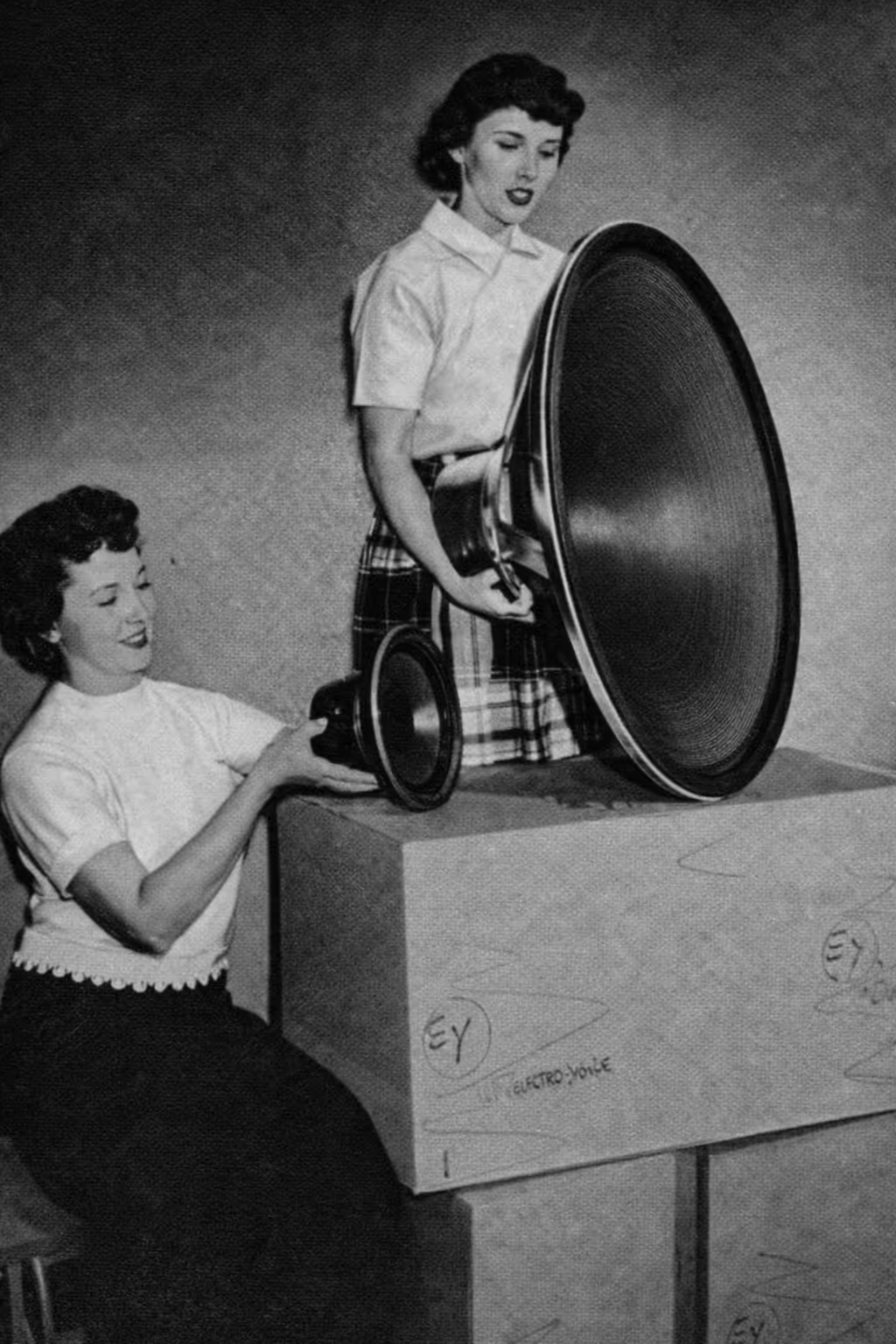
There are loudspeaker drivers, and then there are loudspeaker drivers that seem to have been designed with no regard for domestic restraint. The Electro-Voice 30W belongs firmly in the second category. At a staggering 30 inches in diameter, this giant woofer was not merely intended to reproduce bass: it was intended to make bass feel physical, architectural, and impossible to ignore.
Seen today, the Model 30W looks almost absurd in a home audio context. Modern enthusiasts debate the merits of 10-inch, 12-inch and 15-inch subwoofers, often housed in carefully tuned cabinets that can still be tucked into a lounge room corner. The Electro-Voice 30W comes from an earlier engineering mindset, one that approached low-frequency sound with a simpler and far more dramatic solution: if you want deeper bass, move more air.
That enormous scale is what makes the 30W so fascinating. It was not just a technical product. It was an expression of a period in audio history when hi-fi was still closely tied to experiment, theatre sound, workshop culture, and heroic assumptions about what an enthusiast might be willing to build at home. If a cabinet large enough to house a 30-inch woofer consumed a significant section of the living room, that was apparently a reasonable price to pay for proper bass.
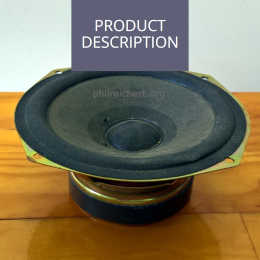
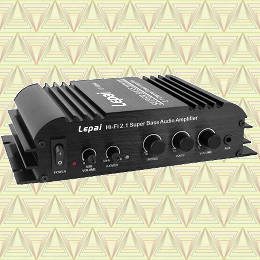
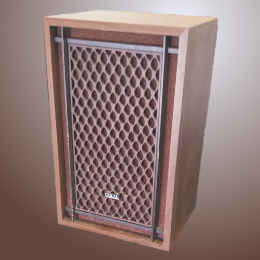
For readers who enjoy the practical and historical side of building your own loudspeaker, the Electro-Voice 30W is a wonderful reminder that DIY audio has always contained a streak of magnificent excess. It also sits comfortably beside more modest drivers and systems discussed elsewhere on this site, from the compact Sony 4" Woofer 1-544-237-21 through to complete vintage loudspeakers such as the AKAI SW-125 and SABA EA 6010. In that company, the 30W stands out as the driver that did not merely join a system. It threatened to become the system.
The Appeal of Giant Bass
The basic attraction of a loudspeaker this large is easy to understand. Low frequencies demand the movement of air, and a larger cone has a natural advantage because it can displace far more air than a smaller one. A 30-inch woofer offers an immense radiating surface area, which means that it can generate strong bass output without depending entirely on wild cone excursion or brute amplifier power. In principle, this allows the speaker to deliver low frequencies with authority and presence that smaller drivers struggle to match.
This idea was especially compelling in the era before compact, high-power home subwoofers became common. Audio enthusiasts and engineers were not yet relying on digital correction, compact long-throw drivers, or sophisticated plate amplifiers to force deep bass out of small boxes. Instead, the answer often lay in driver size, cabinet volume, and efficient acoustic loading. The Electro-Voice 30W represented an unapologetically direct version of that philosophy.
The sales language around the driver reflects this beautifully. It was aimed at audiophiles who liked to feel deep bass in recorded music. That phrase is worth noticing, because it hints at a listening goal that remains familiar today. People still want bass that is not merely audible but bodily present. The difference is that modern systems usually pursue that sensation with compact subwoofers and hidden amplification, whereas the 30W pursued it with a loudspeaker cone large enough to dominate the room visually before a single note had even played.
The Driver That Eats Living Rooms
What makes the Electro-Voice 30W so enjoyable as a historical object is the sheer mismatch between domestic space and industrial scale. A 30-inch woofer is not just larger than the average home speaker driver. It is larger by the sort of margin that changes the entire nature of the enclosure around it. A normal bookshelf loudspeaker can be placed on a stand. A conventional floorstanding system can be integrated into a room. A cabinet designed around a driver of this size begins to feel like furniture, or perhaps like a small utility structure that happens to reproduce music.
This is where the title of this article becomes more than a joke. A driver like the 30W really does threaten to eat the living room. The cone itself is enormous, but the cabinet needed to use it effectively would be larger still. Deep bass performance at home has always been tied not only to the driver, but to the air volume available behind it, the loading method chosen by the designer, and the placement of the finished system in the room. Once those factors are considered, the 30W stops looking like a component and starts looking like a commitment.
In practical terms, a home system built around such a woofer would have demanded careful thought about floor space, structural weight, visual dominance, and room acoustics. It would also have asked a simple but serious question of the household: how much domestic harmony are you willing to surrender in pursuit of bass that can be felt in your chest? For the devoted enthusiast, that may have sounded like a fair trade. For everyone else in the house, it may have looked like audio engineering staging a coup against interior design.
Why Electro-Voice Built It
Electro-Voice did not become a respected name in audio by accident. The company had deep roots in professional sound, public address, and serious loudspeaker engineering. From that perspective, the 30W makes perfect sense. It was not created as a novelty. It was created because there was a genuine belief that large-scale low-frequency reproduction required large-scale hardware. In theatre, auditorium, and specialist high-output applications, that logic was entirely defensible.
The surviving descriptive text is revealing. The 30W combined a massive magnet structure, heavy duty edgewound copper voice coil, and a rigid polystyrene foam cone to deliver high acoustic power in the low-frequency region. Even in summary form, that specification suggests a driver built for serious duty rather than decorative showroom effect. Everything about it points toward control, power handling, and the ability to move substantial volumes of air without collapsing into distortion.
The factory production photograph strengthens this impression. It shows the 30W not as a singular publicity stunt but as part of an organised manufacturing process. There is something deeply satisfying about seeing these giant cones moving along an assembly line. It confirms that this outsized woofer was a real industrial product from a period when American manufacturing could still present scale itself as an argument for technical credibility.
Home Theatre Before Home Theatre
Although the modern term home theatre belongs to a later period, the Electro-Voice 30W feels oddly prophetic when viewed through that lens. It embodies the same ambition that drives dedicated cinema rooms and subwoofer-heavy systems today: the desire to recreate a large-scale, physically engaging sound experience in the home. The difference is that the 30W approached that goal with the visual subtlety of a bulldozer.
Imagine this driver installed in a domestic listening room and the fantasy becomes obvious. Film soundtracks, orchestral recordings, organ music, and richly produced jazz would all gain a kind of low-frequency gravitas that smaller systems could not easily replicate. One can easily see why an enthusiast of the period might dream of it. This was not about polite background music. It was about turning the home listening environment into something closer to a miniature cinema or demonstration theatre.
That aspiration also helps explain why the 30W remains so compelling as an audio artefact. It captures a time when the boundaries between professional sound and domestic hi-fi were more porous, and when ambitious listeners were willing to borrow ideas from larger public systems if they thought it might bring them closer to realism. In that sense, the 30W is less a relic of excess than a monument to audio optimism.
Why It Never Became a Normal Household Driver
For all its fascination, the Electro-Voice 30W was never destined to become an ordinary household standard. The reasons are not hard to find. A driver this large creates immediate problems of cabinet design, placement, cost, and practicality. Even if the owner had the space, the enclosure required to make proper use of the woofer would have been formidable. That reality alone limited the 30W to a narrow category of committed enthusiasts and specialised applications.
Audio technology also moved in directions that reduced the need for such grand physical solutions. Smaller drivers improved. Cabinet alignments became more refined. Amplification grew more powerful and more affordable. Over time, designers became far better at extracting useful bass performance from more compact enclosures. The domestic market favoured loudspeakers that could live in the home without overwhelming it. The giant woofer, for all its brute-force appeal, gradually lost the argument to practicality.
That does not diminish the achievement. It simply places the 30W where it belongs: as a bold and memorable branch of loudspeaker history rather than the shape of the mainstream future. It represents one of those moments when engineering followed a principle to its most dramatic conclusion, and in doing so created something that remains delightful precisely because it feels so oversized for ordinary life.
The 30W in a DIY Audio Context
One reason the Electro-Voice 30W deserves a place on a site like this is that it reminds us how broad the DIY audio tradition really is. Sometimes the hobby is about modest repairs, as with a small replacement driver. Sometimes it is about pairing equipment sensibly, as with an affordable amplifier. Sometimes it involves appreciating the complete design of a vintage loudspeaker. And sometimes it involves looking at a historic monster like the 30W and appreciating the sheer ambition behind it.
That broad span is part of the pleasure. A reader moving from the compact Sony 4" woofer article to the Lepai LP-168HA amplifier, then to complete systems such as the AKAI SW-125 Bookshelf Loudspeaker and the SABA EA 6010, eventually reaches the deeper philosophical appeal of building your own loudspeaker. The 30W sits at the grandly excessive end of that path. It asks not merely how to build a better speaker, but how far an enthusiast might be willing to go in pursuit of bass.
As an artefact, it also has another virtue: it helps modern readers recalibrate their sense of scale. Today, a 12-inch or 15-inch woofer may already seem substantial in the home. The 30W makes those look positively restrained. It offers a useful historical reminder that audio engineering has always had its maximalist dreamers, and that some of the most interesting products are those that reveal the hobby's willingness to stretch beyond normal domestic limits.
Conclusion
The Electro-Voice 30W 30-inch woofer is memorable not simply because it is large, but because it represents a complete philosophy of sound reproduction. It belongs to a period when the pursuit of deep bass could justify imposing, extravagant hardware and when serious audio enthusiasts were prepared to reshape domestic space in service of a listening ideal. In that world, a loudspeaker driver large enough to dominate a room was not necessarily a design failure. It was proof of intent.
Seen now, the 30W feels equal parts engineering achievement, home audio fantasy, and magnificent overreaction. That is exactly why it deserves to be remembered. It is a reminder that hi-fi history is not made only of elegant miniaturisation and practical compromise. Sometimes it is made of giant cones, industrial ambition, and the eternal belief that somewhere, somehow, better bass is worth one more improbable cabinet.
If nothing else, the Electro-Voice 30W stands as a glorious monument to the idea that in audio, there has always been someone willing to look at a normal loudspeaker and ask: yes, but what if it were much bigger?

Editorial
I absolutely love the craziness of the Electro-Voice 30W 30-inch woofer. I have seen many 18-inch woofers over the years, and I have even gone out and bought a pair of 21-inch no-name woofers with the idea of building speakers around them, so the leap to a 30-inch driver feels both ridiculous and strangely compelling. Just imagining the cabinet size, the installation effort, and the sheer visual dominance of a speaker built around the 30W is enough to make any DIY audio enthusiast smile.
These older giant woofers are not like modern high-power designs. Today’s woofers are often built to hit hard, using substantial amplifier power and heavy current to force air movement from relatively compact enclosures. A driver like the 30W comes from a different philosophy. It is more sedate, relying less on brute electrical force and more on the effortless movement of a very large cone area. That does not make it superior to modern designs, and it is unlikely to outperform a well-engineered contemporary woofer in absolute terms, but that is not really the point.
The real appeal of the 30W lies in its glorious excess. It could be used simply for the fun of building something outrageous, or perhaps as part of a period-correct three-way speaker system where scale itself is part of the charm. I do not see the Electro-Voice 30W as pure engineering perfection. I see it as a ludicrous overstatement, and that is exactly why it is so fascinating. DIY audio has always had room for overstatement, and few drivers express that spirit better than this one.
They do still appear for sale from time to time in the United States, and our banner advert occasionally turns one up, but the shipping cost is usually enough to end the fantasy before it begins.
Glossary
- Woofer
- A loudspeaker driver designed to reproduce low-frequency sound, especially bass notes. Woofers are larger than tweeters because low frequencies require more air movement.
- Driver
- The individual loudspeaker unit inside a speaker system that converts an electrical audio signal into sound. A woofer, midrange, and tweeter are all examples of speaker drivers.
- Cone
- The visible diaphragm of a loudspeaker driver that moves back and forth to push air and create sound waves. In a woofer, the cone is responsible for producing bass frequencies.
- Bass
- The low-frequency part of sound, such as the deep notes of a drum, bass guitar, pipe organ, or cinematic explosion. Bass is often felt as well as heard.
- Subwoofer
- A speaker designed specifically to reproduce very deep bass frequencies below the range handled by most ordinary loudspeakers. Modern home theatre systems often use a dedicated subwoofer.
- Speaker Cabinet
- The enclosure or box that houses one or more loudspeaker drivers. The size, shape, and design of the cabinet have a major effect on how a speaker sounds, especially in the bass region.
- Voice Coil
- A coil of wire attached to the loudspeaker cone that moves within a magnetic field when an audio signal is applied. This movement drives the cone and produces sound.
- Magnet Structure
- The magnetic assembly of a loudspeaker driver that works with the voice coil to move the cone. A larger or stronger magnet can help improve control and power handling.
- Hi-Fi
- Short for high fidelity. The term refers to audio equipment designed to reproduce recorded sound as accurately and cleanly as possible.
- Home Theatre
- A home audio and video setup designed to create a cinema-like experience, often using large screens, multiple speakers, and a subwoofer for powerful bass.
Frequently asked questions
What is the Electro-Voice 30W 30-inch woofer?
The Electro-Voice 30W is a giant 30-inch loudspeaker driver designed to reproduce deep bass frequencies. Produced by Electro-Voice, it represents an era of audio engineering where large drivers were used to move substantial amounts of air for powerful low-frequency sound.
Why did engineers build such a large loudspeaker driver?
Large woofer cones can displace far more air than smaller drivers. This allows them to reproduce very low frequencies efficiently and with less distortion. The Electro-Voice 30W is an extreme example of this approach to bass reproduction.
Was the Electro-Voice 30W intended for home audio systems?
While an enthusiast could theoretically build a home system around the driver, a 30-inch woofer would require a very large cabinet and significant floor space. Systems of this size were more commonly suited to theatres, auditoriums, or specialised audio installations.
How does the Electro-Voice 30W compare with modern subwoofers?
Modern subwoofers usually use drivers between 10 and 18 inches combined with powerful amplifiers and carefully designed enclosures. The Electro-Voice 30W relied instead on sheer cone size to move air and produce deep bass.