Commodore 64 Quarterly – June 2026 Inaugural Edition
◆ Revised

Table of Contents
- Editorial
- News & Announcements
- Community Highlights
- Developer Corner
- Programming Workshop
- Classic Game Revisited
- Modern Games
- Project Workshop
- Recommended Reading
Editorial
Commodore 64 Quarterly Newsletter — June 2026 Edition
The Commodore 64 scene remains unusually healthy because it is not only nostalgic. It is practical, technical and creative. New hardware is arriving, FPGA systems continue to mature, preservation work is recovering lost software, and the demo scene is still finding visual and musical possibilities inside a machine released more than four decades ago.
This edition focuses on developments that should remain useful beyond the quarter: modern C64 hardware, handheld systems, firmware questions, preservation work, new games, development tools, restoration practice and practical programming ideas.
News & Announcements
Commodore 64 Ultimate continues to define the hardware conversation
The revived Commodore organisation reports that it has manufactured more than 30,000 new Commodore 64 systems, with the C64 Ultimate line now moving beyond early pre-order activity. The company describes the C64 Ultimate as FPGA-based hardware rather than a software emulator, with HDMI, AV output, modern menus and SID-related enhancements.[1]
The most interesting part of the story is not simply that a new C64 exists. It is that the community is debating what authenticity means in 2026: original chips, FPGA recreation, cycle accuracy, real keyboards, modern video output and the right to modify firmware.
C64C Ultimate announced with original-style case tooling
The C64C Ultimate has been announced as a sibling to the breadbin-style C64 Ultimate, using the same FPGA platform but adopting the later C64C case style. Reports note that the case is connected to original 1980s tooling, making it an unusually tangible bridge between preservation and modern production.[2]
Firmware openness remains an important issue
Commodore’s firmware policy drew attention after discussion around third-party FPGA firmware. The company later stepped back from blocking third-party firmware installation, while making clear that unsupported firmware remains the user’s responsibility if it damages a system.[3]
This is a useful reminder that modern retro hardware is not only about nostalgia. It also raises contemporary questions about user freedom, warranties, open development and long-term repairability.
THEC64 Handheld heads toward October release
Blaze Entertainment and Retro Games Ltd have announced THEC64 Handheld, a portable clamshell-style C64 gaming system expected to ship in October 2026. It includes a 4.3-inch 800×480 display, 25 built-in games, microSD support for additional titles, USB support for external keyboards or joysticks, and a rechargeable battery. [4]
For purists, it is not a replacement for a real C64. For players, however, it may become a convenient way to keep C64 games visible to a broader audience.
Community Highlights
X’2026 shows the demo scene still has momentum
X’2026, held from 5–7 June 2026, produced a strong set of Commodore 64 demo releases. The results and release lists include major productions such as The Lab by Elysium, Next Round by Performers, Kamishibai by Atlantis and Rodents in the Attic by Lft.[5]
The continuing strength of the C64 demo scene matters because it is one of the few areas where the machine is still treated as a living technical platform. New effects, music routines, bitmap techniques and timing tricks are still being developed, shared and studied. CSDd has a comprehensive listing of the competition results. These are well worth the effort to explore through. Catgories include C64 demos, 4k intros, SID music, graphics and more.[6]
Games That Weren’t continues preservation work
Games That Weren’t published a June 2026 digest covering lost C64 games and prototypes, describing it as a major archive update with recovered material. [7]
Preservation is not only about finished commercial releases. Prototypes, previews, abandoned projects and development builds help explain how games were made, what publishers rejected and how creative decisions changed before release. Numerous updates were made to the collection including Arcade Wizzard, Void a budget shooter, and even a Aussie Games prototype added.
Developer Corner
Modern C64 development is increasingly cross-platform
Most new C64 development now happens away from the original machine. Developers commonly write code on Linux, Windows or macOS, assemble or compile it with modern tools, test in an emulator, then run the finished program on real hardware, FPGA systems or cartridge devices.
That workflow is not a compromise. It is one reason the scene remains productive. Fast editing, source control, automated builds and emulator debugging make it easier to produce reliable software for a very constrained machine.
Useful tools to know
- KickAssembler is an advanced MOS 65xx assembler combined with a Java Script like script language. This development platform remains popular for 6502 assembly projects, especially where macros, scripting and build automation are useful.[8]
- cc65 allows C development for the C64 and remains useful for games, utilities and experiments where speed-critical routines can be moved into assembly. Its C64 documentation describes memory layout, runtime behaviour, headers, drivers and platform-specific limitations. The libraries are reportadly portable, so creating a version for other 6502s such as the VIC20, Apple IIs, and various Atari plaforms.[9]
- VICE remains the standard emulator suite for Commodore development and testing. Version 3.10 was released in December 2025, and the project has moved its source repository to SourceForge-hosted public services.[10]
- Ultimate64 firmware remains important for users of FPGA-based C64 systems, with firmware version 3.14d listed for Ultimate platforms in March 2026. The update appears extensive with updates to networking, HDMI output, cartridge emulation, user experience, and various bugfixes.[11]
Programming Workshop
A simple quarterly exercise: build a raster-bar experiment
One of the best ways to understand the C64 is to experiment with raster timing. The VIC-II video chip draws the screen line by line. By changing colours at precise moments, a program can create horizontal colour effects, split screen modes and visual transitions.
A beginner-friendly experiment is to change the border colour inside a loop:
        10 FOR I=0 TO 255
        20 POKE 53280,I AND 15
        30 NEXT I
        40 GOTO 10
This is not a proper synchronised raster routine, but it demonstrates an important idea: the display is being generated continuously, and the machine can change visible registers while the screen is being drawn.
The next step is to use a raster interrupt. A raster interrupt asks the VIC-II to interrupt the CPU when a particular screen line is reached. At that moment, your code can change colours, character sets, screen memory or sprite settings. Many classic and modern C64 effects are built from this foundation.
What to learn next
Learn the VIC-II register map, especially border colour at
$D020and background colour at$D021.Experiment with changing colours in BASIC, then repeat the same idea in assembly.
Learn how to acknowledge an interrupt correctly so the machine does not lock up.
Use an emulator monitor to inspect registers and step through interrupt code.
Study a small demo source rather than starting with a full game.
Classic Game Revisited
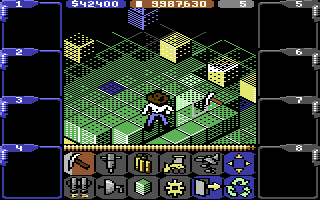
Paradroid

Paradroid remains one of the finest examples of C64 design because it combines atmosphere, strategy and technical restraint. The player controls an influence device aboard ships filled with hostile robots, transferring control from one robot to another through a distinctive circuit-board subgame.
The brilliance of Paradroid lies in how it turns limitation into identity. The graphics are clean rather than lavish. The sound is economical. The game world is built from readable decks, robot classes and tactical risk. It feels mechanical in the best possible sense.
It remains worth playing because it teaches a lesson still relevant to modern independent developers: a strong system can be more memorable than a large asset budget. Paradroid is not merely a nostalgic title. It is a compact design study. And the best thing is that Paradroid is one of the games included with TheC64.[12]
Modern Games
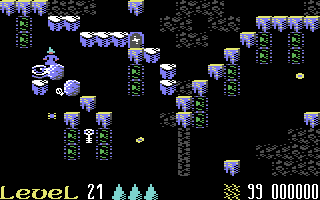
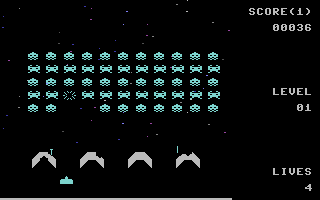
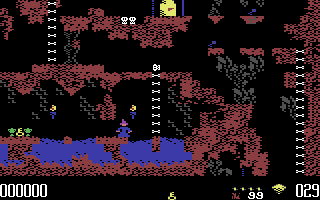
A healthy release pipeline - Lemon64’s 2026 game list already shows 59 C64 games in 2026, including public domain releases, puzzle games, arcade titles and experiments. The important point is not that every release is large or commercial. The important point is continuity. The C64 has a functioning modern game scene with small projects, ambitious commercial-style games, free releases, competition entries and technical experiments.[13]
Top Picks


Project Workshop
Build a personal C64 development folder
A useful quarterly project is to build a clean local C64 development environment. Create one folder containing your assembler or compiler, emulator, source folder, disk image output folder and a simple build script.
A basic structure might look like this:
c64-projects/
      hello-raster/
            src/
            build/
            disk/
            tools/
            README.md
The goal is repeatability. You should be able to type one command, build the program, generate a .d64 file and launch it in VICE.
Explore C64 OS
C64 OS remains one of the more ambitious attempts to make the C64 feel like a practical expanded computer. The project describes itself as an operating system expansion with a unified interface, sophisticated tools, REU-assisted fast application switching and support for multiple open applications. [13]
It is worth exploring not only as software, but as a design argument: how far can an 8-bit machine be extended while still feeling like itself?
Create a preservation disk
Another practical project is to make a personal preservation disk image. Collect a small set of public domain programs, notes, screenshots and documentation into a labelled .d64 or .d81 image. Add a text file describing where each item came from and why it matters.
This small discipline builds good archival habits. Future readers, including yourself, will thank you for clear filenames and source notes.
Hardware Workshop
Power supplies first
The most important C64 hardware advice remains simple: treat old power supplies with caution. A failing original PSU can damage the computer. Before spending money on cartridges, displays or cosmetic upgrades, use a known-good modern PSU or test the original carefully.
Modern storage choices
- SD2IEC: Affordable and convenient for many file-based workflows, especially BASIC programs and compatible software.
- Pi1541: A more accurate 1541 drive emulation approach, useful for software that depends on drive behaviour.
- 1541 Ultimate / Ultimate64: High-end solutions offering broad compatibility, cartridge features and expanded functionality.
- Kung Fu Flash: A practical cartridge option for many cartridge images and software-loading workflows.
Do not overlook the keyboard
A C64 restoration often focuses on capacitors, chips and video output, but the keyboard defines the experience. Clean keycaps carefully, photograph the layout before disassembly, avoid aggressive chemicals, and check the plungers and contacts patiently. A reliable keyboard can make a restored machine feel new again.
Tips & Tricks
- Label disk images clearly. Use filenames that include the project name, version and date.
- Keep source separate from generated files. Do not mix build output with handwritten source.
- Test on more than one emulator configuration. PAL and NTSC differences can reveal timing assumptions.
- Document your hardware setup. Note whether you tested on real C64, C64C, Ultimate64, THEC64, VICE or another environment.
- Save intermediate versions. C64 projects often break when memory layouts change. Versioned snapshots make recovery easier.
Recommended Reading
- Commodore 64 Programmer’s Reference Guide: still the foundational reference for memory maps, BASIC, Kernal routines, graphics, sound and hardware behaviour.
- Commodore MAX Machine - Have you ever wondered what came before the Commodore 64? Hidden between the VIC-20 and the world's best-selling home computer is one of Commodore's rarest creations, the Commodore MAX Machine.
- Commodore 64 in Sweden: A 1990 Advertisement - A Swedish Commodore 64 advertisement from 1990 demonstrates why the world's best-selling home computer continued to thrive well into the 16-bit era. Featuring Winter Games, a family-oriented marketing message, and an emphasis on gaming, education and BASIC programming.
From the Archives
The value of type-in listings
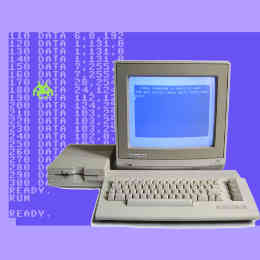
Magazine type-in programs were once a normal way to acquire software. Today they are easy to dismiss as quaint, but they taught important skills: careful reading, debugging, patience and experimentation.
Typing in a listing forced the reader to notice structure. Why did the program use POKE? Why did a loop run from one value to another? Why did a line contain strange data values? A type-in was not only a program. It was an informal programming lesson.
For modern readers, revisiting type-ins is still worthwhile. They are small enough to understand, historically revealing and often surprisingly clever. Even when the finished program is simple, the method teaches how much could be done with limited memory and a few pages of code.
Editor's Notes
The Commodore 64 survives because it is useful in several different ways at once: a games machine, a programming platform, a preservation subject, a music machine, a hardware workshop and a cultural object. That breadth is why the quarterly format suits it so well.
Reader Guide
The following material expands on the terminology, historical context, technical concepts, and related reading connected to this article.
Connected Threads
- Crystian and the Lost Caves (2026) - This article is inspired by the latest gaming offerings on the Commodore 64
Related articles…



References
- Where Does Commodore Go From Here?, Commodore.net, retreived 2026-06-28
- Commodore 64 Ultimate Gets a C64C Sibling, GamesRadar, retreived 2026-06-28
- Commodore Backs Down Over FPGA Firmware Lockdown, Tom's Hardware, retreived 2026-06-28
- THEC64 Handheld Announcement, retreived 2026-06-28
- X Party, offical website, retreived 2026-06-28
- Commodore Scene Database – X'2026 Event Results
- Lost C64 Games and Prototypes (June 2026), Games That Weren't, retreived 2026-06-28
- Kick Assembler, retreived 2026-06-28
- cc65 Documentation – Commodore 64 Target, CC65 website, retreived 2026-06-28
- VICE Version 3.10 released, VICE Emulator Project, retreived 2026-06-28
- Firmware Downloads, Ultimate64, retreived 2026-06-28
- Thec64 Games, Retro Games, retreived 2026-06-28
- Games Released in 2026, Lemon64, retreived 2026-06-28
- C64 OS Official Website, retreived 2026-06-28
Disclosure
This page is a personal collection of Commodore computer resources that have caught the curator's attention. Links are provided for reference and exploration; inclusion does not imply endorsement, accuracy, or ongoing availability. Images on this page have been artistically edited, restored or recreated from historical source material to improve presentation while preserving the historical subject being discussed.