Commodore C64 Games Computer
Originally published 2017 • Updated 13 September 2026

Few startup screens are as instantly recognizable as the Commodore 64's blue-on-blue welcome screen. There are no animations, no logos and no helpful instructions—just a blinking cursor inviting you to do something interesting. For millions of people, this simple screen was their first step into programming, gaming and digital creativity.
Decades on, the Commodore 64 scene is alive and well. New games, magazines, SID music releases, hardware projects and competitions continue to appear. The limitations of an 8-bit computer with 64 kilobytes of memory continue to inspire programmers, artists and musicians to push the platform further than anyone imagined in 1982.
Commodore 64 computers for sale
The hunt for Commodore hardware never really ends. Whether you are looking for your first C64, replacing a childhood machine, or searching for an elusive peripheral, there is always something interesting appearing on the vintage market. Here is a useful link to the eBay vintage computer marketplace.
General Description
Released in 1982, the Commodore 64 became the best-selling single computer model of all time. It was used for games, programming, education, music, communications and small business tasks, often becoming the first computer a family ever owned. Four decades later, it remains one of the most active retro-computing platforms in the world. We have our opinion on why the C64 is so popular.
The leading computer magazine of the time, Compute!, visited the 1982 CES industry show and only gave a small write up to this wonderful machine. Compute! (July 1982). If you weren't paying attention, you would have blinked and missed the Commodore C64 revolutionalise the personal computer industry.
While researching the Commodore 64's earliest public appearances, I stumbled across one of its forgotten siblings: the Commodore MAX Machine. Released in limited numbers for the Japanese market, the MAX shared the Commodore 64's revolutionary VIC-II graphics and SID sound chips but paired them with just 2.5 KB of RAM and a membrane keyboard. Although it proved to be a commercial dead end, it offers a fascinating glimpse into Commodore's experimentation immediately before the C64 went on to become the world's best-selling home computer.
no other computer can offer such a variety of uses and applications at such an affordable price
The Commodore 64 experience still holds its own in many ways. Firstly, there is a dedicated community of enthusiasts producing magazines, software, hardware projects and events that keep the platform active and relevant. Secondly, the demoscene—and particularly the SID music culture—has never really gone away. Decades of experimentation with the SID chip continue to produce remarkable new music and technical achievements. Thirdly, there are the games. The Commodore 64 library remains one of the richest in computing history, with both classic titles and modern releases still providing countless hours of entertainment. One play of Galencia will show you exactly what I mean.
The 8-bit Experience
The best way to experience the Commodore 64 today is through one of the many emulators available online. My preferred emulator remains VICE (Versatile Commodore Emulator), one of the most mature, accurate and widely used Commodore emulators available. You can download VICE from the official homepage. It is straightforward to install, easy to configure and provides an excellent platform for exploring Commodore 64 software, magazines and programming projects. Once you are up and running, the user guides linked below will help you get the most from the emulator.

from Eight Bit Magazine (Issue 02)
LOAD "*",8,1
and let's get started.
Limitations of the Commodore C64 platform
Let's look past the retro-gloss of what many people consider to be the perfect 8-bit platform and delve into some of the limitations that will frustrate many users.
1 It's Expensive - it is a great irony that the C64 burst onto the home computer scene as a low-cost computer accessible to the middle-class. It was cheap enough for many people to buy one for their kids. Now, these kids have turned into wealthy middle-aged adults with money to burn on reliving their childhood experience. 30 year old electronic equipment is now going for sale at ludicrous prices on second-hand sale sites.
2 Slow data transfer speeds - back in the day, it was considered OK to spend 20 minutes waiting for your game to load off the tape drive because, quite frankly, there was no alternative. The disk drives were substantially quicker than this glacial benchmark but they are still slow. Even when using an emulator, you will get bored waiting for games to load.
3 Only 40-column text display - the fonts used on the Commodore C64 were optimized for the low-resolution display and were quite useful. You can download MS-Windows fonts that look like the original C64 fonts here. But let's face it, 40-column text was never enough. 80-column text capabilities was desperately needed to perform real work on. Unfortunately, televisions of the time could not handle this high-resolution requirement. Specific computer monitors were required for serious applications.
4 BASIC - even on the day of release, the BASIC supplied with the Commodore C64 was antiquated. Of course, this was done for cost reasons but the programming language couldn't even handle the standard machine capabilities such as sprites. It wasn't until the Commodore C128 were this was addressed.
5 Memory Expansion - for almost the length of production, Commodore kept on repeating that the Commodore C64 memory could not be expanded to greater than the supplied 64kb. Well that is only partially true. There was no memory management capability to map greater than the core 64kb. But then, very late into production, Commodore released the Commodore 1764 RAM expansion module. We cannot fathom why this artificial limitation was ever declared in the first place. Perhaps because Commodore didn't want the C64 home computer to compete with their business machines.
Commodore C64 emulation is not a #crime!
Commodore C64 demoscene
The Commodore C64 demoscene is a decades old international computer art culture focused on producing demos. These Commodore C64 demos are designed to show off programming, visual art and musical skills of the demo group involved. We believe that the demoscene is one of the reasons why the C64 is so popular.
The demoscene probably didn't start with the Commodore C64 and it certainly hasn't ended, with plenty of demos for the Commodore C64 and other platforms being released. To our eyes, and ears, the demoscene represents true art in the digital medium. It is designed to promote interest so you copy it and forward the file onto your friends.
There is a general lack of literature on the Commodore C64 demoscene. We certainly haven't seen any strictly demoscene books in our list of best Commodore C64 books. One reason for this is that the demoscene often overlaps with the crackers, particularly in the early wild-west days. People on the Commodore C64 scene may not be willing to come forward and share their stories because (a) they have moved on from those days, and/or (b) they do not want to be unintentionally linked to software piracy.
A demo is typically a single-disk program designed to show off the programmer's or Commodore C64 music or video capability. There are no hard and fast rules but there the general size limit of 880kB due to the double-sided double-density capacity limit of the Commodore 1581 disk drive. One gets the feeling that if you said that a demo was this, this and this, then the demoscene would go out of its way to prove otherwise. But there are typically things that viewers can exect are interesting 8-bit graphics, wild SID synthesizer music and scolling text. Modern digital graffiti.
Most historical demos can be found on CSDB and their SID music tracks get ripped to .sid files and entered into the High Voltage SID Collection database.
We have a couple of interesting links that we hope to build on over time that relate to the history and the current vibrant culture of the Commodore C64 demoscene:
- Wikipedia article on Commodore C64 demos
- scene.org - boasts having the Internet's largest demoscene file repository
- DEMOZOO - a very active blog pointing to the latest news in the demoscene
- Genesis Project - A write-up on the 2+ decades long running C64 demogroup
- TRIAD - Demoscene advertising itself as dealer quality software
- ANSI love - ANSI (character) image maker

image quote from a Commodore sales brochure (circa 1982)
Commodore C64 disk magazines
Since the start of the Commodore C64 disk drive, users have been enjoying disk magazines. As the name suggests, disk magazines are magazines that are distributed on one or more magazines. But Commodore C64 disk magazines are so much more than that. To understand this you need to go back to the demoscene.
Programs and demos were widely distributed through groups, or sceners. They would receive disks and copy in batches and send the disks to all of their friends. Photocopiers were not widely available in homes at that time so it was easier to distribute magazines using disks. Create, program, send, copy, re-send. Like the graffiti of the Roman Empire, disk magazines were the fastest way to send the freshest gossip around.
Thankfully, the spirit of the age is still alive and well. If you have an original Commodore C64 or a The C64 Maxi then I can suggest you download the latest disk magazines and get into the scene.


Commodore C64 Journal
Over the years I have published a growing collection of Commodore 64 articles covering hardware, software, magazines, culture and collecting. If this machine fascinates you as much as it fascinates me, these are some of the best places to continue exploring.

Commodore 64 as a
MIDI Music Workstation

Are you keeping up
with the Commodore?

What makes the C64
so popular?

Everyone coded
this on the C64

Jailbreak culture
on the Commodore 64

Commodore C64
user's manuals

Best Commodore C64
books

Commodore 1540/1541
Floppy Drive

Commodore 1581
Disk Drive

Commodore 64
Interesting Links
Storyboard

MOS 6581 SID
Sound Interface Device

SID 6581/8580
Synthesizers

Greatest space trading
game, ever?
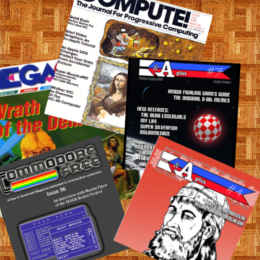
Computer Magazine
Reading Rack





Commodore C64 Game Reviews

Crystian and
the Lost Caves

Best combat simulator
on Commodore C64?

Retaliate XD
game review

Most addictive shooter
on the Commodore C64?

Vortex Crystals
C64 Platform Game

Karaoke on the
Commodore C64?
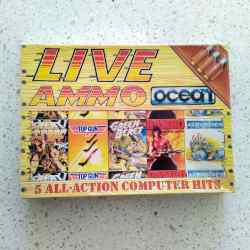
Live Ammo
games bundle
Commodore C64 games we would like to play
Games, games, games! There are not enough lifetimes to play through all of the Commodore C64 games that have been released. Normally we like to play games then tell you what we think. Check out our excellent Commodore 64 game reviews such as the incredible Elite franchise, Retaliate DX, and Galencia as examples of what we are talking about.
There are plenty more games that we haven't got around to yet. Here is our top 10 list of Commodore C64 games that we would like to play but haven't got around to yet.
- Doc Cosmos (Shallan, 2019) - Large platformer with 47 screens
- Digiloi (Dr. TerrorZ, 2018) - A very colorful looking PETSCII graphics game
- Fort Django (Dr. Terrorz, 2017) - A wild west shooter using PETSCII grapgics
- Castle Wolfenstein (Muse Software, 1983)
- Neutron (2019) - Vertical shoot'em up from Sarah Jane Avory
- RGCD C64 16KB Cartridge Game Dev Competition (2019)
What makes a modern C64 game interesting?
Good constraints: The best games accept the machine’s limits rather than trying to imitate later systems.
Readable graphics: Clear sprites and backgrounds matter more than decorative detail.
Fast restarts: Modern players appreciate quick retries, especially in arcade and puzzle games.
Real hardware testing: A game that behaves well on PAL and NTSC systems, emulators and storage devices earns trust.
Good packaging: Manuals, disk images, cartridge support and clear download notes make a project easier to enjoy.
Commodore 64 Quarterly
The Commodore 64 Quarterly Newsletter is a curated magazine celebrating the world's best-selling home computer and the vibrant community that continues to keep it alive. Published four times each year, every edition combines carefully researched news with timeless programming techniques, hardware projects, game reviews, restoration advice, preservation efforts and recommended resources. Rather than chasing every headline, the newsletter focuses on developments that remain valuable long after publication, making each issue a lasting reference for collectors, developers, enthusiasts and anyone discovering the Commodore 64 for the first time.


Multi-Purpose Arcade Combat Simulator cartridge
I have read about the U.S. Army using the Commodore C64 for rifle training. You know all those hunting games really have a grandfather simulator in the Commodore C64.
While it may not look like much at first glance, this MACS Commodore 64 cartridge is exceedingly rare. The...
Posted by National Videogame Museum on Tuesday, 21 July 2020
Related Commodore Articles




Retrogames TheC64 Maxi
I own a TheC64 maxi. Although not perfect, I think this is a great machine. There are no other replicas on the market that can match the phyicality of TheC64. I don't have much written on this wonderful machine even though it is my daily 8-bit driver. Those brown keys are so beautiful to type on. Here are a few notes that have come in handy for me.
- TheC64 user manual - December 2021 release
- Programming in C64 BASIC - an unusually useful and easy introduction to BASIC programming on the Commodore 64.
- Filename flags and CJM files - how to change the default settings on programs, swap joystick ports, make disk read-only, changing display resolution and much more. TheC64 maxi also uses cjm files to embed hidden control for C64 programs to improve compatability. I think that these features are worth investigating further.
The original Commodore 64 remains a wonderful machine, but modern recreations such as TheC64 Maxi make it easier than ever to experience the platform. Whether you prefer original hardware, FPGA solutions or software emulation, the important thing is that the community—and the machine itself—continue to thrive.
The Commodore 64 is no longer simply a vintage computer. It is a living culture of programmers, musicians, artists, collectors and enthusiasts who continue to discover new possibilities in a machine that many people first encountered as children.
Long may the blue screen continue to glow!