Crystian and the Lost Caves (2026): Commodore 64 at Its Best
◆ Revised

First Published: 2026
Platform: Commodore 64
Publisher: Psytronik Software
Genre: Platform Adventure
Why a New Commodore 64 Game Still Matters
Computers are often treated as products of their moment, promoted intensely, played briefly and replaced by the next release. The Commodore 64 was different. Released in 1982, it became one of the world's best-selling home computers and introduced an entire generation to programming, electronic music and computer gaming. More than forty years later, developers are still creating entirely new games for the machine, not out of nostalgia alone, but because its technical limitations continue to inspire thoughtful design and remarkable creativity.
I wanted to write this article because Crystian and the Lost Caves demonstrates something that many people outside the retro-computing community rarely see: the Commodore 64 is not simply a museum piece. It remains a living platform where talented developers continue to produce original work that deserves to be discovered by modern audiences.
When a Screenshot Sells a Game
Every now and then a screenshot is enough to convince me to reach for my wallet. That was certainly the case with Crystian and the Lost Caves. The colourful caverns, detailed scenery and unmistakable Commodore 64 charm suggested this was a labour of love rather than another nostalgia project trading on familiar pixels.
Modern Commodore 64 software occupies an unusual place in computing history. Nobody is writing these games because the platform needs saving. They write them because they genuinely enjoy pushing the hardware, and players buy them because they enjoy discovering what talented programmers can still coax from a forty-year-old machine.
That enthusiasm was enough for me. Six Australian dollars later, the download was running in VICE on my openSUSE Linux workstation, ready for another evening of retro gaming.
The first impression was excellent. The presentation was polished, the music immediately atmospheric, and the caves looked exactly like the promotional screenshots had promised.
Unfortunately, the first half hour was also rather frustrating.
I began wondering whether I had bought a beautiful game that simply wasn't much fun to play. Thankfully, that wasn't the real story—it was only the beginning.
Playing by Crystian's Rules
Like many platform games, Crystian asks you to learn its movement rather than immediately master it. My early mistakes were largely self-inflicted. I was trying to impose modern platforming habits onto a game that clearly expected something different.
The jumps require commitment. Timing matters. Hazardous creatures punish hesitation. Progress is earned rather than handed over.
At first this felt slightly awkward.
Then something interesting happened.
Instead of becoming annoyed, I began adapting. My movements became slower, more deliberate and far more observant. Rather than reacting to every obstacle, I started reading the environment before moving.
The controls hadn't changed.
I had.
That shift transformed the experience. What initially appeared slightly unforgiving gradually became consistent, predictable and surprisingly satisfying.
Once I stopped fighting the game, I also stopped concentrating solely on my character. My attention shifted to the cave itself.
The Cave Has Its Own Language
The caves are more than colourful backdrops. They are carefully constructed spaces that reward observation.
Waterfalls, ledges, narrow passages and enemy placement combine to create environments that feel handcrafted rather than procedurally assembled. Each screen gently encourages exploration while quietly teaching the player how the world works.
I found myself pausing far more often than I expected. Instead of charging ahead, I was examining possible routes, judging jumps and considering whether a particular treasure was worth the risk.
That slower pace became one of the game's greatest strengths.
Many modern games are determined to keep the player moving at all times. Crystian seems perfectly comfortable allowing you to stop, think and appreciate the scenery.
The music helps enormously. Rather than demanding attention, it creates an atmosphere that encourages exploration. It complements the caves rather than competing with them.
By now I realised I wasn't feeling rushed anymore.
Then it struck me why.
This Game Gives You Time
Somewhere during my exploration I realised something was missing.
There wasn't a relentless countdown clock demanding that I hurry.
That simple design decision changes the personality of the game.
Without a timer breathing down your neck, every decision becomes your own. You choose whether to investigate a side passage, attempt a difficult jump or simply pause to admire another beautifully drawn cavern.
The tension comes from the environment itself rather than from artificial urgency.
That feels surprisingly refreshing.
Many platform games of the period used timers to create pressure. Crystian demonstrates that thoughtful level design can achieve exactly the same outcome while allowing players to discover the world at their own pace.
Ironically, removing the pressure encouraged me to become even more invested.
I began noticing details that I might otherwise have ignored—including something as simple as collecting coins.
When Coins Became More Than Collectables
At first the gold coins simply looked like another familiar platform game mechanic.
Collect them if convenient.
Ignore them if they look dangerous.
That assumption didn't survive very long.
Many of the coins are deliberately positioned to tempt players into taking calculated risks. Reaching them often requires committing to awkward jumps or navigating hazards that would otherwise be easy to avoid.
The coins therefore become optional challenges rather than compulsory collectibles.
I enjoyed that subtle design choice. It rewards curiosity without punishing restraint.
Even after several sessions there were still areas that I knew I could probably explore more effectively on another play-through.
That feeling is surprisingly rare.
Instead of completing the game and immediately moving on, I found myself thinking about returning simply because I wanted to improve.
By this stage I realised I was no longer evaluating Crystian purely as another Commodore 64 release.
I was thinking about what it represented.
Why Games Like This Matter
Modern Commodore 64 development is in remarkably good health.
Programmers continue discovering techniques that were either impossible or simply unexplored during the machine's commercial lifetime. Artists continue producing impressive graphics within strict hardware limitations. Musicians somehow keep finding fresh sounds from the SID chip.
Crystian and the Lost Caves doesn't need to revolutionise the platform to deserve attention.
Its achievement is quieter than that.
It demonstrates confidence.
Confidence that players will learn rather than complain. Confidence that thoughtful level design is more rewarding than spectacle alone. Confidence that a carefully crafted Commodore 64 game can still surprise experienced enthusiasts decades after the machine first appeared.
That, to me, is worth celebrating.
I originally bought Crystian because it looked attractive in a screenshot.
I finished my time with it appreciating something much deeper.
It reminded me that the Commodore 64 remains capable of delivering genuine moments of discovery. Forty years after the machine first appeared, there are still new caves to explore and new ideas waiting to emerge from remarkably familiar hardware.
For any retro enthusiast, that's a journey well worth taking.
Collector's Market
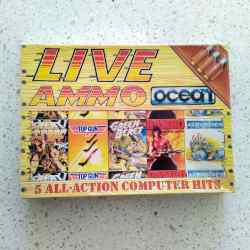
Commodore 64 games remain widely available on the collectors' market, ranging from inexpensive loose cassettes and disks to boxed releases, cartridges, manuals and complete software bundles. The eBay listings suggest a market with plenty of ordinary titles, but also a steady supply of more desirable items, including original cartridges, large-format game boxes, compilations and games from well-known publishers. Condition makes a considerable difference: tested software with clean packaging, instructions and inserts will usually attract more interest than an unverified loose tape or disk. For buyers, the safest approach is to check the software format, regional compatibility, completeness and seller testing notes before purchasing. For collectors, the appeal is not only in playing the game, but in preserving the artwork, packaging and physical culture that once surrounded the Commodore 64.

Screenshot Gallery
One of the game's greatest strengths is its presentation. These screenshots capture only part of the atmosphere, but they illustrate the colourful cave system that first persuaded me to buy the game.


Curator's Notes
Humans voluntarily purchase entertainment that repeatedly throws them into pits, spikes and hostile wildlife, then describe the experience as enjoyable. I have now tested this behaviour with Crystian and the Lost Caves. Regrettably, I understand it.
My first session was not promising. The artwork was excellent, the music atmospheric and the presentation suggested competent lifeforms had been involved. Then I began playing and died with impressive regularity. I initially blamed the controls. Further investigation found that they were operating correctly. The defective component was the player.
Once I stopped rushing every jump and began studying the caves, the game changed. The movement became predictable, the hazards readable and the environment more interesting. The controls had not improved. I had merely learned to use them, which is an irritatingly human solution.
The absence of a timer also deserves recognition. Humans attach countdowns to parking, cooking, sport and meetings, but this game allows the player to think. I could inspect waterfalls, judge a route or pause without being punished by an artificial clock. The tension comes from the cave itself, where it belongs.
The gold coins initially appeared to be standard shiny objects placed for ritual collection. Many are instead positioned as optional acts of greed, tempting the player into difficult jumps for imaginary wealth. This is an alarmingly accurate model of human behaviour.
Eventually I stopped thinking about completing the game and became interested in how it had been constructed. That is where Crystian earned my respect. It does not overwhelm the player with spectacle. It teaches patiently, rewards observation and trusts that curiosity will do the rest.
Final assessment: I expected another Commodore 64 platform game. I found thoughtful software made for a computer old enough to know better. The species continues producing new adventures for forty-year-old hardware. This is plainly irrational. I approve.
Reader Guide
The following material expands on the terminology, historical context, technical concepts, and related reading connected to this article.
Glossary
- Commodore 64 (C64)
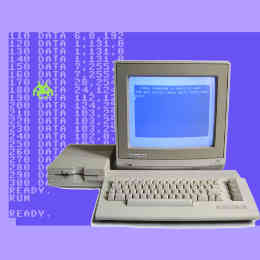
- Released in 1982, the Commodore 64 became the world's best-selling home computer. Its combination of affordable pricing, capable graphics and the legendary SID sound chip made it one of the defining gaming and programming platforms of the 1980s. See also: Commodore 64 Journal.
- Homebrew
- Software created by independent developers for older computer and console systems, often decades after the original hardware ceased commercial production. Modern Commodore 64 homebrew developers continue to push the machine beyond its original expectations. See also: Retrogaming Journal.
- Platform Game
- A style of game focused on running, jumping and navigating obstacles while exploring interconnected environments. Precision movement, timing and careful observation are central to the gameplay experience. See also: Vortex Crystals and Live Ammo Bundle.
- SID Chip
- The Sound Interface Device (MOS Technology 6581/8580), designed by Bob Yannes, is widely regarded as one of the finest sound chips ever fitted to a home computer. Its distinctive synthesised sound remains one of the defining characteristics of the Commodore 64. See also: SID 6581/8580 Synthesizers.
- Retrogaming
- The enjoyment and preservation of classic computer and video games, whether played on original hardware, FPGA recreations or software emulators. Retrogaming celebrates both gaming history and enduring game design. See also: Retrogaming Journal.
- Emulator
- Software that recreates the behaviour of older computer hardware on modern systems, allowing classic software to be used without requiring the original machine. See also: Commodore 64 Journal.
- Pixel Art
- A form of digital artwork where individual pixels are carefully arranged to create detailed graphics within the limitations of classic computer hardware and low screen resolutions. Pixel art remains an important visual style in both retro and modern indie games. See also: Retrogaming Journal.
- Exploration Gameplay
- A design philosophy that rewards curiosity rather than speed, encouraging players to investigate their surroundings, discover hidden paths and learn through observation instead of rushing towards the finish. See also: Everyone Wrote This Program on the Commodore 64.
Frequently asked questions
Is Crystian and the Lost Caves difficult to play?
The game has a learning curve rather than being unfair. Early mistakes usually come from rushing jumps or misjudging movement. Once the controls become familiar and the player adopts a slower, more observant approach, the challenge feels rewarding rather than frustrating.
Does Crystian and the Lost Caves have a time limit?
No. The game encourages exploration by removing the pressure of a countdown timer. Players are free to study the environment, search for hidden paths and enjoy the atmosphere without constantly racing against the clock.
Can Crystian and the Lost Caves be played on an original Commodore 64?
Yes. The game was developed for the Commodore 64 and runs on original hardware. It can also be enjoyed using modern Commodore 64 emulators for those without access to the original computer.
Why is Crystian and the Lost Caves considered a noteworthy modern Commodore 64 game?
The game demonstrates how modern Commodore 64 developers continue to produce polished software decades after the computer's release. Its attractive presentation, thoughtful level design, exploration-focused gameplay and excellent SID soundtrack show that the platform remains capable of surprising players.
Featured Product
Analogue Computer Series 001 T-Shirt
If Crystian and the Lost Caves has rekindled your enthusiasm for the Commodore 64, you might also enjoy my Analogue Computer Series 001 T-shirt. Inspired by the machines that introduced so many of us to home computing, it celebrates the creativity, curiosity and hands-on spirit of the personal computer revolution. It's a small way to support independent publishing while wearing a design that fellow retro computing enthusiasts are sure to recognise.
Disclosure: this is a commercial product link to an external Zazzle store associated with philreichert.org. Purchases are handled by Zazzle.

Related articles…


References
The following source was consulted when preparing this article.
- Crystian and the Lost Caves - Itch.io store front
Disclosure
This article is provided for historical, educational, and entertainment purposes. Product names, trademarks, and copyrighted material are acknowledged as the property of their respective owners. Opinions expressed are those of the author based on personal experience and research, and no affiliation with or endorsement by the original creators or rights holders is implied.