Why Your Digital Photos May Not Survive
Introduction
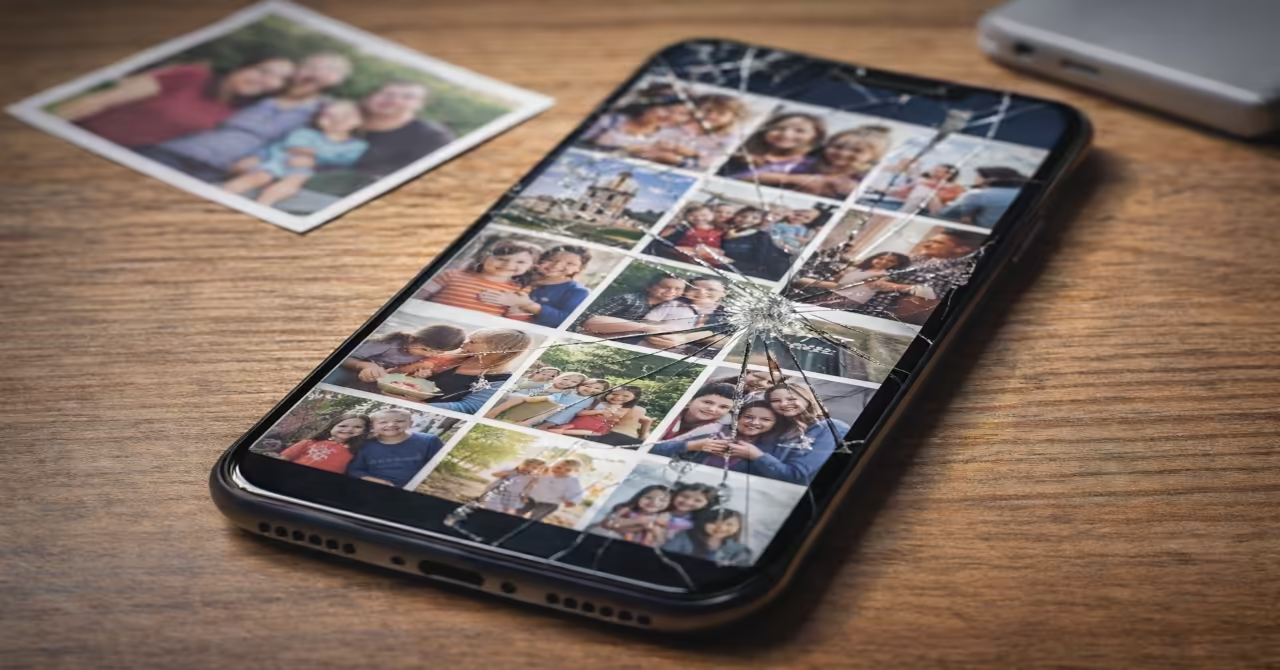
A phone slips from a pocket and disappears into the water. The device can be replaced within days. The photographs inside it cannot.
For many people a smartphone holds years of family memories. Birthdays, holidays, family gatherings, and quiet everyday moments live inside a small glass screen. When the device fails those images can disappear with it. This situation is more common than many people realise. Humanity now produces more than two trillion photographs each year. Most of them come from smartphones. Digital files appear easy to copy and easy to store. This creates the impression that personal photographs are safe.
Estimates suggest that humanity will take around 2.1 trillion photographs in 2025.[2]
The reality is different. Humanity is producing more photographs than ever in history, yet the systems holding them may be less durable than those used in the film era. Many personal photo collections depend on fragile systems that few people notice. Images often live on a single device or inside a single cloud account. When something goes wrong the result can be sudden and permanent loss.
Years of family memories can disappear in an instant. The photographs once existed, but they are no longer accessible. It can feel as though those moments were never recorded at all. In that sense you may find yourself living in the Digital Dark Age.[1]
This article explores why digital photographs may not survive. It examines the everyday risks that affect personal photo collections and explains how those risks form part of the wider Digital Dark Age.
The Snapshot Era
Photography once required planning. Film cameras limited the number of exposures and photographs were usually printed and placed in albums. Families stored those albums in homes and shared copies with relatives. Physical photographs created accidental redundancy because several copies often existed in different places.
Smartphones changed this behaviour. A phone is always within reach and a photograph requires almost no effort. People now capture moments that would never have been recorded before. Children grow up surrounded by cameras and daily life is documented in thousands of small images.
The convenience is remarkable. A photo taken in the morning can appear on several devices within minutes through cloud synchronisation. This creates the impression that photographs exist everywhere at once. In reality many collections still rely on a small number of fragile systems.
How Digital Memories Disappear
Here are four common ways we lose our precious memories over time.
Your Phone as a Single Point of Failure
For many people the phone acts as the centre of their photo collection. Images are captured, viewed, and shared from the same device. Some users also rely on automatic backup to a cloud service that is linked to the same phone account.
This arrangement can create a hidden vulnerability. A phone can be lost, stolen, or damaged. Devices fall into water. Batteries fail. Screens break. If photographs have never been exported or backed up elsewhere then the loss of the device can remove the entire collection.
Technology professionals describe this situation as a single point of failure. When all copies of important data depend on one device or one system, a single incident can remove everything at once.
The Illusion of the Cloud
Cloud storage adds another layer of convenience. A photo application may report that images are backed up and synchronised across devices. Users open their gallery on a tablet or computer and see the same photographs that appear on their phone. This convenience can hide an important detail. Cloud storage is a service that depends on a company and its infrastructure. Services evolve as companies change strategy, adjust pricing, or discontinue products.
History shows many examples of online platforms that have closed or changed direction. When a service shuts down the user is often given a limited period to export their data. Some people complete that process. Many do not notice the announcement or postpone the task until it is too late. In these situations the photographs themselves may not have failed. The surrounding service simply stopped existing.
Access and Accounts
Digital photographs are also tied to online accounts. Access depends on passwords, authentication systems, and the long term availability of email addresses. Accounts can become inaccessible for several reasons. Passwords are forgotten. Security systems detect unusual activity and lock access. Email providers close inactive accounts. Recovery procedures may depend on information that the user no longer remembers.
When this happens the photographs still exist on remote servers. The owner simply cannot reach them. The images become part of a digital archive that is technically intact but practically lost. This can create an uncomfortable imbalance where the platform continues to hold data about the user while the user can no longer easily recover the photographs that matter most.
Technology That Ages
Digital storage media also change over time. Hard drives fail. Memory cards degrade. Software formats evolve as new devices replace older systems. An external drive that holds a decade of photographs may stop working without warning. An older computer may contain thousands of images that cannot be easily accessed once the hardware fails. Even when the files survive, the tools required to read them may disappear.
Long term preservation requires active care. Files must be copied to new storage devices and occasionally reorganised so that they remain accessible as technology changes.
The Emotional Cost of Data Loss
The loss of photographs is rarely a technical problem alone. It is also an emotional one. Photographs capture moments that cannot be recreated. A childhood birthday, a holiday with friends, or a gathering of relatives may only exist in those images.
Families often rely on photographs to remember people and places that have changed. Homes are renovated. Children grow older. Grandparents pass away. Photographs allow these moments to remain part of family memory.
When those images disappear the loss feels personal. The event itself may still be remembered, but the visual record that preserved the details is gone.
Your Personal Digital Dark Age
Historians sometimes describe a possible Digital Dark Age. The term refers to the risk that large amounts of digital information may become unreadable or inaccessible in the future. A similar problem can occur on a smaller scale within individual families. Personal photo collections can vanish through device failure, service closures, or neglected backups. When that happens a period of life may lose its visual record.
This quiet disappearance represents a personal form of the Digital Dark Age. It does not occur through a dramatic event. Instead it arrives slowly through forgotten backups, obsolete devices, and accounts that no longer work.
Conclusion
Digital photography has allowed people to document everyday life in extraordinary detail. The technology is powerful and convenient, and it encourages the belief that our memories are safely preserved. Yet many photo collections depend on systems that were never designed for permanent archiving. Phones fail. Online services evolve. Digital storage devices age. Without careful attention important images can disappear.
Archivists often follow a simple rule. Important data should exist in more than one place.
The Digital Dark Age is often imagined as a challenge for historians in the distant future. For many people it may appear much sooner. It may arrive the day they search for a photograph that once existed and discover that it has quietly vanished.

Glossary
- Digital Dark Age
- A term used to describe the possible loss of digital information over time due to obsolete technology, failed storage media, or inaccessible data formats.
- Cloud Storage
- Online storage provided by a company that allows files to be saved on remote servers and accessed through internet connected devices.
- Smartphone Photo
- A digital photograph captured using the camera built into a mobile phone. Smartphones now produce the vast majority of photographs taken worldwide.
- Photo Backup
- A duplicate copy of photographs stored in a separate location so that images can be recovered if the original files are lost or damaged.
- Photo Archive
- A collection of photographs preserved for long term access. Archives are usually organised and stored using reliable storage methods and multiple copies.
- Account Lockout
- A situation where a user cannot access an online account due to forgotten credentials, security restrictions, or changes to authentication systems.
- Service Shutdown
- The closure of an online platform or digital service. Users must often export their data before the shutdown to avoid losing stored files.
- Data Loss
- The permanent disappearance of digital information caused by device failure, accidental deletion, system corruption, or loss of access to storage systems.
Frequently asked questions
How can digital photos disappear if they are stored online?
Digital photos stored online can still disappear if a service shuts down, an account becomes inaccessible, files are deleted, or the user fails to export their images before a platform changes or closes. Online storage improves convenience, but it does not guarantee permanent preservation.
Why are smartphones considered risky places to store photos?
Smartphones are risky because they can be lost, stolen, damaged, or replaced. Many people also rely on the phone as their main photo library without keeping independent backups. If the device fails and the images have not been copied elsewhere, the collection may be lost.
Should I keep copies of my photos offline?
Yes. Offline copies add an important layer of protection. They reduce reliance on a single phone, account, or cloud platform. External drives and other local storage can help preserve access to important photographs if an online service fails or an account becomes unavailable.
What is a personal digital archive?
A personal digital archive is a collection of important digital files that has been intentionally organised and preserved for long term access. It often includes photographs, documents, and media stored in multiple locations so that personal history is less vulnerable to loss.