Five Interesting Facts About the Digital Dark Age

How Digital Memory Quietly Disappears
Somewhere right now, an old floppy disk still contains a forgotten school project. A CD-R still holds family photographs from a summer holiday twenty years ago. An external hard drive still stores emails, drafts, music collections, and business records from another era of computing. The artefacts survive quietly in drawers and cupboards across the world.
The unsettling part is this: many of them are already becoming unreadable.
1. Digital records can age faster than paper
A printed photograph from the 1970s can still be viewed instantly with nothing more than light and human eyesight. A digital photograph from the early 2000s may depend on a damaged cable, an obsolete connector, unsupported software, or a password nobody remembers.
Digital information survives through layers of technology, and every layer introduces another possible failure point. Remove one layer and the entire chain can collapse. In some cases, a handwritten letter from a century ago is easier to access than a file saved thirty years ago.
“A file can survive physically while disappearing practically.”
This is one of the central ideas explored in Living in the Digital Dark Age. Information loss is often quiet and gradual rather than dramatic. Technology moves forward, and older systems slowly fall behind.
Once you notice this pattern, the next question becomes unavoidable: what does it really mean to preserve something digitally?
2. “Saved” and “preserved” are not the same thing
Most people assume that saving a file means it is secure. In reality, saving is only the beginning. Preservation requires ongoing attention. Files need backups, migration to newer formats, readable naming systems, and storage methods that can survive hardware failure and changing technology.
Obsolete formats are one of the hidden dangers of the digital era. Old databases, word processor files, image formats, and proprietary software types can become unreadable long before the storage media itself fails. The data may still exist perfectly intact, yet no modern system knows how to interpret it.
Libraries and archives now spend enormous effort converting old material into newer formats before the digital door closes permanently. It is a strange kind of race against time, fought not against decay alone but against compatibility.
The problem becomes even more complicated when the storage itself is invisible.
3. The cloud is less permanent than it feels
Cloud systems feel stable because they remove visible hardware from daily life. Photos appear automatically across devices. Documents sync silently in the background. Music and media seem to exist everywhere at once.
Yet cloud storage still depends on accounts, companies, subscriptions, business models, and policies that can change over time. Services close. Platforms merge. Passwords are lost. Accounts become inactive. Storage limits tighten quietly in the background.
“The cloud is still somebody else’s computer.”
This issue becomes deeply personal with family photographs and memory collections. Why Your Digital Photos May Not Survive explores how ordinary technical failures can slowly erase pieces of personal history that once felt completely secure.
Even when files remain accessible, another threat continues working quietly beneath the surface.
4. Digital decay is real
Many people imagine digital data as perfect and permanent, but stored information can slowly degrade over time. Archivists sometimes refer to this as bit rot, where tiny errors accumulate within stored data. Modern systems use error correction and redundancy to reduce the risk, yet long-term preservation still requires active maintenance.
Unlike a damaged paper document, digital corruption can remain invisible until the exact moment somebody tries to open the file. One image may fail to load. One document may suddenly refuse to open. Sometimes the loss is discovered years after the last good backup disappeared.
There is something strangely haunting about this form of decay. The archive appears complete until the instant it is needed.
And all of this is happening while humanity creates more digital material than at any point in history.
5. We are building the largest cultural archive ever created
Earlier generations left behind letters, newspapers, books, posters, catalogues, and physical photographs. Our generation leaves behind websites, videos, social media posts, podcasts, forums, databases, screenshots, digital art, playlists, and cloud archives.
The quantity is astonishing. Every day, humanity produces a vast ocean of digital culture. Yet quantity alone does not guarantee survival. Without preservation, much of this material may become fragmented, inaccessible, or lost altogether.
The Digital Dark Age: The Silent Crisis of Losing Our Digital Culture examines this wider cultural dimension. The concern is not simply losing files. It is losing evidence of how people communicated, learned, created, argued, and imagined during the digital age.
The real challenge
The Digital Dark Age is ultimately a problem of continuity. Information only remains meaningful when future systems, and future people, can still interpret it. A file without context, software, or compatible hardware becomes less like a document and more like an undeciphered artefact.
The practical response is surprisingly simple: maintain backups, export important files into common formats, label collections clearly, and revisit archives before changing technology strands them. Preservation is rarely glamorous work, but it quietly determines what survives into the future.
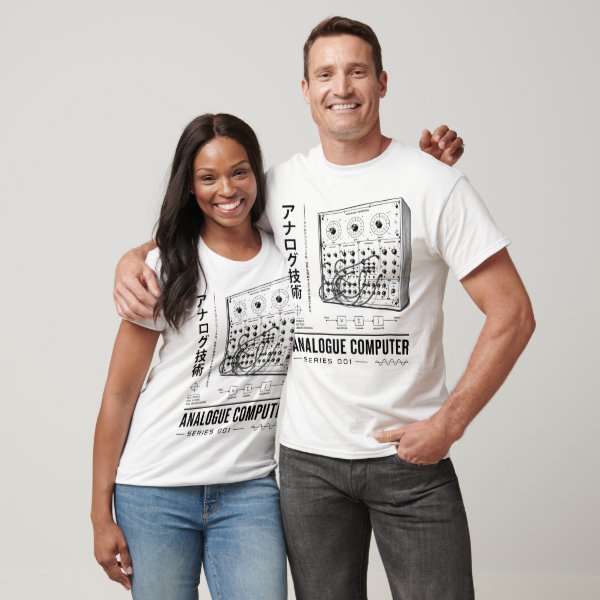
Readers interested in the physical history of computing may also enjoy the retro-futurist aesthetic behind the Analogue Computer Series 001 apparel collection on Zazzle, inspired by the visible-machine era of early computing culture.
Continue with Living in the Digital Dark Age for the broader historical argument, then explore the related articles on digital culture and personal photo preservation to see how the same problem appears across both institutions and everyday life.
Featured Product
Analogue Computer Series 001 T-Shirt
The Digital Dark Age reminds us that information is never truly weightless. Every file depends on machines, formats, media, and systems that eventually age and disappear. The Analogue Computer Series 001 t-shirt celebrates an earlier era of visible computing, when switches, circuits, logic, and physical interaction made the machinery of information impossible to ignore.
Disclosure: this is a commercial product link to an external Zazzle store associated with philreichert.org. Purchases are handled by Zazzle.
Writer's Notes
I find the Digital Dark Age genuinely unsettling because it does not look like destruction in the way people expect. There are no burning libraries. No shattered monuments. No dramatic collapse. Instead, there are drawers full of disks nobody can read, cloud accounts nobody can access, and hard drives quietly dying in cupboards while entire chapters of modern life fade into silence.
What troubles me most is that we are creating one of the largest cultural records in human history while simultaneously building it on fragile foundations. We document everything. Conversations, photographs, journals, engineering work, research, art, music, family history, and daily life. Yet much of it may survive for only as long as a password, a connector, a subscription, or a file format remains usable.
There is something deeply haunting about the idea that future historians may know less about our era than we know about people who lived hundreds of years ago simply because paper survived while our digital systems did not. A handwritten letter can sit untouched for a century and still speak clearly. Meanwhile, a digital archive from twenty years ago can become unreadable through nothing more dramatic than technological progress.
I think many people still assume that digital means permanent. In reality, digital often means dependent. Dependent on software, hardware, power, compatibility, companies, and ongoing maintenance. Remove one layer and the memory can disappear almost instantly.
Part of the reason I write about this topic is because I believe the Digital Dark Age will become one of the defining cultural preservation challenges of the modern era. Not because technology failed, but because we mistook convenience for permanence.
Glossary
- Digital Dark Age
- A possible future loss of digital records because files, formats, storage media, or systems can no longer be accessed. In this article, it describes the unsettling idea that our era may leave behind vast amounts of data that future people struggle to read.
- Obsolete Formats
- File types or data structures that are no longer supported by modern software. The article uses this term to show how a file can still exist but become unreadable, like a message sealed inside a machine nobody owns anymore.
- Bit Rot
- The gradual corruption of stored digital data over time. In the article, bit rot is the quiet decay beneath the surface, where an archive may look complete until a file suddenly refuses to open.
- Cloud Storage
- Online storage provided through remote servers rather than a device in your hand. The article treats the cloud as useful but not magical, because accounts, companies, subscriptions, and policies can all change.
- Digital Preservation
- The active work of keeping digital information readable and meaningful over time. Here, it means more than saving files. It means backing up, exporting, labelling, checking, and caring enough to keep memory alive.
- File Format
- The structure that tells software how to read a file, such as a document, image, video, or database. In the article, file formats are one of the hidden agreements that make digital memory possible.
- Compatible Hardware
- Physical equipment that can still connect to and read older storage media. The article points to this because a disk, tape, or drive may survive perfectly while the machine needed to open it has disappeared.
- Cultural Archive
- The collected record of how people lived, worked, created, argued, and remembered. In this article, our cultural archive includes websites, posts, photos, videos, databases, and other digital traces that may define how the future understands us.
Frequently asked questions
What is the Digital Dark Age?
The Digital Dark Age refers to the potential long-term loss of digital information caused by obsolete formats, failed storage systems, unreadable media, and changing technology platforms.
Why can digital files become unreadable over time?
Digital files depend on hardware, software, file formats, connectors, and compatible systems. As technology changes, older formats and devices can become unsupported or inaccessible.
Is cloud storage enough to preserve important files?
Cloud storage can reduce some risks but does not guarantee long-term preservation. Accounts, services, subscriptions, and platforms can change or disappear over time.
How can people reduce the risk of losing digital memories?
Maintaining backups, exporting files into common formats, clearly labelling archives, and regularly reviewing older digital collections can help reduce the risk of permanent digital loss.
Related articles…
Readers interested in digital preservation, retrocomputing, and the long-term survival of digital culture may also enjoy these related articles.




References
- Living In The Digital Dark Age, philreichert.org
Disclosure
This article presents an editorial exploration of the Digital Dark Age and the long-term risks surrounding digital preservation, obsolete technology, and cultural memory. Content is written for general readers and combines technical concepts with interpretive commentary. Readers seeking formal archival, preservation, or information science guidance should consult professional digital preservation and archival sources.