The Future is AI-Generated RPG Soundscapes
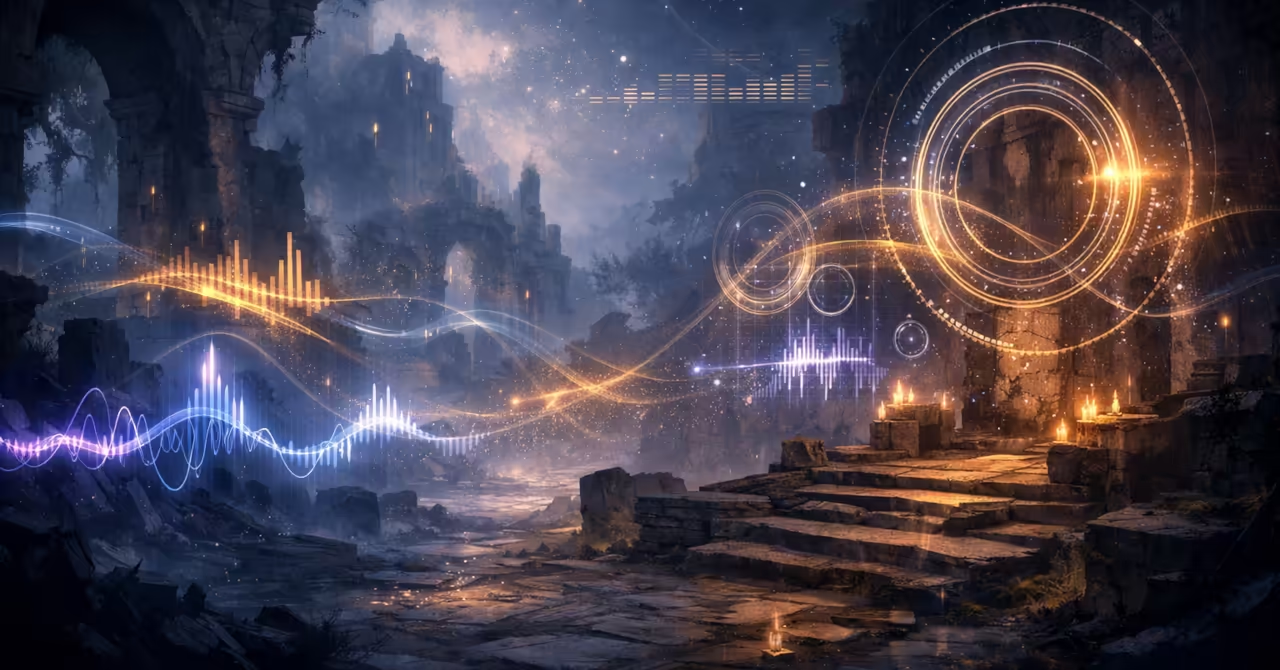
AI Systems Expand the Design Space of RPG Soundscapes
Artificial intelligence and RPG audio design are linked through the expansion of generative systems that can produce, adapt, and organise sound in real time. Traditional pipelines rely on fixed assets composed, recorded, and implemented ahead of play. AI systems introduce the ability to generate and modify audio during play, which alters how soundscapes are built and experienced.
From Fixed Assets to Generative Audio Design Systems
Audio design in fantasy RPGs has moved from static playback toward responsive systems that adapt to player state. AI extends this progression by enabling sound generation rather than selection. Instead of choosing from a library of prebuilt loops and cues, a system can construct material that matches current conditions such as location, tension level, or narrative state.
This shift changes the role of the composer and designer. The focus moves from creating complete tracks to defining rules, models, and constraints. These elements guide how the system generates output. The result is not a single authored piece but a space of possible outcomes that remain consistent with the game’s identity.
Fantasy settings benefit from this approach because they demand variation across large worlds. A forest, a ruin, and a city require distinct sound identities, yet they must remain coherent within a shared aesthetic. Generative systems can maintain this balance by producing variation within defined boundaries.
Generative Models Translate State into Continuous Sound
AI systems operate by mapping game state to audio output through trained models or procedural rules. Inputs may include player location, proximity to threats, quest progress, or environmental variables. The system interprets these inputs and generates sound that reflects the current context.
This allows for continuous variation rather than discrete transitions. A soundscape can evolve gradually as the player moves through space or as tension increases. The change is not limited to switching tracks or layers. It can involve the creation of new textures, rhythms, or harmonic movement that align with the situation.
Early adaptive systems used predefined layers and crossfades. AI systems extend this by producing material that was not explicitly authored in advance. The function remains similar. The method becomes more flexible and less predictable.
Control, Consistency, and the Limits of Automation
The introduction of generative systems creates a contrast with traditional scoring. Fixed compositions offer precise control over structure, timing, and identity. Generative systems offer variation and responsiveness but require constraints to maintain coherence. Without clear boundaries, output can become inconsistent or lose narrative focus.
There is also an implication for authorship. A composed track reflects direct creative intent. A generated output reflects a combination of training data, system rules, and runtime conditions. The designer’s role shifts toward defining the space within which the system operates rather than specifying each result.
This raises practical concerns. Identity must remain stable across long play sessions. Key narrative moments may require fixed cues to ensure clarity. Generative systems need to integrate with these requirements rather than replace them. Balance between control and variation becomes a central design problem.
Integrating AI Sound Systems into Fantasy RPG Design
AI audio systems can be integrated as a layer that complements existing design rather than replacing it. Core themes and critical cues can remain authored. Generative systems can fill the surrounding space with variation that responds to player movement and state. This approach preserves identity while increasing depth.
Application extends to environmental sound, music, and effects. Ambient layers can be generated to reflect weather, time, and activity. Musical textures can shift in density and harmony based on tension. Effects can vary in subtle ways to avoid repetition. The player experiences a world that feels less static and more reactive.
Analysis of these systems requires attention to behaviour rather than individual assets. It becomes useful to observe how sound changes over time, how it responds to input, and how it maintains coherence. The focus shifts from evaluating tracks to evaluating systems.
Fantasy RPGs already rely on layered audio to support large-scale worlds. AI introduces a method to extend that layering into continuous generation. The design challenge is to ensure that this flexibility supports rather than obscures narrative clarity.
Evaluating AI Audio Systems Through System Behaviour
AI-generated soundscapes expand the possibilities of RPG audio by shifting design from fixed assets to generative systems. These systems translate game state into evolving sound, offering variation and responsiveness at scale. Their effectiveness depends on control, constraint, and integration with authored elements. A useful next step is to observe how a game’s audio changes across movement, tension, and narrative state, noting whether those changes feel coherent and intentional.