When Music Theory Meets Fantasy Game Design
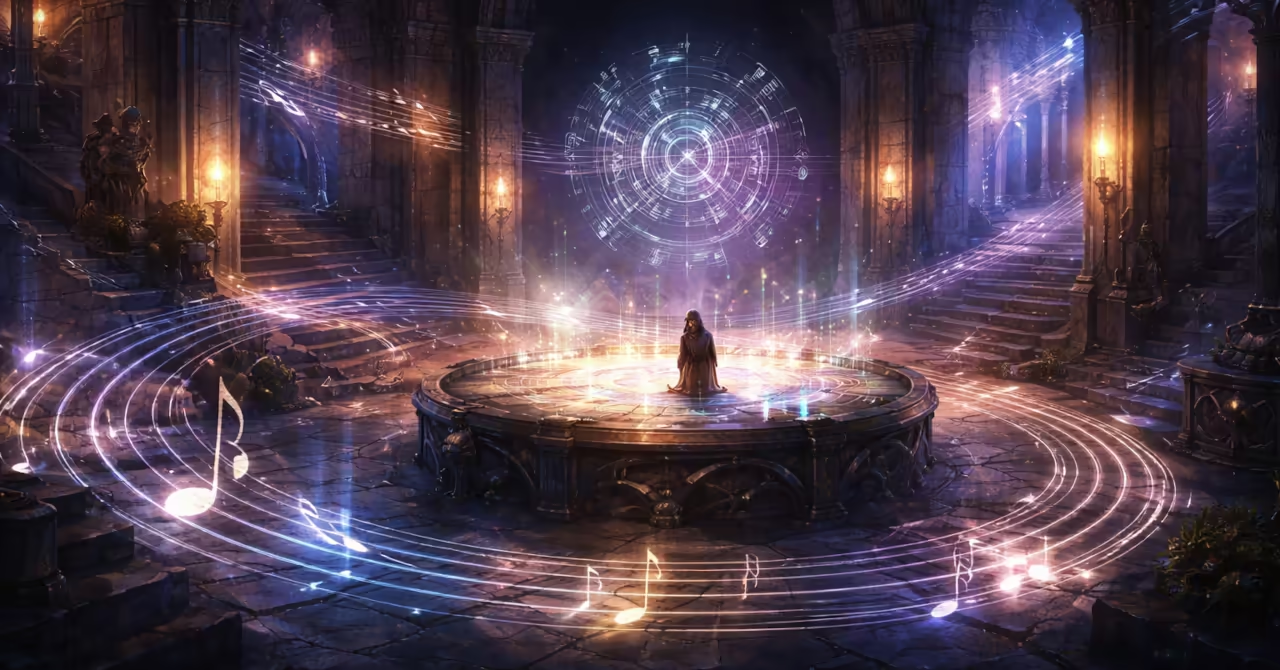
Compositional Structure Shapes How Players Experience Systems
Music theory and fantasy game design are linked through shared structural principles that organise time, tension, and resolution. A composer uses harmony, rhythm, and form to guide expectation. A game designer uses mechanics and pacing to guide action. When these systems align, the player experiences a coherent flow where sound and play reinforce each other.
Musical Rules Translate Directly Into Gameplay Structure
Compositional structure can mirror gameplay systems with high precision. Rhythm establishes pace. Harmony establishes emotional direction. Form establishes progression. These elements map cleanly onto exploration, combat, and narrative beats within a fantasy RPG.
A steady rhythmic pattern supports controlled movement and observation. Faster subdivisions increase urgency and encourage quicker decisions. Harmonic tension can signal instability or danger, while consonant harmony can suggest safety or completion. Form allows the score to move through phases that match gameplay states. An introduction can align with entry into a new area. Development can align with increasing challenge. Resolution can align with victory or rest.
These connections allow music to reinforce system design without direct instruction. The player does not need to analyse the structure. They respond to it. The experience feels ordered even when the underlying systems are complex.
Rhythm and Harmony Define Player Timing and Expectation
Rhythm operates as a timing guide. A regular pulse creates stability. Syncopation introduces uncertainty. Acceleration increases pressure. These changes influence how players act. A steady beat supports measured input. Irregular patterns can disrupt timing and create tension.
Harmony shapes expectation across longer spans. A progression that delays resolution can sustain anticipation. A clear cadence can signal completion. Players internalise these cues. They begin to anticipate change based on sound alone. This anticipation supports decision making without requiring explicit prompts.
Early RPGs applied these principles in simple forms. Limited channels required clear rhythmic and harmonic signals. Modern systems extend this through layering and variation. The function remains consistent. Music defines when and how the player should act.
Structured Music Creates Coherence Across Systems
Visual and mechanical systems can present large amounts of information, but they do not always provide a unified sense of flow. Structured music can supply that coherence. It binds separate systems into a single perceived experience.
A combat encounter illustrates this effect. Visual cues show enemy position and attack patterns. Mechanics define available actions. Music can unify these elements by framing the encounter within a clear structure. A build in intensity can align with rising threat. A break in texture can align with a moment of recovery. The player experiences the encounter as a sequence rather than a set of isolated actions.
This creates a contrast with unstructured audio. Without clear musical organisation, the player may still succeed mechanically, but the experience can feel fragmented. Structured music supports continuity. It provides a sense of direction that extends beyond individual inputs.
Applying Musical Thinking to Game Design
Designers can use musical principles to shape gameplay more deliberately. Encounters can be planned with an arc that mirrors musical form. Early phases establish patterns. Mid phases introduce variation and pressure. Final phases resolve tension. Audio can reinforce each stage, creating alignment between sound and system.
This approach also applies to larger structures. Regions can be defined by distinct tonal and rhythmic identities. Transitions between areas can be handled as key changes or shifts in tempo. The player perceives movement through the world as progression through a structured space.
Analysis of RPG audio benefits from recognising these links. It becomes useful to examine how rhythm supports timing, how harmony supports expectation, and how form supports progression. These elements reveal how sound is integrated into system design rather than added after the fact.
Fantasy RPGs often aim for large and complex worlds. Musical structure provides a way to organise that complexity into something the player can follow. The result is not just a better soundtrack. It is a clearer experience.
Listening for Structure Within the Experience
Music theory shapes player experience by aligning compositional structure with gameplay systems. Rhythm guides timing. Harmony guides expectation. Form guides progression. These elements operate together to create coherence across play. A useful next step is to examine a familiar RPG encounter and identify how its music aligns with the phases of action and resolution within the system.