Menu Music First Sets The Game RPG Narrative
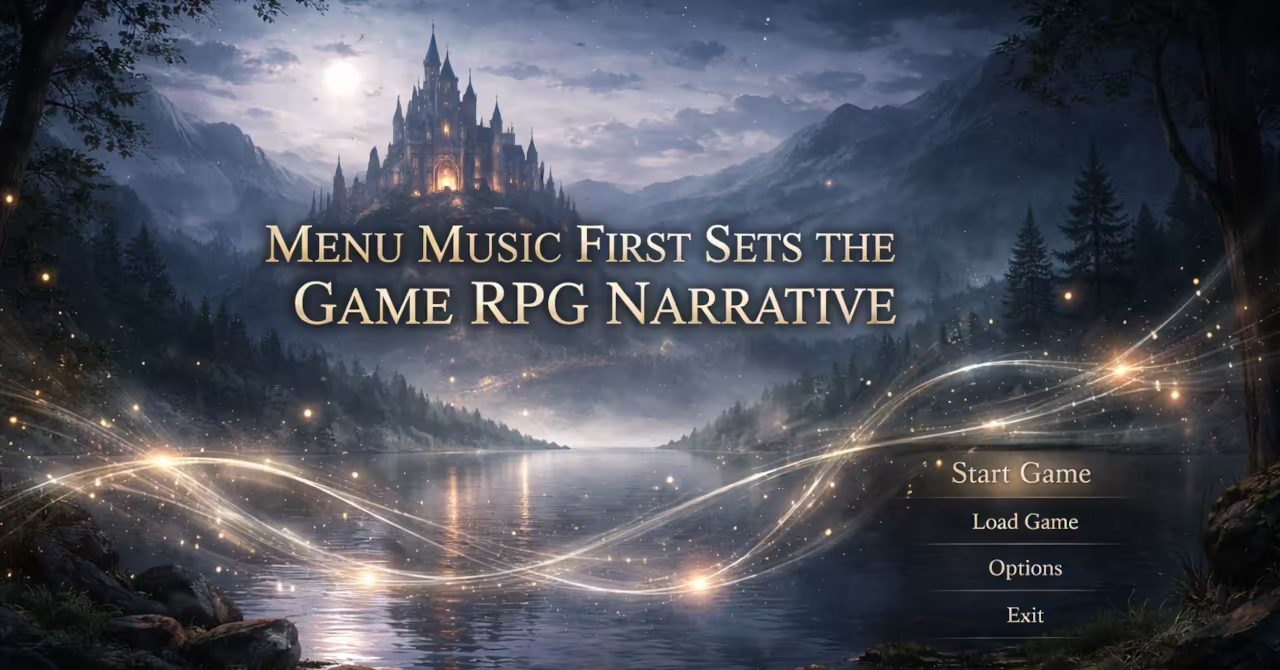
Menu Music Defines Expectation Before Play Begins
Menu music and narrative framing are linked through the way opening audio establishes emotional expectation before any gameplay occurs. The player has not moved, chosen, or acted, yet the game has already begun to communicate tone, scale, and intent. The first seconds of audio function as a contract. They define what kind of experience the player is about to enter.
Interface Audio Establishes Narrative Context Without Action
The opening menu sits outside the active game world, but it still carries narrative weight. Visual elements present identity through logos, typography, and artwork. Audio provides the first sense of atmosphere. A restrained piano line suggests introspection. A full orchestral swell suggests scale and conflict. A sparse ambient texture suggests isolation or mystery. These signals arrive before the player engages with mechanics.
This positioning gives menu music a unique role. It must communicate without relying on context from play. There are no systems in motion. There is no character control. The music stands alone as a statement of intent. It frames how the player interprets everything that follows.
Fantasy RPGs use this space to establish identity with precision. The opening theme can introduce harmonic language, instrumentation, and pacing that will recur throughout the game. The player begins forming expectations about world tone and narrative direction before the first input is made. This is not passive listening. It is orientation.
Opening Themes Anchor Tone and System Identity
Menu music establishes a tonal baseline that informs how later systems are perceived. A slow tempo and stable harmony create a sense of calm or reflection. A faster tempo with layered orchestration suggests complexity and movement. Instrument choice reinforces setting. Strings and choir may imply epic scope. Synth textures may imply abstraction or distance.
These elements act as anchors. When similar material appears during gameplay, the player recognises continuity. A theme introduced in the menu may return in altered form during key moments. The connection is not always conscious, but it supports cohesion across the experience.
Early RPGs used simple looping themes to achieve this effect. Limited memory required concise statements. A short melody could define the entire identity of the game. Modern titles have more space and variation, but the function remains consistent. The opening theme establishes the rules of the audio language.
Early Framing Influences How Gameplay Is Interpreted
The contrast lies in how the same gameplay can be perceived differently depending on its initial framing. Mechanics do not change between sessions, but expectation alters interpretation. A combat system introduced after a restrained and solemn theme may feel deliberate and weighty. The same system introduced after a bright and energetic theme may feel fast and responsive.
This influence extends to narrative tone. Dialogue, exploration, and progression are filtered through the emotional state established at the menu. The player carries that baseline into the first moments of play. It shapes how events are read and remembered.
Interface design alone cannot achieve this effect. Visual elements can signal genre and quality, but they do not control pacing in the same way. Audio introduces time and movement before interaction begins. It prepares the player for a certain type of engagement.
Designing the Menu as Part of the Narrative System
Menu music can be treated as part of the broader narrative system rather than a separate interface element. Designers can use it to introduce thematic material, establish pacing expectations, and align the player with the intended tone of the game. This requires coordination between composition, narrative design, and system structure.
Variation can extend this approach. A menu theme may evolve as the player progresses, reflecting changes in story or state. Additional layers may appear after key events. Instrumentation may shift to match narrative development. The menu becomes a living extension of the game rather than a static entry point.
Analysis of RPG audio benefits from including this layer. It is useful to consider how the opening theme frames the experience and how it connects to later material. The strength of this connection often reflects the overall coherence of the audio design.
Fantasy RPGs operate at large scale, and consistency across that scale is difficult to maintain. The opening menu provides a controlled space where identity can be established with clarity. That identity can then be reinforced throughout play.
Listening to the Game Before It Begins
Menu music forms a narrative contract by defining tone and expectation before gameplay starts. It anchors identity, shapes interpretation, and connects to later audio structures across the game. This layer operates quietly, yet it influences the entire experience. A useful next step is to revisit a familiar RPG and compare its opening theme with its in-game music, noting how the initial framing carries through exploration, combat, and narrative moments.