Audio as the Hidden Narrative Layer in Game RPGs

Introduction
Most players think RPG storytelling is visual. It is not. Audio carries narrative meaning that the screen never shows. A player may see a corridor, a campfire, or a party member standing still. The audio layer tells them whether the place is safe, haunted, sacred, tense, lonely, or alive with unseen movement. That is why sound is not just decoration in an RPG. It is often the hidden narrative layer that gives the scene its true meaning.
Sound Carries Narrative Where Visuals Cannot
Sound design deepens storytelling by adding context that visuals and text alone cannot efficiently deliver. Music can suggest faction, history, danger, or emotional weight before a line of dialogue appears. Ambient sound can imply scale, distance, weather, architecture, and life beyond the edge of the screen. Voice delivery can reshape how a character is understood even when the written words remain unchanged. In a strong role-playing game, audio is not simply supporting the narrative. It is carrying part of the narrative load.
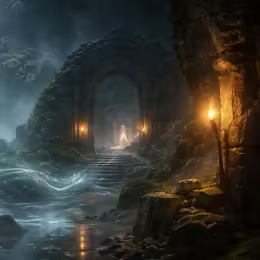
This matters especially in fantasy RPGs because these games ask players to believe in places that do not exist. A stone ruin on screen may look impressive, but the sound of wind through broken arches, a distant bell, or a low musical drone gives that ruin a story. It can feel ancient, cursed, abandoned, ceremonial, or occupied. The player is receiving information without the game needing to stop and explain it. That is efficient design, but it is also good storytelling.
Audio Communicates Through Association and Timing
The mechanism is simple. Audio delivers narrative context through association, timing, and spatial implication. A composer assigns musical colour to a kingdom, a faith, or a threat. A sound designer builds an environment where surfaces, creatures, weather, and machinery all produce clues. The player gathers these clues as naturally as they watch the screen.
Older role-playing games often did this through necessity. Limited graphics left gaps that sound had to fill. A short dungeon theme could imply dread and confinement. A bright town melody could imply safety and commerce. A harsh battle sting could announce danger before the enemy sprite fully registered. Even primitive effects had narrative value. A door creak, a metallic clang, or a distant monster sound helped the world feel present.
Modern RPGs have more tools, but the underlying mechanism is the same. The difference is density and control. Today, audio can change with location, dialogue state, combat pressure, companion reaction, and quest progress. The soundscape can narrow when tension rises. It can widen when wonder returns. The player reads this almost unconsciously. Good audio design teaches the player how to feel about a scene before the game states it in words.
Visual Dominance Masks Audio’s Narrative Role
The contrast is that visual storytelling gets most of the credit because it is easier to point at. Players remember castles, armour, menus, monsters, and dramatic cutscenes. They can screenshot those things. Audio is less visible, so its contribution is often underestimated. Yet remove the sound and the same scene usually loses weight at once.
This is where the hidden layer becomes obvious. Imagine entering a forest temple with no music, no reverberation, and no environmental sound. The architecture may still be impressive, but it will not feel charged with meaning. Add a faint chant, a cold wind tone, and a subtle echo, and the same location gains history and ritual presence. Nothing on screen has changed. The story has changed anyway.
There is also an implication for how we judge RPG writing. Players often praise a scene because it felt emotional or memorable, when part of that effect came from audio structure rather than text alone. A companion farewell can become devastating because the voice performance trembles, the music withdraws, and the ambient bed becomes exposed and fragile. That is narrative construction. It is just happening through sound rather than prose.
Listening Changes How RPG Worlds Are Understood
The application of this idea reaches beyond appreciation. It changes how we listen to games and how developers might build them. For players, it encourages more attentive listening. Instead of asking only what a game shows, it is worth asking what the audio is telling you about place, mood, faction, danger, and character intent. In many RPGs, the answer is a great deal.
For writers, designers, and critics, this idea sharpens analysis. A fantasy world is not made convincing by lore entries alone. It is made convincing when every layer agrees on what the place is. Audio can be the layer that makes the fiction cohere. It can bind environment art, dialogue, and mechanics into a single emotional reading.
This is also why older RPG audio deserves respect rather than polite nostalgia. Chiptunes, sparse ambience, and simple effect libraries were often doing very serious narrative work. They established tone with few resources. Modern orchestral scores and full voice performances extend the same tradition at a larger scale. The tools changed. The storytelling function remained.
Conclusion
Audio is the hidden narrative layer in RPGs because it carries meaning that the player may feel before they consciously recognise it. It gives scenes emotional direction, strengthens places, and helps characters exist beyond their written lines. Once you notice that relationship, fantasy RPGs become easier to hear as well as see. The next step is to test this idea in a familiar game and pay close attention to what the sound reveals that the screen never directly says.