Sound Effects as Narrative Storytelling in Dungeons
When a Dungeon Starts Speaking Through Sound
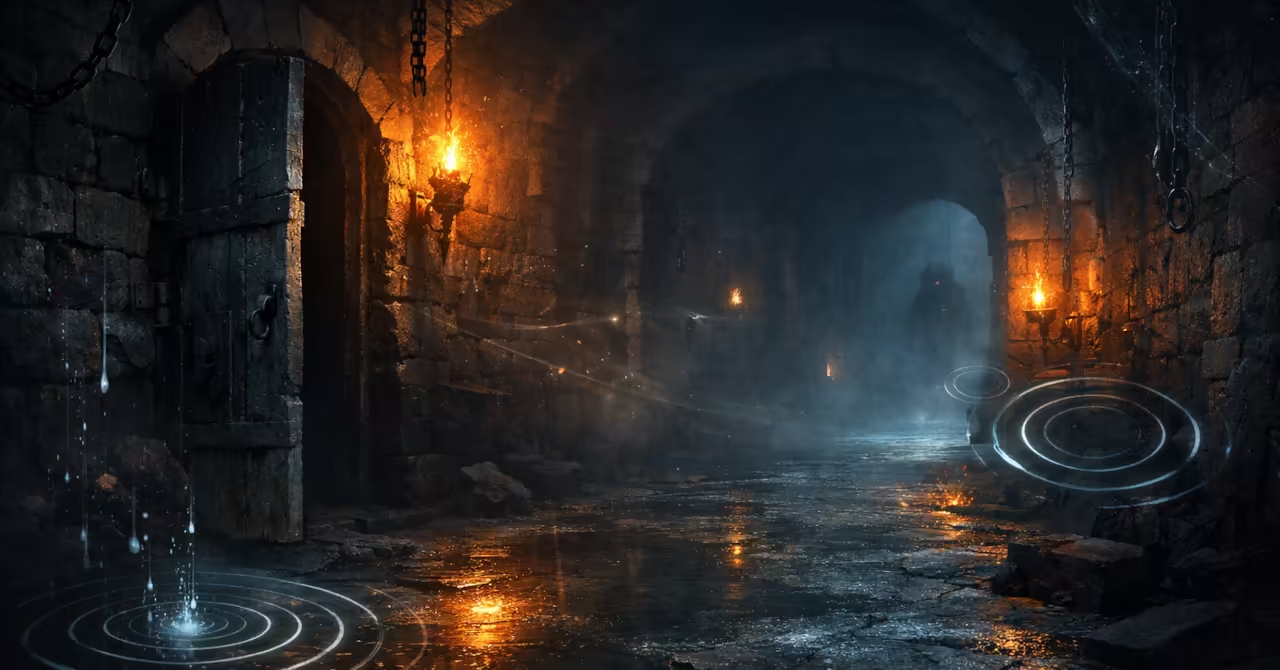
Sound effects and dungeon storytelling are closely linked because environmental audio often tells the player what kind of space they have entered before the game explains it in words. A corridor with dripping water, a distant metal groan, or the sudden clack of something moving out of sight can establish danger, direction, and unseen presence in a way a static wall texture cannot. In early role-playing games, these sounds were not luxuries. They were narrative anchors that helped turn simple spaces into places with tension and meaning.
Why Early Dungeon Audio Carried So Much Story Weight
The connection is simple. Dungeon sound effects gave structure to spaces that were often visually limited. Early RPGs had strict technical boundaries. They could show stone walls, doors, torches, and monsters, but they could not always express scale, atmosphere, or off-screen activity with much detail. Environmental sound stepped into that gap. It helped define what was nearby, what was hidden, and what sort of place the player was moving through.
A dungeon in an early game was rarely just a map with monsters placed in rooms. It was a sequence of implied situations. The scrape of a door suggested age or resistance. A bubbling pit suggested depth and hazard. A hollow footstep implied a different floor surface and a change in space. Even a blunt combat noise could tell the player that contact had occurred in a confined and dangerous place. These effects were short and often crude, yet they carried narrative load with real efficiency.
Fantasy dungeons benefited from this more than almost any other environment. By design, a dungeon hides information. You are meant to feel uncertain. You are meant to suspect that something is around the next corner. Sound effects support that uncertainty. They turn a visible maze into a felt location. The player starts to read the dungeon not just with sight, but with expectation.
How Sound Effects Build Spatial Meaning
The mechanism works through cues that imply location, material, and activity. When a player hears a chain rattle, a stone door shift, or a low creature noise, they begin forming a mental map that extends beyond the visible screen. The game no longer feels limited to what is in view. It starts to feel larger than the frame.
Early RPGs used this trick well because they had to. A single sound could define a zone. Drips and echo could make one section feel cold and wet. Mechanical clicks could make another feel trapped or engineered. The same visual tiles might be reused across several areas, but the sound effect layer could separate those spaces in the player's mind. One room became threatening. Another felt abandoned. Another felt active. The effect was subtle, but the result was powerful.
Direction also emerges from this system. A player hears water and expects a cavern or underground stream. A beast noise implies pursuit or nearby contact. A sudden silence after regular effects can be just as telling. The dungeon gains rhythm. It begins to lead the player through anticipation rather than instruction. That is level design, but it is also storytelling. The sounds are telling you what kind of trouble may be ahead.
Why These Cues Often Work Better Than Explanation
The contrast with direct explanation is sharp. A text box can state that a dungeon is ancient, unstable, or haunted. A sound effect can make the player feel it at once. Creaking timber, falling grit, distant moans, or a heavy echo achieve an immediate result. The world stops being described and starts being sensed.
This is part of the charm of early dungeon audio. It did not have the fidelity of later surround sound design, but it often had stronger discipline. Each effect needed a purpose. It had to reinforce place, warn the player, or mark a change in state. There was less room for decorative clutter. Because of that, the player could latch onto the meaning of each sound quickly.
Modern games can sometimes bury this clarity under layers of constant ambience. Early RPGs, by comparison, often let a single effect carry more weight. A lone door groan or sudden monster shriek could dominate the moment. The implication is worth remembering. Strong dungeon storytelling does not always need more sound. It needs the right sound at the right point, placed with intent.
Why These Old Lessons Still Matter Today
The application reaches well beyond retro appreciation. Anyone designing, analysing, or even casually playing fantasy RPGs can learn from these older sound structures. Listen to how a dungeon introduces itself. Does it use effects to define material, threat, movement, and unseen life. Does it help the player sense where they are before the map explains it. If so, the game is probably doing narrative work through sound.
For critics, this offers a better way to discuss atmosphere. It is easy to praise graphics or music in broad terms. It is more useful to ask how specific sound effects anchor the fiction. Which cues tell you the dungeon is inhabited. Which cues suggest trap logic, decay, ritual, or mechanical order. Those questions get closer to how the space is actually being communicated.
For developers, the lesson is plain enough. Dungeon effects should not be treated as loose garnish added after layout is finished. They are part of the dungeon's language. A well-placed sound can define presence, point to danger, and make a repeated tile set feel freshly meaningful. The technology has changed, but the design principle still holds.
Listening for What the Walls Are Telling You
Sound effects became narrative anchors in dungeons because they gave early RPG spaces danger, direction, and presence without the need for heavy explanation. They extended the world beyond the visible screen and made simple environments feel uncertain, inhabited, and alive. Once you start listening for those cues, old dungeon crawls become richer and more deliberate than they first appear. A good next step is to compare how an older RPG and a modern one handle the same basic moment, such as a door opening, a corridor turning, or a monster announcing itself in the dark.