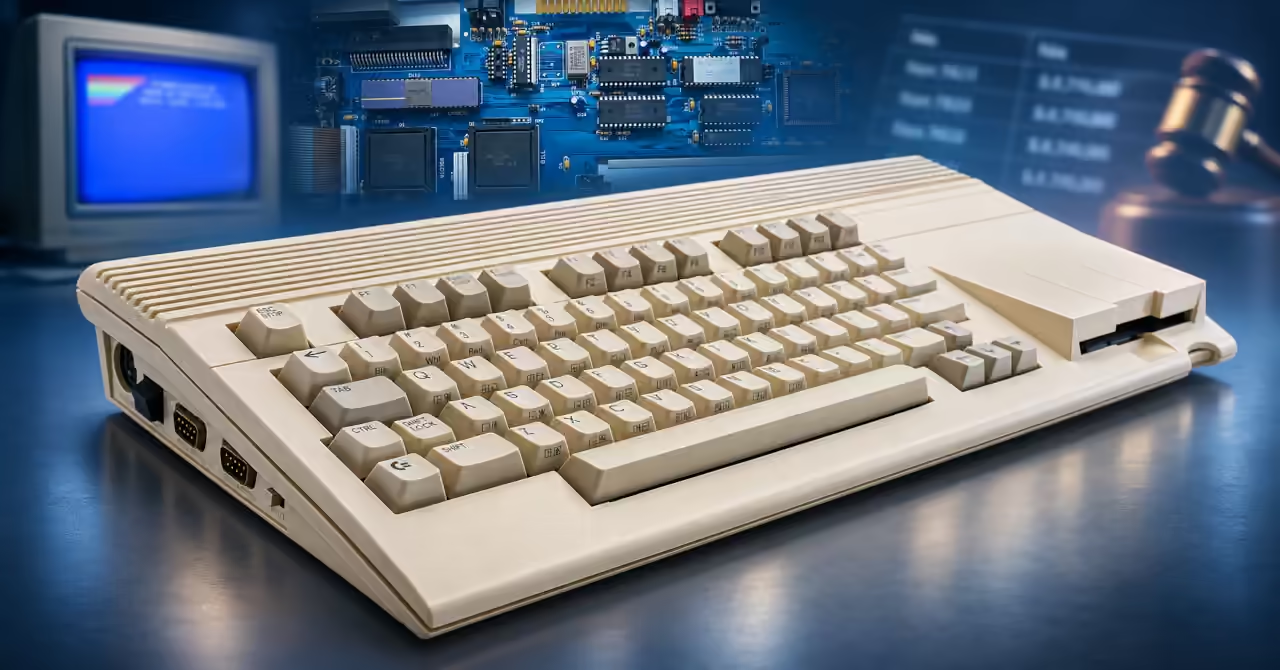
The Commodore C65—also known during development as the C64DX—occupies an unusual place in home-computer history. It promised a more capable successor to the Commodore 64, with enhanced graphics, a new BASIC environment and a built-in 3½-inch floppy drive. Yet the project never reached ordinary buyers. Today the surviving development machines are studied as unfinished pieces of Commodore's engineering history, not merely as expensive collectibles.
One such machine appeared on eBay in April 2022, advertised from Germany as an “Ultra Rare Commodore 65 / C65 / 64DX / C90 prototype, working!” I saved the auction description, photographs and bid history at the time. Those records make it possible to reconstruct not just the remarkable headline price but the specific hardware that attracted bidders.
What made this C65 unusual?
According to the seller, the key distinction was its very early “Alpha Unit” pre-production case. The plastic had a high-gloss finish rather than the textured surface familiar from other C65 examples. Just as significantly, the housing lacked the moulded POWER and DRIVE lettering beside the indicator lights. The seller described this casing variant as exceptionally uncommon, claiming that only a handful were known.
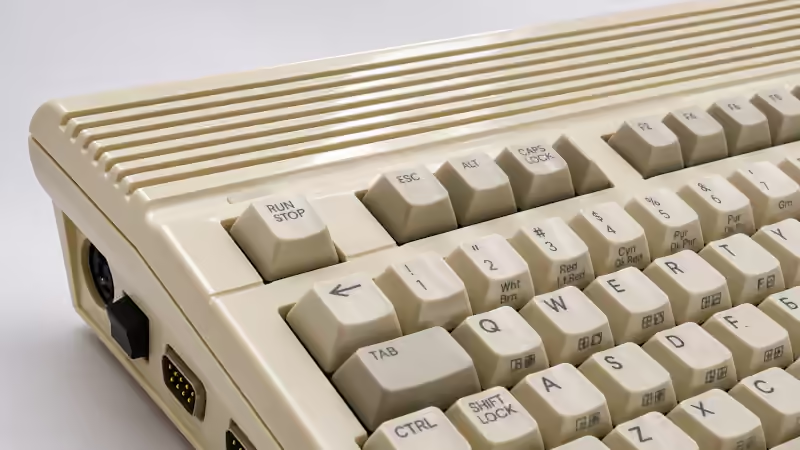
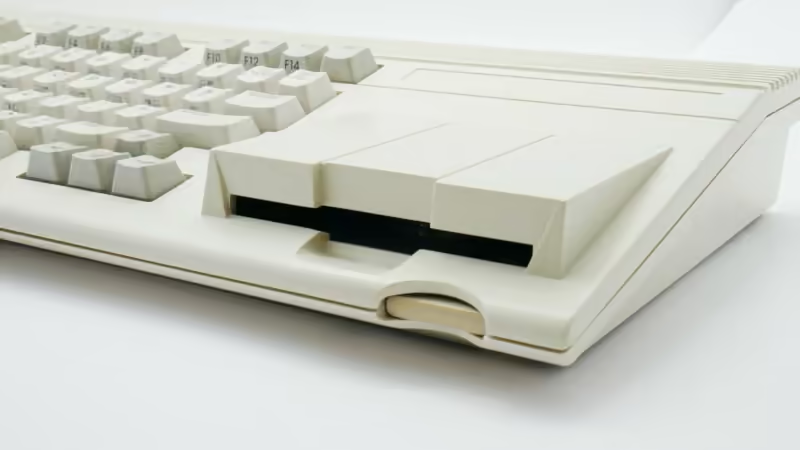
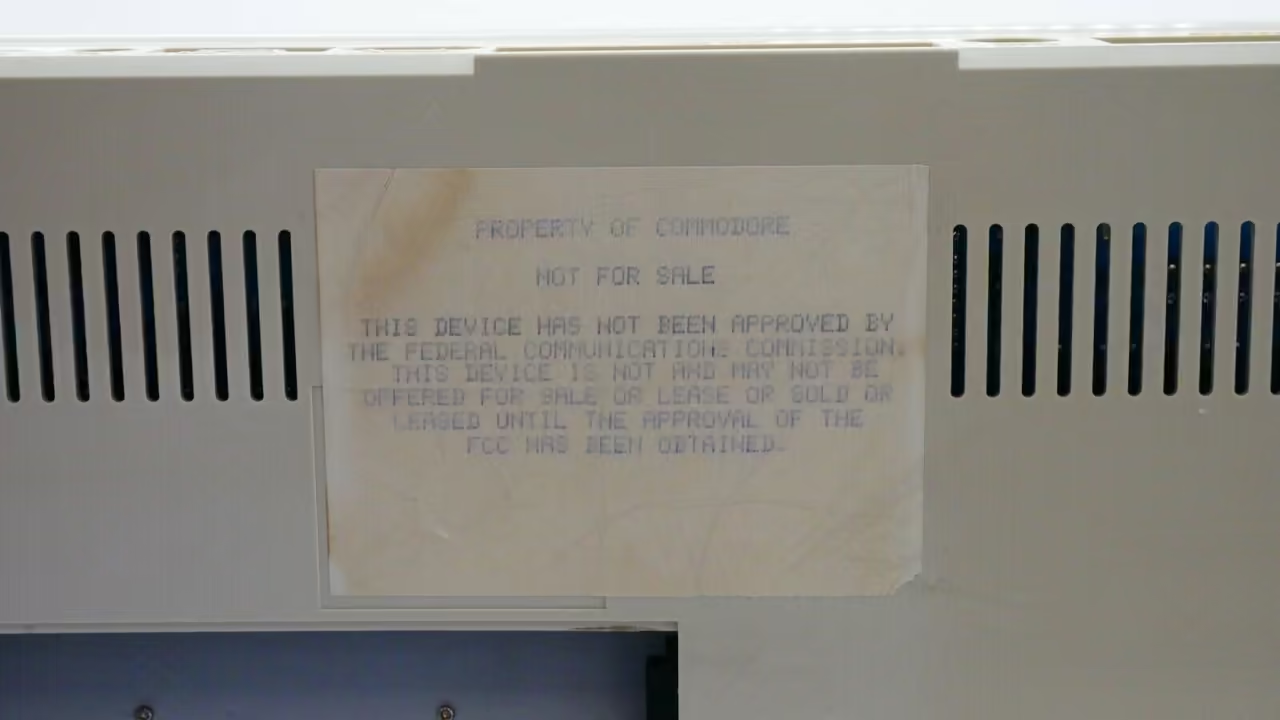
The exterior was advertised as unusually clean for a machine more than three decades old, with no apparent yellowing, only fine surface scratches and a small mark beneath the unit. A faded label on the bottom reportedly identified it as Commodore property and warned about FCC compliance. That is an evocative detail: this was a development machine, not a retail computer carrying ordinary consumer certification.
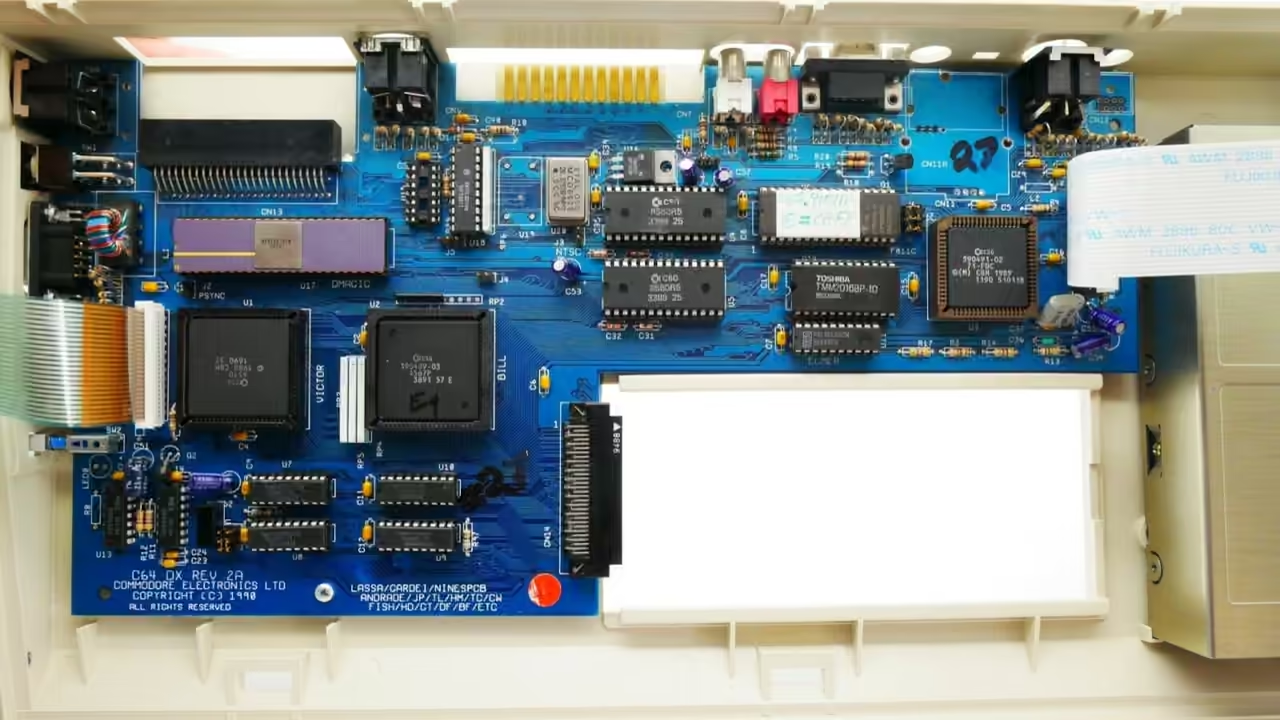
Prototype No. 27: a look inside
The seller identified the motherboard as Revision 2A, bearing the handwritten number 27. This is best understood as an identifier marked on the prototype board: it should not automatically be interpreted as the 27th C65 manufactured. The ROM was described as an early version marked “910111”, corresponding, according to the listing, to a January 1991 build (given there as version 0.9.910111). The seller suggested the marking might have been written by an engineer; that attribution remains conjectural.
The seller also claimed that the machine was fully functional, having been tested before the auction. The internal drive reportedly formatted and copied several disks, with results cross-checked using a Commodore 1581 drive. A demonstration video was supplied to substantiate the operating condition; the photographs additionally show the system running and connected to a monitor. These are the seller's representations and archived images, not a test independently repeated for this article.
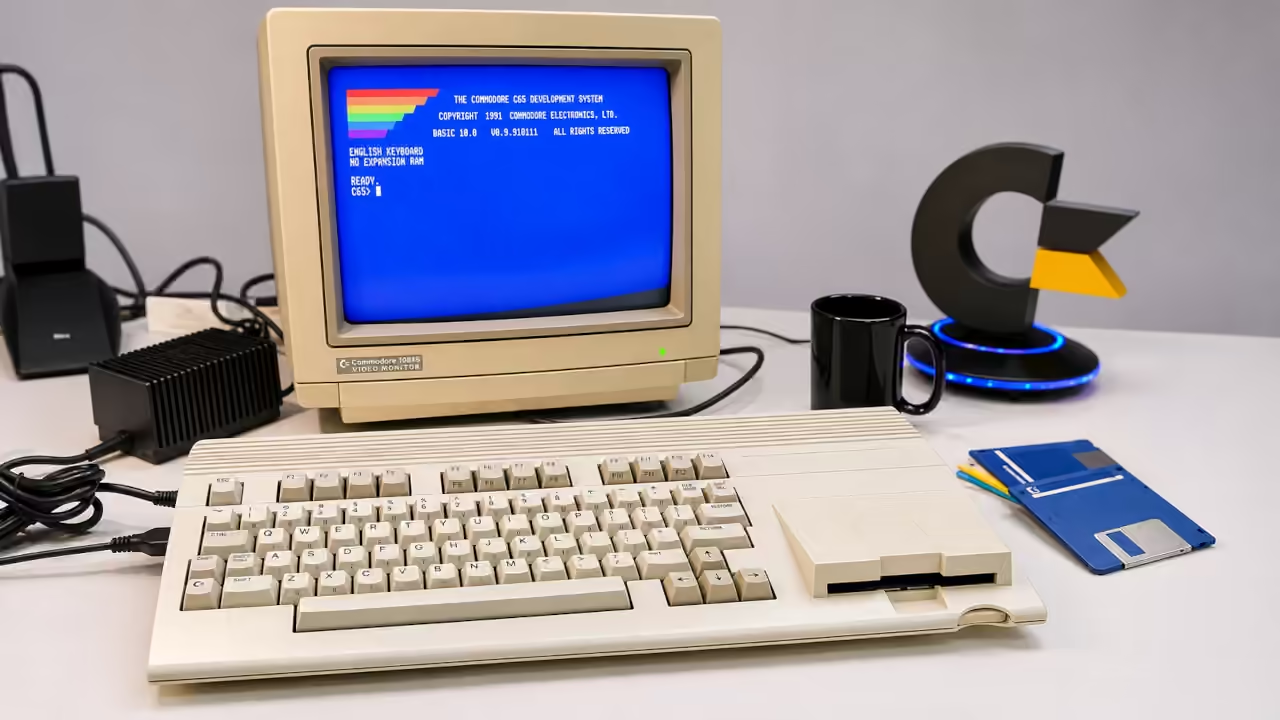
Watch the seller's original C65 demonstration video on YouTube (availability may have changed since 2022).
The auction: 70 bids and a €47,105 result
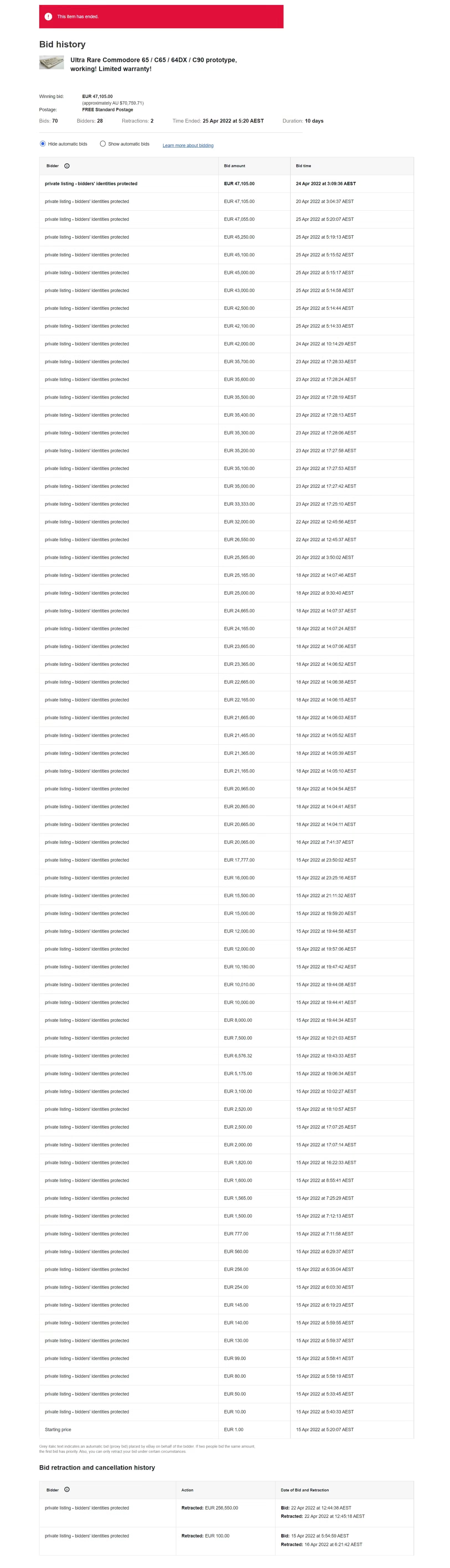
eBay item 134086191240 ran as a ten-day auction and ended on 25 April 2022 at 5:20 am AEST, as recorded by the Australian eBay interface. The saved bidding history records 28 bidders, 70 bids and two bid retractions. Bidders' identities were hidden by the private-listing setting.
Its winning bid was €47,105. The archived Australian page displayed an indicative conversion of approximately AU$70,759.71 at the time; this is a historical on-screen conversion, not an amount independently exchanged or paid in Australian dollars. Postage was listed as free standard postage. As with any completed eBay listing, the winning-bid display documents the auction outcome, not proof of subsequent payment or delivery.
| eBay listing | 134086191240 |
|---|---|
| Auction duration | 10 days |
| End time | 25 April 2022, 5:20 am AEST (eBay Australia display) |
| Bidding activity | 70 bids; 28 bidders; 2 retractions |
| Final winning bid | €47,105.00 |
| Australian equivalent displayed | Approximately AU$70,759.71 |
| Postage displayed | Free standard postage |
The final moments were lively. The retained bid history shows bids of €42,100, €42,500 and €43,000 within seconds of one another, followed by €45,000, €45,100, €45,250 and €47,055 before the auction closed. The winning amount of €47,105 had already been entered as a maximum bid earlier; the displayed history reflects eBay's automatic bidding mechanism, so the chronological ordering of bids is not simply a sequence of manually entered prices.
The €50,000 monitor that stayed out of the deal
The seller offered an unusual incentive: if bidding went above €50,000, the Commodore 1084S monitor shown in the demonstration would be included at no extra charge. The final bid came in €2,895 short of that threshold. The published conditions therefore indicate that the monitor was not part of the winning lot.
The stated package consisted of the C65, its original 220/230V European Commodore power supply, a handful of disks and a nine-pin video/stereo-audio cable. Other objects appearing in the seller's photographs were expressly excluded. Worldwide shipping was offered subject to eligible destinations, and the seller described a limited warranty with different periods for EU and non-EU buyers. Those commercial terms were unusual enough to help distinguish this listing from a typical untested vintage-computer sale.
What did the seller say about its history?
The auction text went beyond hardware specifications. It described Commodore's unsuccessful C64DX development programme and offered a story about how surviving C65 prototypes dispersed after the project's cancellation. Among the claims were a late-1993 sale of beta-series prototypes to a dealer named Grapevine, machines retained by developers, and a shipment reaching Munich Ost freight station before prototype sales in Munich during 1994–96.
That uncertainty does not diminish the interest of the artefact. On the contrary, it is precisely why original sale material should be preserved. The auction photographs document a physical configuration, the description records what a seller asserted in 2022, and the bidding history shows what collectors were prepared to bid. These are three different forms of historical evidence, each valuable in its own way.
Why this auction matters
For me, the appeal of the C65 is not simply that somebody bid more than €47,000 for an unfinished Commodore. It is the glimpse of a product from a possible alternative history: a more powerful 8-bit family computer with a built-in disk drive, an expanded BASIC and an ambition to carry the C64 platform forward.
Prototype No. 27 makes that unrealised future unusually tangible. Its Alpha casing hints at early industrial-design decisions; the ROM label and board revision preserve the traces of engineering work; and the seller's demonstration suggests that the computer could still perform basic tasks some 31 years after its development. The auction was both a collector event and a small act of preservation.
Most importantly, the price is not the whole story. This record helps distinguish one surviving C65 from another—a far more useful contribution to the Commodore historical archive than treating every C65 auction as a generic rarity.
Research notes and original sources
This article was reconstructed in November 2026 from original records saved in May 2022. The archived material includes the German and English seller descriptions, eleven listing photographs, a full-page eBay capture, the bid-history screenshot and link records. Descriptions of working condition, rarity, warranty and provenance are attributed to the seller; the auction price and bidding counts are taken from the retained eBay screen.
- Archived eBay listing, 21 May 2022 (Wayback Machine snapshot; item 134086191240).
- Original full bidding-history capture saved 22 May 2022.
- Seller's operating demonstration video.