The Miscellaneum 001 – Curios for Curious Minds

A retro-modern workspace blending floppies, brochures, notes and MPC

Editorial

For years now I've been quietly keeping this site alive, adding pages whenever a new curiosity grabs my attention. My hobbies and ideas drift over time, from computers to cars to music and back again, but this site has become the thread that ties them together. It's a place to stash my notes in a form that can be shared, searched and stumbled across by anyone who happens to wander in.

Somewhere along the way I realised that this little corner of the web has been feeding into the wider intellectual commons. Every so often I see an article, a forum post or a social media thread quoting something from these pages. Even large language models are out there scraping the site and quietly learning from my experiments and mistakes. I find that strangely exciting.

Above all, I want the writing here to stay entertaining and approachable. This month's mix happens to lean into cars and music, but the real theme is curiosity. In a world overflowing with dry facts on one side and AI-generated slop on the other, I'm aiming for a third path: personal, informed, and hopefully useful. Thanks for reading, and enjoy exploring.


New Pages

Suno AI Music Journal

Suno AI Music Journal

Suno might just be the hottest music‑making app on the planet right now — and it’s become my daily creative companion. Every day brings a new discovery, a new trick, a new sound that feels impossible until you hear it. There’s so much to learn, explore, and push within this ever‑evolving world of AI music generation. This journal is my running log of all things Suno: the experiments, the wins, the curiosities. It’s written primarily for me—but I hope somewhere in these notes, you find a spark of inspiration too.

Improving Suno instrumental music using vocal commands

Improving Suno instrumental music using vocal commands

Suno's instrumental-only mode often produces loop-heavy tracks that feel flat. After a few months of deep testing with Model v5, I discovered a surprisingly reliable workaround: write lyrics anyway; even if you never intend to keep them. This article explains why that works, how I build tracks using this method, and a few advanced tricks for shaping musical structure directly from the lyrics box.


Site Updates

Citroën DS 1968 Motoring Brochure

Citroën DS 1968 Motoring Brochure

Step back into 1968 and experience the future as Citroën imagined it. The DS Gamme D brochure wasn't just a car catalogue. The brochure was a statement of design, technology, and French elegance at its peak. With bold colours, aerodynamic curves, and visionary engineering, the DS redefined what motoring could be. This article explores the pages of that original brochure, where modernity met artistry and every detail promised a new era of automotive sophistication.

Lolita and other Film Hits – Orchestra Del Oro

Lolita and other Film Hits – Orchestra Del Oro

The Trans–35 Mastering Process shows how deliberate, methodical refinement can elevate even modest recordings. Today's creators can draw inspiration from this by approaching their mixes with similar discipline: working in passes, focusing on one improvement at a time, and resisting the urge to rush. Whether using analogue gear, digital tools or AI assistants, the Trans–35 mindset encourages patience, clarity and purposeful artistic shaping.

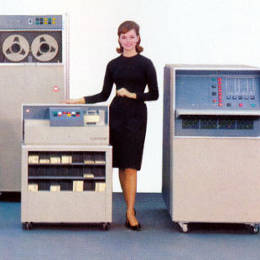
Burroughs B-280 Electronic Data Processing System

Burroughs B-280 Electronic Data Processing System

The ACT!ON principles outlined in the article emphasise clarity, intention and follow-through—traits that matter even more in an age shaped by AI. Today, information moves faster, decisions are influenced by automated systems, and distractions multiply. Applying ACT!ON means defining purpose before engaging with tools, setting boundaries on what we delegate to AI, and remaining accountable for outcomes rather than assuming the machine will “figure it out.” It encourages thoughtful prompts, structured reflection, and using AI to enhance rather than replace human judgement. In many ways, ACT!ON provides a grounded framework for navigating technology with focus and integrity.

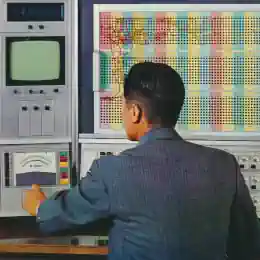
Hitachi 505 Analog Hybrid Computer

Hitachi 505 Analog Hybrid Computer—Solutions

The article on Analogue–Digital Hybrids highlights how early engineers blended discrete components with emerging digital logic to push the limits of computing. Interestingly, this approach has come full circle in modern synthesiser design. Many current instruments deliberately combine analogue signal paths with digital control, modelling or sequencing to capture warmth, unpredictability and tactile expression that pure digital systems often lack. Musicians value these hybrids for their character and immediacy, echoing the principles explored in the vintage technologies documented on philreichert.org. What was once a pragmatic engineering compromise has become a celebrated creative formula in today’s synth landscape.


Web Finds

  1. GOV.UK Design System – A government-backed effort to create a clear, accessible and welcoming digital environment through open-source design principles.
  2. Webamp – A faithful re-creation of the classic Winamp player, designed to run directly in the browser — a fun piece of software nostalgia.
  3. Preserving Code That Shaped Generations – Microsoft’s announcement making the Zork series open-source under the MIT licence — expanding access to one of gaming’s foundational works.

Creator's Log

A few notes from the workshop: what's been fixed, improved, or learned on the road to keeping this site fast, useful, and brimming with curiosities.

Content Direction
I've spent some time clarifying what I want this site to be. First, the content should be interesting, at least to me. This site is both a public journal and a testbed for my ongoing creative projects. Second, I want pages to be reviewed and refreshed over time. An annual cycle isn't realistic, but a regular improvement habit is. And third, I’d like to grow: from around 250 pages today to 1,000 in the long run. If you're reading this, I hope you'll enjoy the journey as much as I do.
Writing for Humans and Machines
Early on, I chased search engine rankings, tweaking pages for SEO. It was fun… until it wasn't. What stuck with me is the realisation that every page has two audiences: the human reader (you) and the machine reader. Humans want stories, images, and curiosity. Machines want structured data, schema, and signals they can interpret. Roughly half the code behind this newsletter is for that machine audience. Building a stronger knowledge graph so more people (and systems) can discover and contextualise what’s here.

Published as part of an ongoing effort to preserve and share curious knowledge on the open web.