The Commodore 64 Had Jailbreakers Before the iPhone
◆ Revised

Before the iPhone, There Was the C64
Long before smartphones, locked app stores, and modern console exploits, Commodore 64 users were already bypassing software restrictions, modifying games, freezing memory, and pushing machines beyond their intended design. Many of the practices we now associate with jailbreaking were already part of home computer culture in the 1980s.
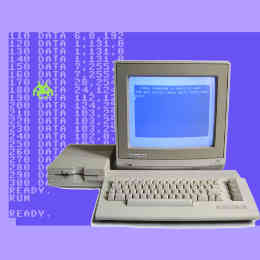
The Commodore C64 was not a locked-down device in the modern sense. It invited experimentation through BASIC, cartridges, expansion ports, disk drives, magazines, manuals, and a vast user community. Yet users still found ways to go further than the official experience allowed. They altered games, defeated copy protection, added graphical environments, and used hardware tools to interrupt and inspect running software.
Seen from that angle, the C64 was not waiting to be jailbroken. It was already living inside a culture of practical jailbreakers.
What Does Jailbreaking Usually Mean?
Jailbreaking usually means bypassing the restrictions placed on a device by its manufacturer, platform owner, or software ecosystem. On modern devices, that might mean escaping a locked bootloader, side-loading software, installing alternative operating systems, or running applications outside an official store.
The term is most familiar from iPhones, game consoles, and other consumer devices where the owner can physically possess the machine but still be limited by software rules. Jailbreaking is the act of stepping around those rules to make the device behave in ways that were not intended, supported, or approved.
The Commodore 64 complicates that idea. It came from a more open computing era, where users were expected to type, save, modify, copy, and experiment. But even there, restrictions existed. Games had protection systems. Hardware had undocumented behaviours. The standard operating environment had limits. Software often tried to stop users from seeing, copying, altering, or reusing what was happening inside the machine.
Why the C64 Was a Different Kind of Target
Unlike modern smartphones or gaming consoles, the Commodore 64 was not surrounded by a fragile online ecosystem. There was no app store account to lose, no cloud service to revoke, and no firmware update cycle designed to close every loophole. The machine was much closer to the user. You could type commands directly into it, load code from cassette or disk, plug in a cartridge, and inspect memory with the right tools.
That made C64 jailbreaking less about escaping a corporate platform and more about extending a machine beyond its ordinary use. The risks were different too. You were unlikely to permanently “brick” a C64 in the modern software sense, although poor handling, bad disks, faulty hardware, or careless programming could still cause data loss, crashes, or damage.
The legal and ethical questions were also real. Copy protection was often bypassed for piracy. Trainers and POKEs altered games in ways developers did not intend. At the same time, the culture of modification also produced learning, preservation, technical skill, and the demoscene. It was messy, inventive, and not easily reduced to either crime or creativity.
The conversation is still not all one-way. The Electronic Frontier Foundation (EFF) has long promoted awareness of manufacturer restrictions and user freedom, including through campaigns such as the Catalog of Missing Devices (wayback).
How C64 Users Broke Software Restrictions
When I first prepared this article, the obvious assumption was that nobody had bothered to jailbreak a Commodore C64. On the surface, Commodore encouraged third-party software development and, let's face it, the Commodore KERNAL (wayback) was fairly bare bones and occupied only 8KB. What restrictions were there to break?
The better question is not whether the C64 was jailbroken in the modern smartphone sense. It is whether C64 users worked around intended restrictions to open up new and unintended uses. With that in mind, the answer is clearly yes. The C64 scene was full of practical jailbreak behaviour before the word became fashionable.
- Freeze cartridges, such as Action Replay, allowed users to interrupt running software, reset programs, inspect memory, and dump content to disk. These cartridges were sometimes described as cheating devices, but they were also powerful tools for investigation, modification, and control. As jailbreak equipment goes, they were remarkably direct.
- GEOS gave the Commodore 64 a graphical operating environment far beyond the standard startup experience. It was not a jailbreak in the dramatic exploit sense, but it did let users step outside the expected Commodore interface and into a more capable, more visual way of using the machine.
- Game POKEs, trainers, and score hacks changed values inside running programs. Players used them to gain unlimited lives, skip restrictions, avoid sprite collision detection, or give characters new capabilities. These hacks directly altered the intended rules of a game and made visible the fact that software restrictions were only instructions waiting to be changed.
- Copy protection cracking was one of the most controversial parts of the C64 scene. Pirate game distribution was common, and cracking groups worked around disk protection systems to create copied releases. That activity fed into the visual and musical culture of crack intros, which became part of the wider demoscene.
- Illegal opcodes showed how far programmers would push the hardware. The 8-bit machines were not especially fast, so developers and experimenters looked for every possible advantage. Some undocumented processor instructions could be used for speed or unusual effects, even though they were never officially endorsed and could behave unpredictably.
Why the Jailbreak Comparison Still Works
The word “jailbreaking” may have become popular through the iOS jailbreak movement (wayback), but the behaviour is older than the word. Users have long tried to understand, modify, unlock, repair, copy, extend, and repurpose the machines they own.
Modern jailbroken systems are often used to install alternative operating systems, side-load homebrew software, run technical demonstrations, or bypass platform controls. The C64 did not need to be liberated from an app store, but it did become a proving ground for the same instinct: the desire to make a machine do more than its official path allowed.
That is why the Commodore 64 belongs in the longer history of jailbreak culture. Not because it was locked down like a smartphone, but because its users treated limitations as invitations. They opened the box, read the memory, changed the rules, and made the machine answer back.

Writer's Notes
When I first drafted this article, the word “jailbreaking” was everywhere. iPhones, Nintendo Switch consoles, Android devices, and handheld systems were all caught up in a wave of online excitement about unlocking restricted hardware. The term carried a certain rebellious energy at the time, and I remember wondering whether the Commodore 64 scene had already been living through its own version of that culture decades earlier. Looking back now, the hysteria around jailbreaking has settled down considerably, but the underlying instinct never disappeared.
The language changes over time. One decade talks about jailbreaking, another talks about sideloading, soft-modding, rooting, flash carts, FPGA cores, or homebrew software. Underneath it all is the same curiosity-driven culture of people wanting to understand the machines they own and push them beyond their intended limits. That spirit was deeply present in retrocomputing culture long before modern smartphones existed. Freeze cartridges, trainers, disk copiers, BASIC loaders, custom hardware projects, demos, and cracked intros were all expressions of users refusing to stay inside the official boundaries.
Personally, I see that as one of the most interesting and human parts of retrocomputing culture. The Commodore 64 was never just a sealed consumer appliance. It was a machine people opened up mentally as much as physically. Users experimented, broke things, copied things, improved things, and learned by doing. Even now, decades later, the homebrew spirit still survives in FPGA recreations, modern cartridge projects, restored disk drives, and communities preserving old software. The names may change, but the culture of creative tinkering is still very much alive.
Reader Guide
The following material expands on the terminology, historical context, technical concepts, and related reading connected to this article.
Glossary
- Jailbreaking
- Bypassing the restrictions placed on a device or software system so it can do things beyond its approved design. In this article, the term is used to compare modern locked devices with the older C64 culture of modification, curiosity, and user control.
- Freeze Cartridge
- A plug-in cartridge that could interrupt a running Commodore 64 program, inspect memory, reset software, or save data to disk. It turned the machine into something more open and examinable, like lifting the lid while the engine was still running.
- KERNAL
- The Commodore 64’s built-in operating routines for basic input, output, keyboard handling, screen use, and device access. In this article, it represents the ordinary starting point that users often pushed beyond.
- GEOS
- A graphical operating environment for the Commodore 64. Here it appears as an example of users stepping beyond the standard text-based C64 experience into a more visual, ambitious way of using the machine.
- POKEs
- Commands or code changes that alter values inside a running program’s memory. In C64 gaming culture, POKEs could change lives, scores, collisions, or abilities, revealing that game rules were often just numbers waiting to be altered.
- Copy Protection Cracking
- The practice of bypassing software protections intended to stop games or disks from being copied. The article treats it as one of the messier parts of C64 culture, sitting between technical skill, piracy, preservation, and scene identity.
- Demoscene
- A creative computer subculture built around technical demonstrations, visual effects, music, and programming skill. In the C64 world, it grew partly from cracking culture and turned hardware limits into a stage for digital showmanship.
- Illegal Opcodes
- Undocumented processor instructions that were not officially supported but could sometimes be used for speed or unusual effects. They gave expert programmers a strange little back door into the machine’s behaviour, powerful but unpredictable.
Frequently asked questions
What is jailbreaking in the context of the Commodore C64?
Jailbreaking the Commodore C64 refers to bypassing the built-in software limitations of the computer to enable it to run custom, unauthorized software or to perform functions that were not originally intended by the manufacturer. This could include running different operating systems, playing unofficial games, or using the C64 for new types of computing tasks.
Can jailbreaking the Commodore C64 cause damage to the device?
Unlike modern digital devices, jailbreaking a Commodore C64 typically does not carry the risk of “bricking” the device, as it is a robust machine built in a simpler digital era. However, improper handling or programming can still lead to software malfunctions or data loss, so it is important to proceed with caution and proper knowledge.
What are some notable examples of Commodore C64 jailbreaking?
Notable examples of Commodore C64 jailbreaking include the use of freeze cartridges like Action Replay for game enhancements and debugging, the creation of the GEOS graphical operating system, and overcoming game restrictions and disk copy protections to extend gameplay and capabilities beyond the intended limits set by developers.
Related articles…


Disclosure
This article explores Commodore 64 hacking and homebrew culture through a modern “jailbreaking” lens. The comparison is interpretive and intended as historical and cultural commentary rather than technical or legal advice.