Lexiconography: A Cabinet of Curious Vernacular
◆ Revised

Introduction
The Lexiconography is a growing collection of words, phrases, and conceptual language gathered during writing, publishing, engineering, systems thinking, and general curiosity.
Some terms become articles. Some appear in newsletters. Others are simply too interesting, useful, or expressive to lose to memory. This page acts as a set of public working notes rather than a formal dictionary.
Entries may evolve over time as words are revisited, reused, or connected to broader ideas across the site.
The Lexicon
- Alacrity
- Cheerful readiness, brisk willingness, or eager promptness in taking action. Pronounced in Australian English as uh-LAK-ruh-tee. Useful when simple speed is not enough, because the word suggests both quick movement and a willing, almost buoyant attitude.
- Lexical Gravity: ★★★☆☆
- Equivocate
- To speak or act in a deliberately vague, ambiguous, or evasive manner in order to avoid making a clear commitment or statement. Pronounced in Australian English as ee-KWIV-uh-kayt. Example: “When pressed for a decision, the executive continued to equivocate rather than provide a direct answer.” Useful instead of words like hedge, avoid, or dodge because equivocate implies the intentional use of ambiguous language to obscure meaning or avoid accountability.
- Lexical Gravity: ★★★☆☆
- Gestalt
- A perceived whole that is understood as more than the sum of its individual parts. Pronounced guh-SHTALT in Australian English. Example: “The magazine’s visual gestalt felt distinctly European despite its Australian origins.” Often used instead of words like style, shape, or impression when describing an overall pattern, atmosphere, or integrated character that emerges from many smaller elements working together.
- Lexical Gravity: ★★★★☆
- Inscrutable
- Impossible or extremely difficult to understand, interpret, or discern. Pronounced in Australian English as in-SKROO-tuh-bul. Example: “The director maintained an inscrutable expression throughout the negotiations.” Useful instead of words like mysterious, puzzling, or unclear because inscrutable specifically suggests that a person's thoughts, motives, or intentions remain concealed despite observation or inquiry.
- Lexical Gravity: ★★★☆☆
- Obsequious
- Excessively eager to please, obey, or flatter someone, particularly a person in a position of authority. Pronounced in Australian English as ub-SEE-kwee-us. Example: “The consultant's obsequious praise of every management decision quickly became tiresome.” Useful instead of words like polite, respectful, or compliant because obsequious carries a negative implication of exaggerated deference, servility, or insincere admiration motivated by favour, status, or advantage.
- Lexical Gravity: ★★★☆☆
- Onomatopoeic
- Describing words, sounds, or artistic expression that imitate or evoke the thing they represent. Traditionally associated with language such as “buzz” or “clang”, the term is also used in music criticism to describe instruments or performances that mimic real world textures, motion, or sonic phenomena.
- Lexical Gravity: ★★★☆☆
- Telos
- The ultimate end, purpose, or goal towards which something is directed; especially the organising purpose of a process, system, action, or form of life. Pronounced in Australian English as TEL-oss. Example: “The telos of the quality system is not document compliance but reliable delivery.” Useful in preference to goal, purpose, or objective when the intended meaning is deeper than a target: the word suggests the final or inherent end that gives the whole activity its direction and meaning.
- Lexical Gravity: ★★★★★
- Perspicacious
- Having keen insight, sharp perception, or an unusual ability to notice and understand subtle details quickly. Pronounced in Australian English as pur-spuh-KAY-shus. Example: “The editor made a perspicacious observation about the article’s hidden narrative structure.” Useful when words like smart, perceptive, or insightful feel too broad, because perspicacious implies an active, almost analytical sharpness of judgment and observation.
- Lexical Gravity: ★★★★☆
- Pidgin
- A simplified contact language that develops when people or groups without a shared native language need to communicate, often for trade, work, travel, or administration. Pronounced in Australian English as PIJ-in. Example: “In the novel, the alien trade pidgin acts as a practical bridge between species, not as a secret code.” Useful instead of words like slang, jargon, or dialect because pidgin specifically describes a functional bridge language created for mutual understanding across linguistic boundaries.
- Lexical Gravity: ★★★☆☆
- Troubadourism
- The poetic, musical, and cultural tradition associated with troubadours: travelling or courtly singer-poets whose work joined lyrical storytelling, performance, romance, place, and personal expression. Useful in modern music criticism for describing artists who act less like commercial entertainers and more like bearers of a living song tradition.
- Lexical Gravity: ★★★★☆
- Zugzwang
- A chess term describing a situation where every possible move makes the position worse. Useful beyond chess for describing strategic deadlock, organisational pressure, or systems where all remaining options carry consequences.
- Lexical Gravity: ★★★★☆
Featured Product
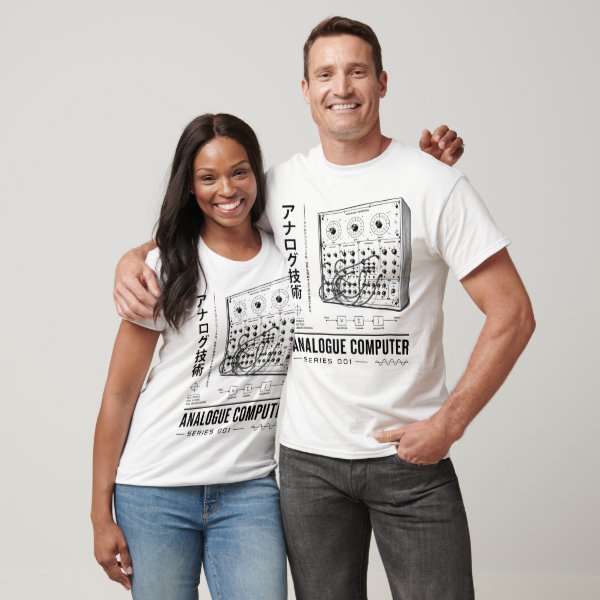
Analogue Computer Series 001 T-Shirt
The phrase “reason in syllogisms” belonged to a time when computing was visible, tactile, and mechanical. The Analogue Systems 01 retrocomputing themed t-shirt celebrates that era of electric brains, logic circuits, switches, and learning machines, when reasoning could be traced through wires and confirmed by the glow of a lamp.
Disclosure: this is a commercial product link to an external Zazzle store associated with philreichert.org. Purchases are handled by Zazzle.
Writer's Notes
As I move through books, articles, engineering discussions, publishing notes, and the general debris field of curiosity, I occasionally encounter words that are simply too interesting to lose. Some are precise technical terms, others capture an idea more elegantly than an entire paragraph ever could. The Lexiconography acts as a public notebook for these discoveries; a growing collection of language fragments, concepts, and expressions that caught my attention for one reason or another. From time to time I will add new entries as they appear, and who knows, one of these words may eventually find its way into the fabled The Miscellaneum Newsletter as the featured word.
Lexical Gravity Rating System
Each entry receives a simple one-to-five star rating based on its lexical gravity: how strongly the word attracts attention, carries meaning, and earns future reuse. A one-star word is an amusing oddity, two stars is niche but useful, three stars is expressive, four stars is conceptually powerful, and five stars is dangerously reusable.
- ★★★★★ — dangerously reusable
- ★★★★☆ — conceptually powerful
- ★★★☆☆ — expressive
- ★★☆☆☆ — niche but useful
- ★☆☆☆☆ — amusing oddity
Reader Guide
The following material expands on the terminology, historical context, technical concepts, and related reading connected to this article.