Entex Adventure Vision (1983)
Updated 13 March 2022

The Entex Adventure Vision is one of the most unusual video game consoles of the early 1980s. Released in 1983, it combined a tabletop arcade form factor with a unique display system that used a spinning mirror and red LEDs to create a 150 × 40 pixel image. Unlike most home consoles of the era, the Adventure Vision featured its own built-in screen, making it a self-contained gaming system. Only four games were released—Defender, Super Cobra, Turtles and Space Force—and production is believed to have been limited to around 50,000 units. Today, the Adventure Vision is remembered less for its commercial success and more for its inventive engineering, distinctive appearance and enduring appeal among retro gaming collectors.
Why Is The Adventure Vision Special?
The Adventure Vision stands apart from other early 1980s game consoles because it combined unusual display technology with a compact tabletop arcade design. While commercially unsuccessful, its distinctive engineering has made it a favourite among retro gaming enthusiasts and collectors.
- Released in 1983 by Entex Industries during the golden age of home video games.
- Self-contained arcade cabinet with a built-in display and controls.
- Unique LED display system using a spinning mirror and red LEDs to create the image.
- 150 × 40 pixel resolution, impressive for a dedicated gaming system of its era.
- Only four games released: Defender, Super Cobra, Turtles and Space Force.
- Relatively rare today, with production estimated at around 50,000 units.
- Highly collectible due to its unusual technology and limited software library.
How the Adventure Vision Display Worked
The Adventure Vision did not use a conventional television screen or monitor. Instead, it relied on a clever optical system that combined a vertical row of red LEDs with a rapidly spinning mirror. As the mirror rotated, the console illuminated different LEDs at precise moments, creating the illusion of a complete image through a phenomenon known as persistence of vision.
The resulting display had a resolution of approximately 150 × 40 pixels and appeared to float in front of the player. While innovative, the system had some drawbacks. The image could appear dim in brightly lit rooms, and the moving components added mechanical complexity compared to traditional video game systems.
Despite these limitations, the Adventure Vision remains one of the most technically distinctive game consoles ever produced. Its unusual display technology is a major reason why the system continues to attract interest from retro gaming enthusiasts and collectors more than forty years after its release.
The Spinning Mirror Display
The most remarkable feature of the Adventure Vision was its unusual display system. Rather than using a conventional screen, the console generated its image using a column of red LEDs and a rapidly rotating mirror assembly. As the mirror spun, the LEDs were illuminated at precisely timed intervals, creating the illusion of a complete 150 × 40 pixel display through persistence of vision.
This approach allowed Entex Industries to create a self-contained gaming system without requiring a television or expensive display technology. The result was a futuristic-looking tabletop arcade machine that felt unlike any other home gaming system of its era.
The design was innovative but also introduced mechanical complexity. The rotating mirror assembly produced audible noise during operation and became a potential point of failure as machines aged. Despite these limitations, the Adventure Vision remains one of the most distinctive examples of display engineering ever used in a commercial video game console.
Specifications
| Specification | Details |
|---|---|
| Manufacturer | Entex Industries |
| Release Year | 1983 |
| Display Type | Red LED display with spinning mirror system |
| Resolution | 150 × 40 pixels |
| Processor | COP411L |
| Games Released | 4 |
| Known Games | Defender, Super Cobra, Turtles, Space Force |
| Estimated Production | Approximately 50,000 units |
| Form Factor | Tabletop arcade-style game console |
Commercial Success and Legacy
Despite its innovative design, the Adventure Vision was not a commercial success. Limited software support and the arrival of the North American video game crash of 1983 restricted its impact. Today, however, the system is remembered as one of the most inventive and unusual game consoles of its era.
Entex Adventure Vision Games
Only four games were released for the Adventure Vision: Defender, Super Cobra, Turtles, and Space Force. While limited in number, the library reflected the arcade influences that shaped the system.
The Adventure Vision Project - All 04 Games - Every Game
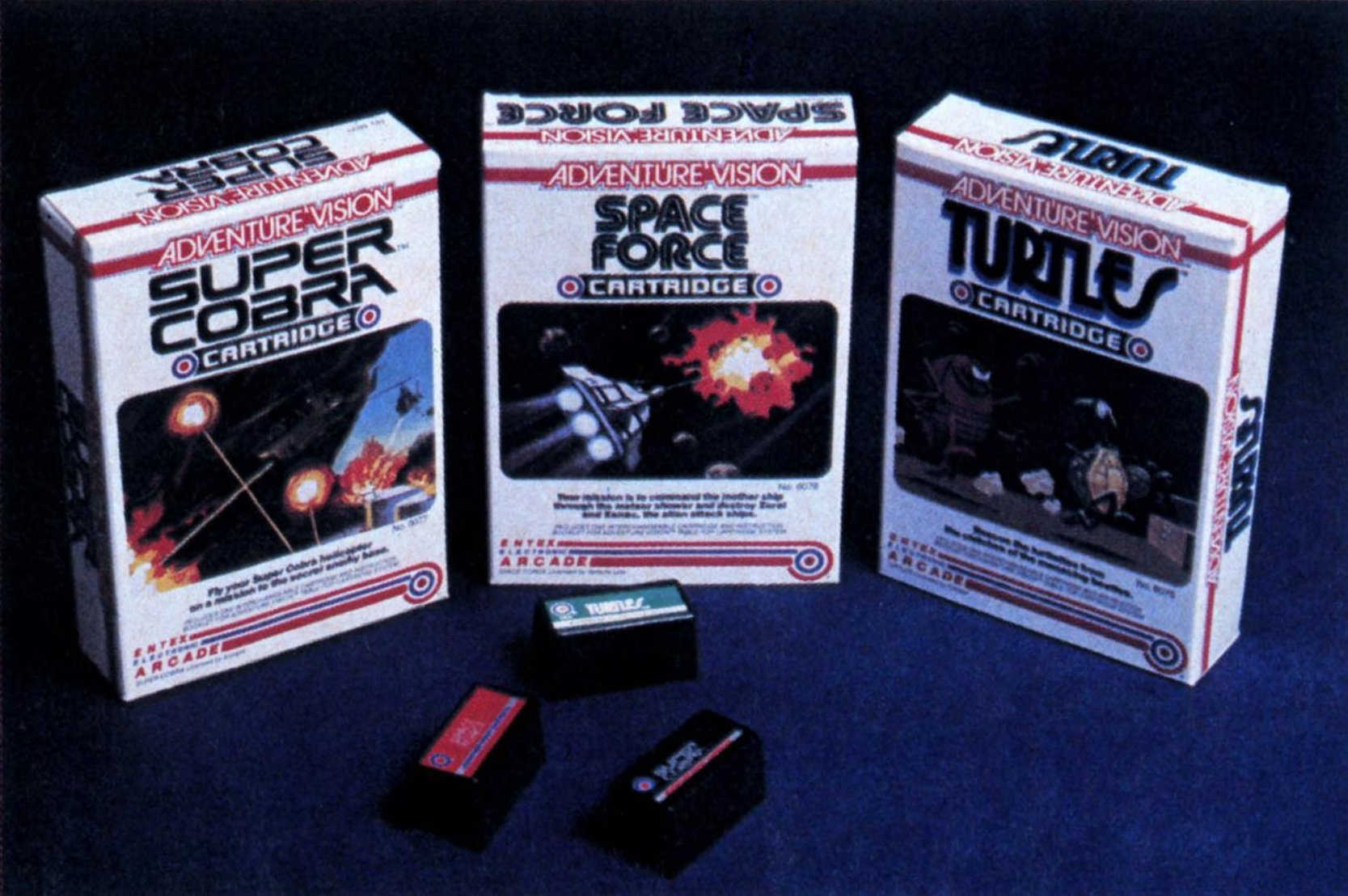
Promotional artwork for three of the four Adventure Vision game releases: Super Cobra, Space Force and Turtles.
Collecting and Restoration
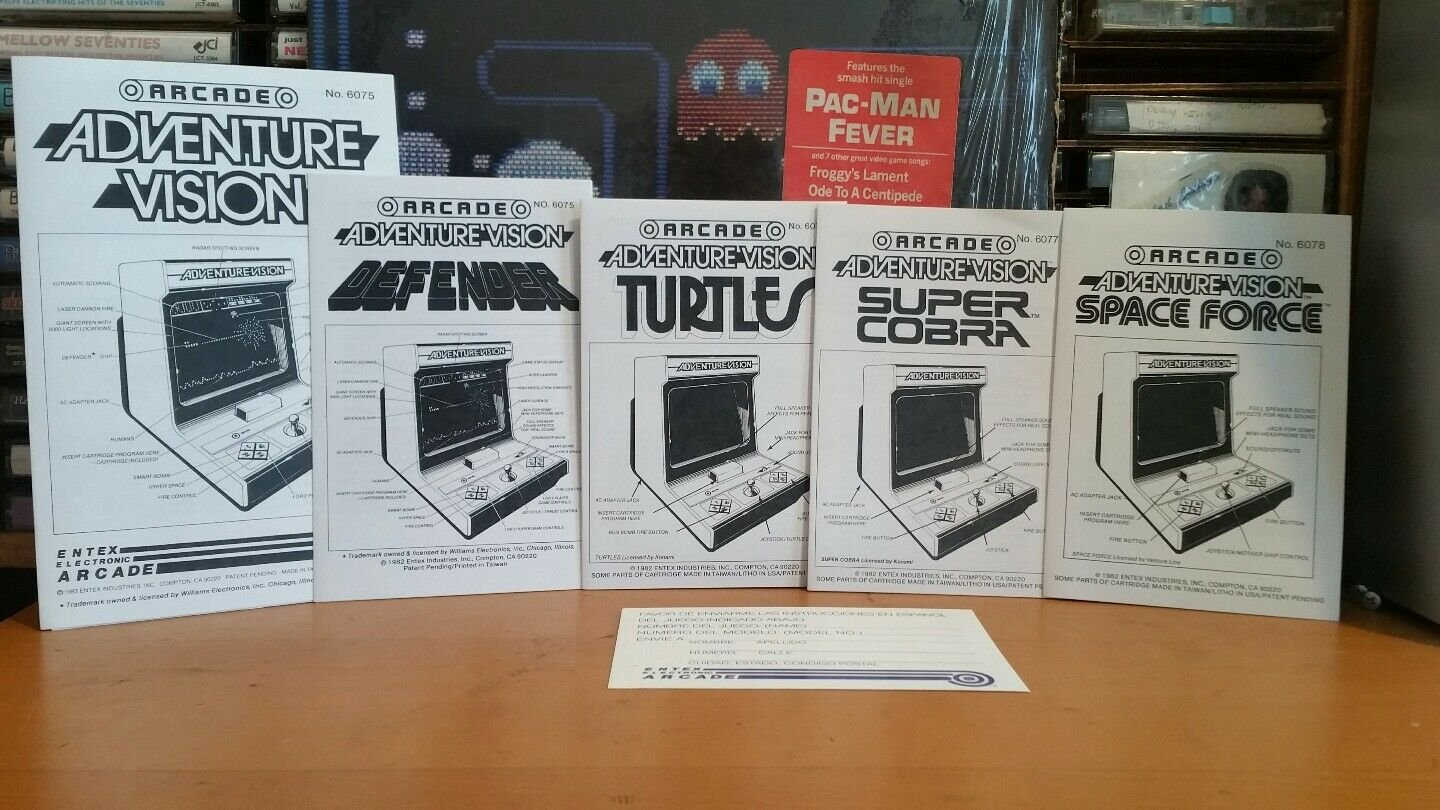
Entex Adventure Vision - Only 4 games released, Defender, Super Cobra, Turtles, Space Force. Someone has helpfully reproduced these game instructions on 60lb cut and folded paper.
eBay sale - ENTEX ADVENTURE VISION REPRODUCTION INSTRUCTIONS
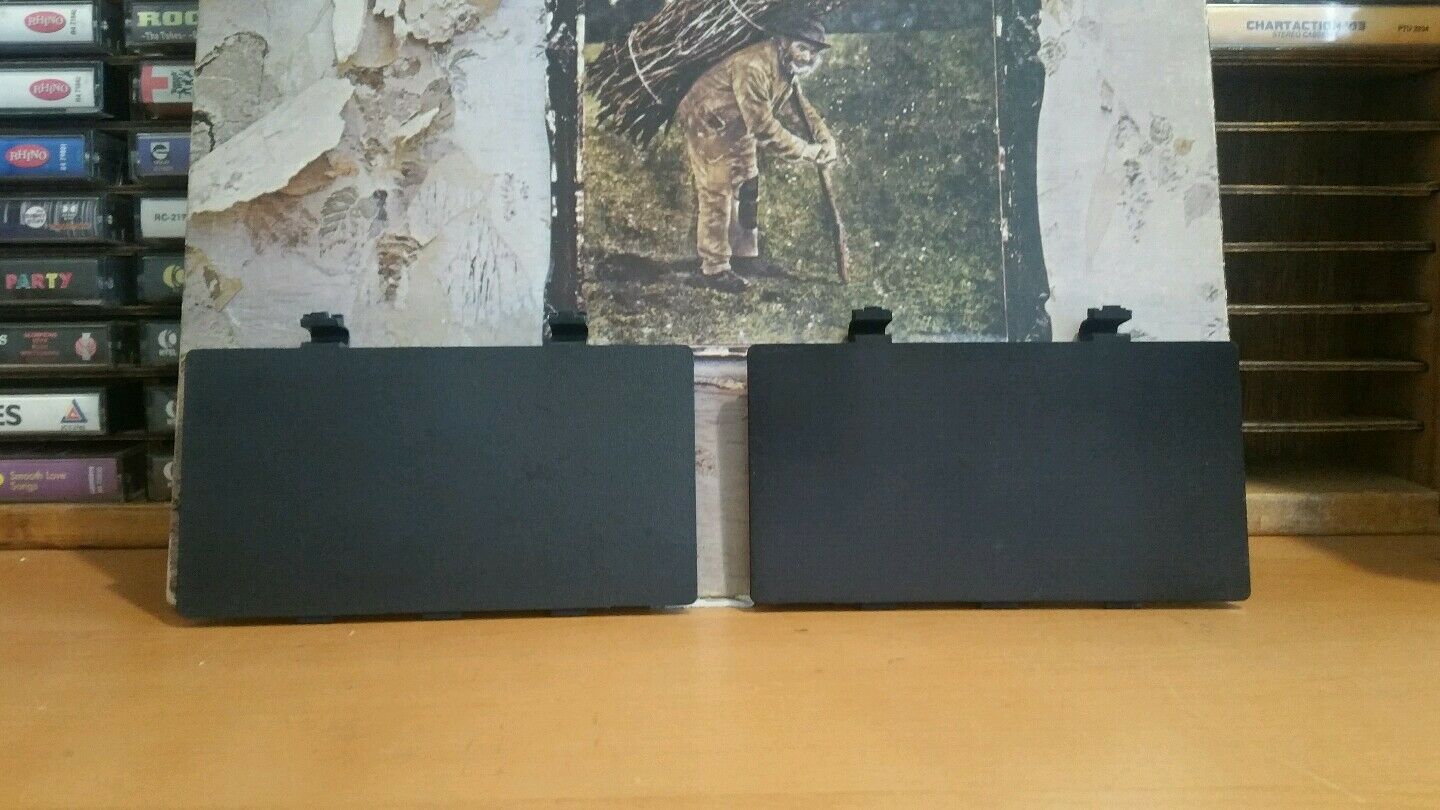
A common problem with #RetroComputing are broken/lost plastic parts, like slot covers. Same seller is selling replacement battery compartment panels for the Entex Adventure Vision. Very obscure but useful if you need one.
eBay sale - Entex adventure vision game replacement battery cover
Featured Product
Analogue Computer Series 001 T-Shirt
The Entex Adventure Vision is remembered for its unusual spinning mirror display, a reminder of a time when engineers often solved problems with clever physical mechanisms rather than simply adding more processing power. The Analogue Computer Series 001 retrocomputing themed t-shirt celebrates an earlier era of computing when switches, logic circuits, relays and mechanical ingenuity transformed ideas into working machines. Whether you enjoy rare game consoles, vintage electronics, early educational computers or the history of technology itself, this design pays tribute to the inventors and experimenters who helped shape the computing world we know today.
Disclosure: this is a commercial product link to an external Zazzle store associated with philreichert.org. Purchases are handled by Zazzle.

Reader Guide
The following material expands on the terminology, historical context, technical concepts, and related reading connected to this article.
Frequently asked questions
When was the Entex Adventure Vision released?
The Entex Adventure Vision was released in 1983.
How many games were released for the Adventure Vision?
Just four games were released for the Entex Adventure Vision: Defender, Super Cobra, Turtles and Space Force.
Why is the Adventure Vision rare?
Production is estimated at around 50,000 units, making the Adventure Vision one of the less common video game consoles of the early 1980s.
How did the Adventure Vision display work?
The Adventure Vision used a vertical row of red LEDs and a rapidly spinning mirror to create a complete image through persistence of vision.