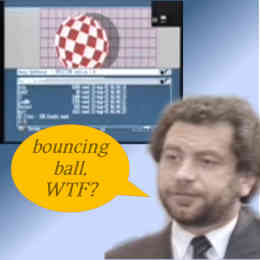
Old computer programmes have a particular charm: we know what happened next, but the presenters and exhibitors do not. Watching Database report from the 1985 Personal Computer World show is rather like opening a time capsule just before the next generation of personal computers took hold. The machines are important, of course, but so are the personalities, prices and marketing bravado.
Jack Tramiel had left Commodore and was now at Atari. In front of the cameras, the former Commodore chief was presenting an affordable alternative to more expensive graphical computers. Across the show, Commodore was promoting the Commodore 128 while the Amiga remained a tantalising prospect. It is an enjoyable moment to revisit, particularly with the benefit of four decades of hindsight.
Watch Database at PC World 1985 (June 1985)
Video source: Internet Archive. The recording is hosted by a third party; its availability, rights information and privacy terms are controlled by that host.
Jack Tramiel returns with the Atari ST
The opening attraction is the Atari ST, a machine frequently compared with the Apple Macintosh. Atari’s proposition was straightforward: deliver a Motorola 68000-based computer with a graphical interface, a mouse and a price that brought the new style of computing within reach of a much wider audience. “Power without the Price” was an inspired slogan for a business led by a man who knew the value of aggressive pricing.
In the interview, Tramiel is characteristically forthright. His comments about competitors and their prices make the report feel less like a product demonstration and more like a ringside seat at the computer wars. The programme also conveys how important software support was: a striking machine would amount to little unless developers followed it.

Why the price mattered
The original coverage describes a UK bundle with a disk drive, mouse, monochrome monitor and software, including GEM and Logo, at around £750. That figure is best understood as a contemporary package price rather than a permanent specification: different ST configurations and markets had different offers. The substance of the story is the same. Atari was competing on the total cost of a useful computer, not merely the price of a bare keyboard unit.
The desktop interface was another selling point. GEM gave the ST a graphical working environment, while the 68000 processor represented a major step beyond the familiar 8-bit home-computer architecture. The machine would subsequently become especially important to musicians, thanks in part to its built-in MIDI connections. Our Atari ST music software archive follows that particular legacy.
The Amiga in the room, even when it was not on the stand
The spectre of the Commodore Amiga hangs over the conversation. Atari had pursued the technology behind the Amiga before Commodore ultimately acquired Amiga Corporation, giving Tramiel’s new company a pointed rivalry with his former employer. The television segment captures the competitive posturing, but the future of either platform was still uncertain to contemporary buyers.
Atari could make a compelling case on price. Commodore’s forthcoming Amiga promised a different set of strengths, especially in graphics and sound. The real contest was not simply a percentage difference in graphics performance: software, distribution, affordability and availability would all matter. The next instalment of this watch-along explores the Amiga demonstrations and MetaComCo’s role.
Commodore answers with the C128

The Commodore 128 makes an interesting contrast with the ST. It was not designed to win the same contest on processor architecture. Instead, Commodore offered a more capable 8-bit computer that retained an important attraction: compatibility with much of the established Commodore 64 ecosystem.
It is tempting, watching with hindsight, to dismiss the C128 as yesterday’s technology arriving at tomorrow’s party. Yet that misses the commercial logic. Millions of people already knew the C64, and software libraries mattered. In that context, backwards compatibility was a feature rather than an apology. For more on this part of the story, visit our Commodore 128 coverage.
What the programme reveals about 1985
Three overlapping markets appear in a single television segment: established 8-bit home computing, affordable 68000-based graphical systems, and a more ambitious multimedia future. Nobody on screen could know precisely which products would become legends and which would struggle to find an audience. That uncertainty is what makes these recordings so rewarding.
It is also worth noticing how much the presenters discuss the practicalities: when the machines will be available, what comes in the box, and what a customer will have to pay. The glamour of graphics demonstrations matters, but a computer must eventually make its way onto a desk.
Continue the 1985 PC World watch-along
In Part 2, the focus shifts to the Amiga and its software environment. Part 3 moves into programming and portable technology, including the Seiko RC-1000 computer watch. Together the recordings offer a wonderfully revealing portrait of an industry on the cusp of change.
References and viewing
- Database – June 1985, Part 1, Internet Archive recording (primary viewing source).
- Personal Computer World, June 1985, Centre for Computing History (contemporary issue and market context).
- COMPUTE!, April 1985: “The Next Generation” (contemporary Atari and Commodore market reporting).